


Page 31 - JSOM Spring 2018
P. 31
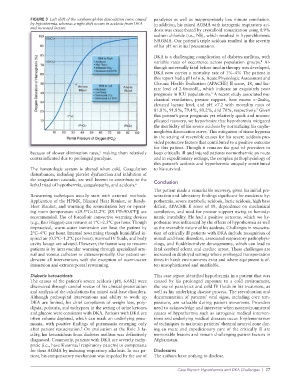
FIGURE 3  Left shift of the oxyhemoglobin dissociation curve caused   paralytics as well as inappropriately low minute ventilation.
              by hypothermia, whereas a right shift occurs in acidosis from DKA   In addition, his mixed AGMA with iatrogenic respiratory aci-
              and increased lactate.
                                                                 dosis was exacerbated by crystalloid resuscitation using 0.9%
                                                                 sodium chloride (i.e., NS), which resulted in hyperchloremic
                                                                 NAGMA. Our patient’s triple acidosis resulted in the severity
                                                                 of his pH on initial presentation.

                                                                 DKA is a challenging complication of diabetes mellitus, with
                                                                 variable rates of occurrence across population groups.  Al-
                                                                                                             8
                                                                 though universally fatal before insulin therapy was developed,
                                                                 DKA now carries a mortality rate of 1%–4% The patient in
                                                                 this report had a pH of 6.6, Acute Physiologic Assessment and
                                                                 Chronic Health Evaluation (APACHE) II score, 18, and lac-
                                                                 tate level of 2.8mmol/L, which indicate an exquisitely poor
                                                                 prognosis in ICU populations.  A recent study associated me-
                                                                                        9
                                                                 chanical ventilation, pressor support, base excess <−2mEq,
                                                                 elevated lactate level, and pH <7.2 with mortality rates of
                                                                 81.8%, 91.8%, 79.4%, 80.2%, and 70%, respectively.  Given
                                                                                                           9
                                                                 this patient’s poor prognosis yet relatively quick and uncom-
                                                                 plicated recovery, we hypothesize that hypothermia mitigated
                                                                 the morbidity of his severe acidosis by normalizing his oxyhe-
                                                                 moglobin dissociation curve. This mitigation of tissue hypoxia
                                                                 in the setting of reversible causes for his severe acidosis pro-
                                                                 vided protective factors that contributed to a positive outcome
                                                                 for this patient. Though it remains the goal of providers to
              because of slower elimination rates,  making them relatively   keep critically ill and injured patients normothermic en route
                                          5
              contraindicated due to prolonged paralysis.        and in expeditionary settings, the complex pathophysiology of
                                                                 this patient’s acidosis and hypothermia uniquely contributed
              The hematologic system is altered when cold. Coagulation   to his survival.
              disturbances, including platelet dysfunction and inhibition of
              the coagulation cascade, are well known to contribute to the   Conclusion
              lethal triad of hypothermia, coagulopathy, and acidosis. 6
                                                                 The patient made a remarkable recovery, given his initial pre-
              Rewarming techniques usually start with external methods.   sentation and laboratory findings significant for moderate hy-
              Application of the HPMK, Blizzard Heat Blanket, or Ready-  pothermia, severe metabolic acidosis, lactic acidosis, high base
              Heat Blanket, and warming the resuscitation bay or operat-  deficit, APACHE II score of 18, dependence on mechanical
              ing room (temperature >29.5°C–32.2°C [85.1°F–90.0°F]) are   ventilation, and need for pressor support owing to hemody-
              recommended. Use of forced-air convective warming devices   namic instability. He had a positive outcome, which we hy-
              (e.g., Bair Hugger) can rewarm at 1°C–2.5°C per hour. Though   pothesize was influenced by the effects of hypothermia as well
              impractical, warm-water immersion can heat the patient by   as the reversible nature of his acidosis. Challenges in resuscita-
              2°C–4°C per hour. Internal rewarming though humidified in-  tion of critically ill patients with DKA include recognition of
              spired air (0.5°C–1.2°C per hour), warmed IV fluids, and body   mixed acid-base disorders, associated respiratory pathophysi-
              cavity lavage are advised. However, the fastest way to rewarm   ology, and fluid/electrolyte derangements, which can lead to
              patients is by intravascular warming through specialized arte-  fatal cerebral edema and cardiac arrest. These challenges are
              rial and venous catheters or extracorporeally. Our patient un-  increased in deployed settings where prolonged transportation
              derwent all interventions with the exception of warm-water   times in harsh environments exist and where equipment is of-
              immersion and extracorporeal rewarming.            ten unsophisticated and unreliable.
              Diabetic ketoacidosis                              This case report identified hypothermia in a patient that was
              The causes of the patient’s severe acidosis (pH, 6.682) were   caused by his prolonged exposure to a cold environment,
              discovered through careful review of his clinical presentation   the use of paralytics and cold IV fluids in his treatment, as
              and analysis of the calculations for mixed acid-base disorders.   well as his underlying disease process. The reevaluation and
              Although prehospital interventions and ability to work up   documentation of patients’ vital signs, including core tem-
              DKA are limited, his chief complaints of weight loss, poly-  perature, are valuable during patient movement. Providers
              dipsia, polyuria, and tachypnea in the setting of urine ketones   need to acknowledge and intervene when nonenvironmental
              and glucose were consistent with DKA. Patients with DKA are   causes of hypothermia such as iatrogenic medical interven-
              often volume depleted, which can mask an underlying pneu-  tions and underlying medical diseases occur. Implementation
              monia, with positive findings of pneumonia emerging only   of techniques to maintain patients’ thermal neutral zone dur-
              after patient resuscitation.  On evaluation at the Role 3 fa-  ing en route and expeditionary care of the critically ill are
                                  7
              cility, his ketoacidosis from diabetes mellitus was definitively   memorable lessons and remain challenging patient factors in
              diagnosed. Commonly, patients with DKA are severely tachy-  Afghanistan.
              pneic (i.e., have Kussmaul respiratory pattern) to compensate
              for their AGMA by inducing respiratory alkalosis. In our pa-  Disclosures
              tient, his compensatory mechanism was impeded by the use of   The authors have nothing to disclose.

                                                                          Case Report: Hypothermia and DKA Challenges  |  27

