


Page 151 - JSOM Spring 2018
P. 151
An Ongoing Series


                                            I Can’t Breathe—A SIPe of Water


                                    Mariusz K. Urbaniak ; Katarzyna (Kasia) Hampton, MD *
                                                                                        2
                                                       1


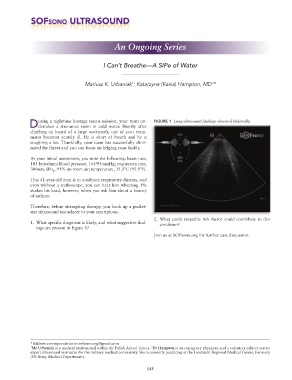
                 uring a nighttime hostage rescue mission, your team un-  FIGURE 1  Lung ultrasound findings observed bilaterally.
             Ddertakes a strenuous swim in cold water. Shortly after
              climbing on board of a large watercraft, one of your team-
              mates becomes acutely ill. He is short of breath and he is
              coughing a lot. Thankfully, your team has successfully elimi-
              nated the threat and you can focus on helping your buddy.

              At your initial assessment, you note the following: heart rate,
              105 beats/min; blood pressure, 145/95mmHg; respiratory rate,
              30/min; SPo , 91% on room air; temperature, 35.5°C (95.9°F).
                       2
              This 41-year-old man is in moderate respiratory distress, and
              even without a stethoscope, you can hear him wheezing. He
              shakes his head, however, when you ask him about a history
              of asthma.
              Therefore, before attempting therapy, you hook up a pocket-
              size ultrasound transducer to your smartphone.
                                                                 2.  What easily treatable risk factor could contribute to this
              1.  What specific diagnosis is likely, and what suggestive find-  condition?
                ings are present in Figure 1?
                                                                 Join us at SOFsono.org for further case discussion.


              *Address correspondence to sofsono.org@gmail.com
              1 Mr Urbaniak is a medical professional within the Polish Armed Forces.  Dr Hampton is an emergency physician and a volunteer subject matter
                                                                2
              expert ultrasound instructor for the military medical community. She is currently practicing at the Landstuhl Regional Medical Center, Germany
              (US Army Medical Department).
                                                              145

