


Page 142 - JSOM Spring 2018
P. 142
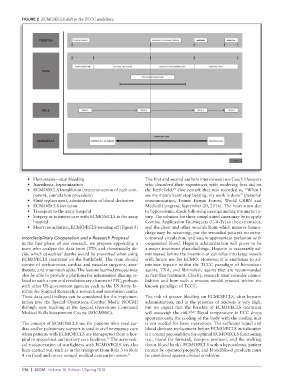
FIGURE 2  ECMO/ECLS shift in the TCCC guidelines.


            •  Hemostasis—stop bleeding                      The first and second authors interviewed two Czech lifesavers
            •  Anesthesia, heparinization                    who described their experiences with rendering first aid on
            •  ECMO/ECLS Installation (interconnection of each com-  the battlefield.  One remark that was recorded is, “When I
                                                                         27
               ponent, cannulation procedure)                see my mate’s heart stop beating, my work is done” (personal
            •  Fluid replacement, administration of blood derivative  communication, Future Forum Forces, World CRBN and
            •  ECMO/ECLS initiation                          Medical Congress, September 20, 2016). The heart stops due
            •  Transport to the army hospital                to hypovolemic shock following exsanguinating traumatic in-
            •  Surgery or intensive care with ECMO/ECLS in the army   jury. The solution for these complicated cases may be to apply
               hospital                                      Combat Application Tourniquets (C-A-Ts) to the extremities,
            •  Heart resuscitation, ECMO/ECLS weaning off (Figure 3)  seal the chest and other wounds from which massive hemor-
                                                             rhage may be occurring, put the wounded patients on extra-
          Interdisciplinary Cooperation and a Research Proposal  corporeal circulation, and secure appropriate perfusion with
          In the first phase of our research, we propose appointing a   oxygenated blood. Heparin administration will prove to be
          team who analyze the data from JTTS and theoretically de-  a major treatment plan challenge. Heparin is necessarily ad-
          cide which casualties’ deaths would be prevented when using   ministered before the insertion of cannulas into large vessels
          ECMO/ECLS treatment on the battlefield. The team should   with future use for ECMO. However, it is anathema to ad-
          consist of perfusionists, cardiac and vascular surgeons, anes-  minister heparin within the TCCC paradigm of hemostatic
          thetists, and traumatologists. The lessons learned process may   agents, TXA, and fibrinolytic agents that are recommended
          also be able to provide a platform for information sharing re-  as first-line treatment. Clearly, research must consider comor-
          lated to such a new and revolutionary element of PFC, perhaps   bidities and how such a process would proceed within the
          with other US government agencies such as the US Army In-  known paradigm of TCCC.
          stitute for Surgical Research, a research and innovation center.
          These data and findings can be considered for the implemen-  The risk of greater bleeding on ECMO/ECLS, after heparin
          tation into the Special Operations Combat Medic (SOCM)   administration, and in the presence of acidosis is very high,
          through new teaching at the Special Operations Command   but we expect that the benefits of ECMO/ECLS treatment
          Medical Skills Sustainment Course (SOCMSSC).       will outweigh the risk. 28,29  Blood temperature in ECC drops
                                                             spontaneously; the cooling of the body with the cooling unit
          The concept of ECMO/ECLS use for patients who need car-  is not needed for basic operations. The sufficient liquid and
          diac and/or pulmonary support is used in civil emergency care   blood derivate replacement before ECMO/ECLS initialization
          when patients with ECMO/ECLS are transported from a hos-  is a crucial precondition for optimal ECMO/ECLS functioning
                                             26
          pital to specialized and tertiary care facilities.  The aeromedi-  (i.e., blood far forward, vampire protocol, and the walking
          cal transportation of warfighters with ECMO/ECLS has also   donor blood bank). ECMO/ECLS with a hypovolemic patient
          been carried out, such as in the transport from Role 3 to Role   cannot be operated properly, and blood/blood products must
          4 via fixed and rotary winged medical evacuation assets. 22  be considered against clinical condition.


          136  |  JSOM   Volume 18, Edition 1/Spring 2018

