


Page 125 - JSOM Spring 2018
P. 125
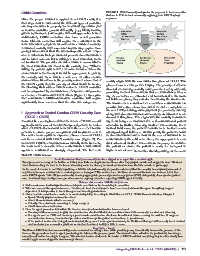
CBRN Casualties                                    FIGURE 1  CBRN casualty categories. Be prepared to treat casualties
                                                                 that are in PPE but not necessarily suffering from CBRN injury/
              Once  the  proper  mindset  is  applied  to  a  CBRN  event,  it  is   exposure.
              then important to understand the different types of casualties
              one may encounter to properly use treatment algorithms. Just
              as trauma casualties present differently (e.g., blunt, trauma,
              gunshots, blasts, etc.) and require different approaches toward
              stabilization,  CBRN  casualties  also  have  varied  presenta-
              tions. Chlorine casualties will require more attention to the
              toxic inhalation symptoms in contrast to a mustard casualty.
              A mustard casualty with associated trauma may require more
              prompt intervention than the mustard-specific effects. Expo-
              sure to infectious biologic material presents decontamination
              and isolation concerns but is unlikely to need immediate medi-
              cal treatment. The provider should continue to assess what is
              the most immediate life threat to the casualty (i.e., “What is
              killing my patient right now?”). In some instances where the
              environment is the threat, it would be appropriate to pick up
              the casualty and move him to a safe area. In other circum-
              stances where blood loss is the pressing concern above that of
              the CBRN agent, then the priority of effort would be to stop   readily aligns with the care under fire phase of TCCC. This
              the bleeding, then address CBRN concerns. CBRN casualties   phase of care is at the point of injury. The priority of effort is
              can be categorized by circumstances of exposure and presence   directed at ensuring casualty (and provider) safety and only
              or absence of trauma and CBRN effects (Figure 1). Recognize   providing medical interventions that are immediately lifesav-
              that combination CBRN-and-trauma casualties will require   ing. As casualties are extracted and transitioned to the tacti-
              significantly more resources than the other two categories.  cal field care phase, they can also be entering the warm zone.
                                                                 The warm zone is considered an area where contamination is
                                                                 possible but active release has ended. Partial or complete re-
              I.   Approach to Tactical Combat CBRN Casualty Care   moval of PPE, clothing, and equipment (i.e., casualty cutout);
                (TCCC + CBRN)                                    along with decontamination and casualty stabilization is ad-
                                                                 dressed in this phase. This aligns with the casualty transition-
              It cannot be overemphasized that the tenets of TCCC are still   ing from being a contaminated to a decontaminated patient
              applicable in the care of the CBRN-exposed patient. Consider-  amenable to further lifesaving medical interventions. From
              ation of CBRN effects should be habit in the care of all trauma   tactical field care, the patient transitions to tactical evacu-
              patients to ensure proper recognition and treatment even in   ation/prolonged field care. At this point, the patient should
              the event of a surreptitious exposure. Phases of care in TCCC   be decontaminated and is now in the area of minimal to no
              can be correlated with CBRN casualty care (Figure 2). Pa-  contamination, the cold zone. Here, it is appropriate to con-
              tients with CBRN contamination are initially in the hot zone,   duct advanced medical interventions necessary to stabilize
              the term used to describe where contamination with CBRN   the patient or ensure the patient is ready for transport to
                                                                                 5
              agents  is  confirmed  or  strongly  suspected.  The  hot  zone   higher levels of care.  Remember that depending on the event
              TABLE 2  CBRN Mindset
                                  Avoid the mindset that your casualty has been dipped in an agent like a candied apple
              Treat personnel arriving at the hotline as if they were kids running home for dinner after they played outside and stepped in mud. We don’t
              want them tracking the mud in the house when they come for dinner, but we don’t want to leave the kids outside to go hungry.
              In the event of trauma to an HIV-, hepatitis-, or MRSA-infected casualty, do providers demand that the casualty be completely cleansed of
              any blood, feces, or vomitus before rendering care or transport? The answer is no. Yet these viruses and bacteria can be more lethal than
              some CBRN agents. Take BSI precautions by wearing appropriate personal protective equipment (PPE). Adequately clean up after patient
              care. And most importantly, ensure providers receive ongoing education regarding CBRN agent lethality.
                                                Balance risk aversion with the duty to care
              •  Risk aversion can lead to hypothermia or delays in care that can be devastating to casualties.
              •  Take into account the agents of concern. Decisions to treat must always be based on characteristics of the agent. Everything is agent
                dependent. It is imperative to know the agent and its anticipated effects.
              •  Cutout and decontamination needs to be conducted quickly. According to Field Manual 3-11.5, CBRN Decontamination, Chapter 1.
                –  Speed: Timely physical removal is critical
                –  Need: Decontaminate what is necessary
                –  Priority: Decontaminate according to triage category
                –  Limit: Area of contamination
              •  Does the agent present an immediate life threat or merely a decontamination inconvenience?
                –  Do away with unnecessary lengthy decontamination checks with detectors and monitors while a casualty is naked and shivering.
                –  For agents such as TICS and mustard, a good visual contamination check can be sufficient before crossing the cold line. If no gross
                  contamination is seen, then medical providers should accept the patient and continue to provide care.
                –  If the patient is alive after being decontaminated, then, even if some spot was missed, the likelihood that spot will severely harm medical
                  staff or destroy an evacuation platform or medical treatment facility is little to none.
                                                         Can I take a knee?
              Traditional CBRN medical courses will penalize a student for taking a knee while providing care, theoretically because the pressure of the
              knee on the ground can lead to agent penetrating the fabric at the pressure point. The student is then added to the problem by becoming a
              casualty and further learning is foregone. This mindset teaches students to be fearful of CBRN and that everything they touch is deadly (see
              candied apple versus stepped in mud concept above).

                                                                       Integrating CBRN Protocols Into TCCC: (MARCHE)   |  119
                                                                                                           2

