


Page 120 - JSOM Spring 2018
P. 120
be triggered by non-immunologic mechanisms. These include
                                                             physical factors, ethanol and some medications such as nar-
                                                             cotics  (Table 1).
                                                                 3
                                                             Food is the most common trigger for anaphylaxis from in-
                                                             fancy through young adulthood. Among adults, food allergies
                                                             are most likely to occur under the age of 30. While food al-
                                                             lergies can occur with any food, shellfish, tree nuts, fish, soy
                                                             and peanuts account for most cases. Cashews are an emerging
                                                             cause of anaphylaxis due to increasing consumption of this
                                                             nut. There are also reports of cross-reactivity between cashews
                                                             and pistachios. People who are stung by insects can become
                                                             sensitized to hymenoptera venom and develop large local reac-
                                                             tions to them. More than 5 percent of persons sensitized may
                                                             go on to later develop a systemic anaphylactic reaction (SAR).
                                                             Unfortunately, current testing methods cannot distinguish
                                                             among persons who undergo asymptomatic sensitization,
          Most cases of anaphylaxis present as generalized hives, flushed skin   large local reactions and SAR.  Drugs are another common
                                                                                     4
          and itching, along with respiratory distress or shock.  source of anaphylaxis. The most common medication triggers
                                                             include antibiotics and non-steroidal anti-inflammatory drugs
          may cause death.” The working group also agreed on diagnos-  (NSAIDs). A cause of anaphylaxis that is frequently missed is
          tic criteria that would capture 95 percent of anaphylaxis cases   exercise, triggered by activities such as running, cycling and
          (Table I).  Criterion one includes skin symptoms in association   resistance exercises.
                 2
          with respiratory distress and/or shock, and identifies 80 per-
          cent of patients with anaphylaxis. Criterion two identifies the   An allergic response occurs following an initial exposure to an
          20 percent of children with food or insect sting allergies who   allergen that activates plasma cells to synthesize immunoglob-
          fail to manifest skin symptoms when exposed to a known or   ulin E (IgE). The IgE antibodies circulate and attach to the sur-
          suspected allergen. Finally, criterion three is used in rare cir-  face of mast cells and basophils. Mast cells and basophils are
          cumstances where patients experience a hypotensive response   specialized white blood cells produced by the bone marrow.
          to exposure to known allergens. In 2015, the Joint Task Force   They are located throughout the body but are concentrated in
          on Practice Parameters, representing the American Academy   the connective tissue surrounding blood vessels, smooth mus-
          of Allergy, Asthma and Immunology, the American College of   cle, mucus and hair follicles, and below the mucosal and epi-
          Allergy, Asthma and Immunology, and the Joint Council of Al-  thelial tissues in the gastrointestinal tract, skin and respiratory
          lergy, Asthma and Immunology, published the fourth edition   system. Re-exposure to an allergen results in the activation of
          of “The Diagnosis and Management of Anaphylaxis.” First   IgE, causing mast cells to release inflammatory mediators that
          published in 1998, the current edition provides an evidence-  include histamine, heparin, cytokines, chondroitin sulfate and
          based approach to the current management of anaphylaxis.  proteases. The effects of mast cell activation and the release
                                                             of mediators have different effects on organ systems and tis-
                                                             sues. For example, activation of mast cells in the skin release
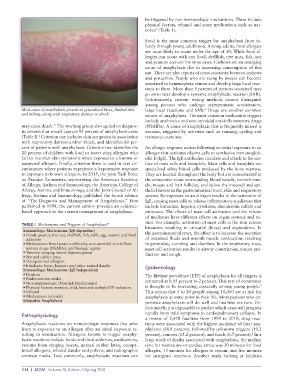
          TABLE I  Mechanisms and Triggers of Anaphylaxis 17  histamine resulting in urticarial (hives) and angioedema. In
           Immunologic Mechanisms (IgE dependent)            the gastrointestinal tract, the effect is to increase the secretion
           • Foods: peanut, tree nut, shellfish, fish, milk, egg, sesame and food
            additives                                        of intestinal fluids and smooth muscle contraction, resulting
           • Medications: beta-lactam antibiotics, non-steroidal anti-inflam-  in peristalsis, vomiting and diarrhea. In the respiratory tract,
            matory drugs (NSAIDs), and biologic agents       mast cell activation results in airway constriction, mucus pro-
           • Venoms: stinging insects (hymenoptera)          duction and cough.
           • Natural rubber latex
           • Occupational allergens
           • Inhalants: horse, hamster and other animal dander  Epidemiology
           Immunologic Mechanisms (IgE Independent)
           • Dextran                                         The lifetime prevalence (LTP) of anaphylaxis for all triggers is
           • Radiocontrast media                             estimated at 0.05 percent to 2 percent. This rate of occurrence
           • Non-Immunologic (Non-IgE Mechanisms)
                                                                                                            5
           • Physical factors: exercise, cold, heat and sunlight/UV radiation  is thought to be increasing, especially among young people.
           • Ethanol                                         This means that 5 to 20 people among 10,000 are at risk for
           • Medications (opioids)                           anaphylaxis at some point in their life. Most patients who ex-
           Idiopathic Anaphylaxis                            perience anaphylaxis will do well and fatalities are rare. Un-
                                                             fortunately, it is impossible to predict which cases will progress
                                                             rapidly from mild symptoms to cardiopulmonary collapse. In
          Pathophysiology
                                                             a review of 2,458 fatalities from 1999 to 2010, drug reac-
          Anaphylactic reactions are immunologic responses that arise   tions were associated with the highest incidence of fatal ana-
          from re-exposure to an allergen after an initial exposure re-  phylaxis (58.8 percent), followed by unknown triggers (19.3
          sulting in sensitization. Allergens known to trigger anaphy-  percent), venoms (15.2 percent), and foods (6.7 percent).  In a
                                                                                                         6
          lactic reactions include foods and food additives, medications,   large study of deaths associated with anaphylaxis, the median
          venoms from stinging insects, natural rubber latex, occupa-  time for respiratory or cardiac arrest was 30 minutes for food
          tional allergens, inhaled dander and pollens, and radiographic   allergies, 15 minutes for allergies to venom, and five minutes
          contrast media. Less  commonly, anaphylactic reactions can   for iatrogenic reactions. Another study looking at fatalities


          114  |  JSOM   Volume 18, Edition 1/Spring 2018

