


Page 126 - JSOM Spring 2018
P. 126
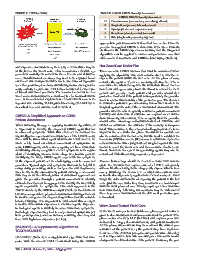
FIGURE 2  TCCC + CBRN.                             TABLE 3  CRESS: CBRN Casualty Assessment
                                                                        CRESS: CBRN Casualty Assessment
                                                               C    Consciousness (unconscious, convulsing, altered)
                                                               R    Respirations (present, labored, absent)
                                                                E   Eyes (pupil size and responsiveness)
                                                                S   Secretions (absent, normal, increased)
                                                                S   Skin (diaphoretic, cyanotic, dry, hot)
                                                             approach to patient assessment described here earlier. Once the
                                                             provider has applied CRESS to determine if the more immedi-
                                                             ate threat is the CBRN exposure or trauma, then the integrated
                                                             algorithms can be applied to ensure comprehensive care that
                                                             addresses both traumatic and CBRN-related injury (Table 5).

                                                             Hot Zone/Care Under Fire
          and exposure circumstances, Role I, II, or III facilities may be
          in the hot or the warm zone. This necessitates a flexible ap-  There are some CBRN nuances that must be considered when
          proach in casualty movement to the cold zone and definitive   applying the algorithm. One such consideration is whether to
          care. Distribution of resources may need to be adjusted based   expose the patient within the hot zone. At this phase of care,
          on threat. An example would be far forward use of filgrastim   consider the agent as if you are receiving effective fire. This is
          (or other granulocyte-colony stimulating factor analogue) for   care under fire when the agent is the immediate threat. Protec-
          acute radiation syndrome. TCCC has facilitated forward use   tion from and egress away from the threat is crucial for both
          of blood and blood products. The lessons learned in far for-  patient and provider. Both patient and provider should don
          ward resuscitation must be considered for far forward CBRN   protective mask and if the patient is incapacitated, the provider
          care. A more-detailed explanation of how CBRN care is in-  needs to ensure functionality of the protective gear. The decision
          tegrated into existing TCCC guidelines using (MARCHE)  is   to unmask a patient to provide airway intervention needs to be
                                                        2
          described here and summarized in Table 4.          weighed against the risk of the contaminated environment. The
                                                             provider must be able to quickly conduct a patient assessment
          CRESS: A Simplified Approach to CBRN               (CRESS) and determine if antidotes are required as an imme-
          Patient Assessment                                 diate life-saving intervention. If nerve agent, then the provider
                                                             should either encourage self-administration of ATNAAs and
          When initiating therapy or applying treatment algorithms, it   CANA or administer the antidotes if the casualty is incapaci-
          is important to identify the suspected CBRN agent that led   tated. This is similar to the concept of self-application of a tour-
          to observed symptoms. While this often can be deduced us-  niquet in the care under fire phase. Treatment for cyanide can
          ing intelligence reports and circumstances of the CBRN event,   also be considered in the hot zone, but the need to establish in-
          there will be times when agent identification will need to be   travenous (IV)/intraosseous (IO) access to administer hydroxo-
          made  solely  based  on  clinical  assessment  of  symptoms.  As   cobalamin makes this a judgment call weighed against the time
          some CBRN agents, such as nerve agents, can have immediate   needed to reach the warm zone and the care under fire/hot zone
          debilitating effects, recognition of such symptoms is the equiv-  threat. Naloxone for opioid incapacitating agents may also be
          alent of identifying massive hemorrhage in a trauma patient.   considered if life-threatening respiratory depression.
          Identifying the likely CBRN agent responsible for symptoms
          in the exposed patient can be challenging, even for seasoned   Massive hemorrhage should be treated as usual with tourni-
          providers. Typical signs and symptoms that can be helpful in   quets. For wounds that require removal of PPE to adequately
          categorizing poisoning, such as tachycardia and diaphoresis,   address life-threatening hemorrhage, only expose what is nec-
          may be due to the environment, patient anxiety, or stress and   essary.  Similarly,  the  decision  to  conduct  interventions  such
          thus may cloud the clinical picture. A structured approach can   as needle decompression, application of chest seals, etc. must
          guide the provider through a patient assessment to identify   weigh the risks and benefits of exposing the patient in the hot
          clinical clues that can be aggregated to identify the most likely   zone. Just like care under fire, these treatments are best delayed
          agent responsible for symptoms. One such approach is the   until the next phase of care. Finally, rapid spot decontamina-
          NATO standard, the CRESS acronym  (Table 3). Each letter in   tion immediately following interventions may be indicated if
                                       6
          CRESS corresponds to physical examination findings that can   there is gross contamination on the skin or if protective gear
          be used to categorize the suspected agent based on the constel-  is breached.
          lation of findings. It is important to understand this acronym
          is used to differentiate exposures to chemical agents. Exposure   Warm Zone/Tactical Field Care
          to biological agents is unlikely to cause immediate symptoms.
          Radiologic exposure may lead to early onset of symptoms (<1   In the warm zone, or tactical field care. phase, special notice is
          hour postexposure), such as nausea, vomiting, diarrhea, and   given to decontamination and reassessment of the patient. This
          fever with high-dose exposures (>6 Gy).            phase occurs at a dirty CCP (hot line) and requires personnel
                                                             dedicated to triage, decontamination, and patient treatment.
                                                             At this phase, interventions may have altered the clinical pre-
                    2
          (MARCHE) : A Supplemental Algorithm to             sentation of the patient (i.e., the patient may have mydriasis
          TCCC’s MARCHE
                                                             from use of the ATNAA [atropine and pralidoxime chloride])
          (MARCHE)  (Table 4) is a supplemental algorithm that inte-  so it is important to take into account prior interventions and
                   2
          grates with the current TCCC framework using the CRESS   changes in the clinical status of the patient. However, the goal

          120  |  JSOM   Volume 18, Edition 1/Spring 2018

