


Page 59 - Journal of Special Operations Medicine - Fall 2017
P. 59
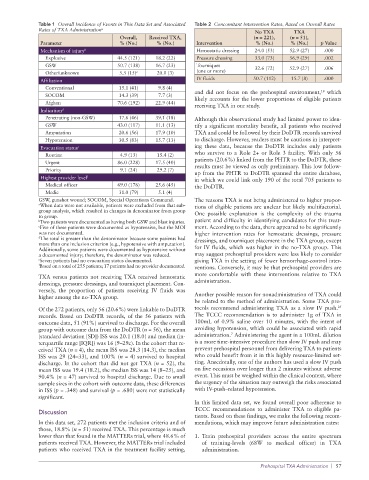
Table 1  Overall Incidence of Events in This Data Set and Associated   Table 2  Concomitant Intervention Rates, Based on Overall Rates
              Rates of TXA Administration a                                         No TXA       TXA
                                        Overall,    Received TXA,                   (n = 221),    (n = 51),
              Parameter                 % (No.)     % (No.)      Intervention        % (No.)    % (No.)   p Value
              Mechanism of injury b                              Hemostatic dressing  24.0 (53)  52.9 (27)  .000
                Explosive              44.5 (121)   18.2 (22)    Pressure dressing  33.0 (73)   56.9 (29)  .002
                GSW                    50.7 (138)   16.7 (23)    Tourniquet         32.6 (72)   52.9 (27)  .006
                Other/unknown           5.5 (15) c  20.0 (3)     (one or more)
              Affiliation                                        IV fluids          50.7 (112)  15.7 (8)   .000
                Conventional            15.1 (41)    9.8 (4)                                              18
                SOCOM                   14.3 (39)    7.7 (3)     and did not focus on the prehospital environment,  which
                                                                 likely accounts for the lower proportions of eligible patients
                Afghan                 70.6 (192)   22.9 (44)    receiving TXA in our study.
              Indication d
                Penetrating (non-GSW)   17.6 (46)   39.1 (18)    Although this observational study had limited power to iden-
                GSW                    43.0 (117)   11.1 (13)    tify a significant mortality benefit, all patients who received
                Amputation              20.6 (56)   17.9 (10)    TXA and could be followed by their DoDTR records survived
                Hypotension             30.5 (83)   15.7 (13)    to discharge. However, readers must be cautious in interpret-
              Evacuation status e                                ing these data, because the DoDTR includes only patients
                Routine                 4.9 (13)    15.4 (2)     who survive to a Role 2+ or Role 3 facility. With only 56
                Urgent                 86.0 (228)   17.5 (40)    patients (20.6%) linked from the PHTR to the DoDTR, these
                                                                 results must be viewed as only preliminary. This low follow-
                Priority                9.1 (24)    29.2 (7)     up from the PHTR to DoDTR spanned the entire database,
              Highest provider level f                           in which we could link only 190 of the total 705 patients to
                Medical officer        69.0 (176)   25.6 (45)    the DoDTR.
                Medic                   31.0 (79)    5.1 (4)
              GSW, gunshot wound; SOCOM, Special Operations Command.  The reasons TXA is not being administered to higher propor-
              a When data were not available, patients were excluded from that sub-  tions of eligible patients are unclear but likely multifactorial.
              group analysis, which resulted in changes in denominator from group   One possible explanation is the complexity of the trauma
              to group.
              b Two patients were documented as having both GSW and blast injuries.  patient and difficulty in identifying candidates for this treat-
              c Five of these patients were documented as hypotensive, but the MOI   ment. According to the data, there appeared to be significantly
              was not documented.                                higher intervention rates for hemostatic dressings, pressure
              d The total is greater than the denominator because some patients had   dressings, and tourniquet placement in the TXA group, except
              more than one inclusion criterion (e.g., hypotensive with amputation).
              Additionally, some patients were documented as hypotensive without   for IV fluids, which was higher in the no-TXA group. This
              a documented injury; therefore, the denominator was reduced.  may suggest prehospital providers were less likely to consider
              e Seven patients had no evacuation status documented.  giving TXA in the setting of fewer hemorrhage-control inter-
              f Based on a total of 255 patients; 17 patients had no provider documented.  ventions. Conversely, it may be that prehospital providers are
              TXA versus patients not receiving TXA received hemostatic   more comfortable with these interventions relative to TXA
              dressings, pressure dressings, and tourniquet placement. Con-  administration.
              versely, the proportion of patients receiving IV fluids was
              higher among the no-TXA group.                     Another possible reason for nonadministration of TXA could
                                                                 be related to the method of administration. Some TXA pro-
                                                                                                               25
              Of the 272 patients, only 56 (20.6%) were linkable to DoDTR   tocols recommend administering TXA as a slow IV push.
              records. Based on DoDTR records, of the 56 patients with   The TCCC recommendation is to administer 1g of TXA in
              outcome data, 51 (91%) survived to discharge. For the overall   100mL of 0.9% saline over 10 minutes, with the intent of
              group with outcome data from the DoDTR (n = 56), the mean   avoiding hypotension, which could be associated with rapid
                                                                             7
              (standard deviation [SD]) ISS was 20.1 (18.0) and median (in-  administration.  Administering the agent in a 100mL dilution
              terquartile range [IQR]) was 16 (9–29c). In the cohort that re-  is a more time-intensive procedure than slow IV push and may
              ceived TXA (n = 4), the mean ISS was 28.3 (14.3), the median   prevent prehospital personnel from delivering TXA to patients
              ISS was 29 (24–33), and 100% (n = 4) survived to hospital   who could benefit from it in this highly resource-limited set-
              discharge. In the cohort that did not get TXA (n = 52), the   ting. Anecdotally, one of the authors has used a slow IV push
              mean ISS was 19.4 (18.2), the median ISS was 14 (8–25), and   on five occasions over longer than 2 minutes without adverse
              90.4% (n = 47) survived to hospital discharge. Due to small   event. This must be weighed within the clinical context, where
              sample sizes in the cohort with outcome data, these differences   the urgency of the situation may outweigh the risks associated
              in ISS (p = .348) and survival (p = .680) were not statistically   with IV-push–related hypotension.
              significant.
                                                                 In this limited data set, we found overall poor adherence to
              Discussion                                         TCCC recommendations to administer TXA to eligible pa-
                                                                 tients. Based on these findings, we make the following recom-
              In this data set, 272 patients met the inclusion criteria and of   mendations, which may improve future administration rates:
              those, 18.8% (n = 51) received TXA. This percentage is much
              lower than that found in the MATTERs trial, where 48.6% of   1.  Train  prehospital  providers  across  the  entire  spectrum
              patients received TXA. However, the MATTERs trial included   of   training-levels (68W to medical officer) in TXA
              patients who received TXA in the treatment facility setting,   administration.

                                                                                      Prehospital TXA Administration  |  57

