


Page 45 - Journal of Special Operations Medicine - Spring 2017
P. 45
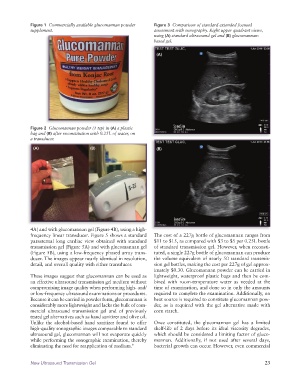
Figure 1  Commercially available glucomannan powder   Figure 3  Comparison of standard extended focused
              supplement.                                        assessment with sonography. Right upper quadrant views,
                                                                 using (A) standard ultrasound gel and (B) glucomannan-
                                                                 based gel.

                                                                  (A)


              Figure 2  Glucomannan powder (1 tsp) in (A) a plastic
              bag and (B) after reconstitution with 0.25L of water, on
              a transducer.

               (A)                    (B)                         (B)


              4A) and with glucomannan gel (Figure 4B), using a high-
              frequency linear transducer. Figure 5 shows a standard   The cost of a 227g bottle of glucomannan ranges from
              parasternal long cardiac view obtained with standard   $11 to $15, as compared with $3 to $5 per 0.25L bottle
              transmission gel (Figure 5A) and with glucomannan gel   of standard transmission gel. However, when reconsti-
              (Figure 5B), using a low-frequency phased array trans-  tuted, a single 227g bottle of glucomannan can produce
              ducer. The images appear nearly identical in resolution,   the volume equivalent of nearly 50 standard transmis-
              detail, and overall quality with either transducer.  sion gel bottles, making the cost per 227g of gel approx-
                                                                 imately $0.30. Glucomannan powder can be carried in
              These images suggest that glucomannan can be used as   lightweight, waterproof plastic bags and then be com-
              an effective ultrasound transmission gel medium without   bined with room-temperature water as needed  at the
              compromising image quality when performing high- and/  time of examination, and done so in only the amounts
              or low-frequency ultrasound examinations or procedures.   required to complete the examination. Additionally, no
              Because it can be carried in powder form, glucomannan is   heat source is required to constitute glucomannan pow-
              considerably more lightweight and lacks the bulk of com-  der, as is required with the gel alternative made with
              mercial ultrasound transmission gel and of previously   corn starch.
              tested gel alternatives such as hand sanitizer and olive oil.
              Unlike the alcohol-based hand sanitizer found to offer   Once constituted, the glucomannan gel has a limited
              high-quality sonographic images comparable to standard   shelf-life of 2 days before its ideal viscosity degrades,
              ultrasound gel, glucomannan will not evaporate quickly   which should be considered a limiting factor of gluco-
              while performing the sonographic examination, thereby   mannan. Additionally, if not used after several days,
              eliminating the need for reapplication of medium. 9  bacterial growth can occur. However, even commercial


              New Ultrasound Transmission Gel                                                                 23

