


Page 41 - Journal of Special Operations Medicine - Spring 2017
P. 41
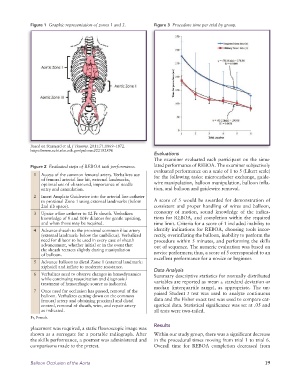
Figure 1  Graphic representation of zones 1 and 3.  Figure 3  Procedure time per trial by group.


              Based on Stannard et al, J Trauma. 2011;71:1869–1872.
              https://www.ncbi.nlm.nih.gov/pubmed/22182896
                                                                 Evaluations
                                                                 The examiner evaluated each participant on the simu-
              Figure 2  Evaluated steps of REBOA task performance.  lated performance of REBOA. The examiner subjectively
                                                                 evaluated performance on a scale of 1 to 5 (Likert scale)
               1  Access of the common femoral artery. Verbalizes use    for the following tasks: microcatheter exchange, guide-
                  of femoral arterial line kit, external landmarks,
                  optional use of ultrasound, importance of needle    wire manipulation, balloon manipulation, balloon infla-
                  entry and cannulation.                         tion, and balloon and guidewire removal.
               2  Insert Amplatz Guidewire into the arterial line catheter
                  to proximal Zone 1 using external landmarks (below   A score of 5 would be awarded for demonstration of
                  2nd rib space).                                consistent and proper handling of wires and balloon,
               3  Upsize a-line catheter to 12 Fr sheath. Verbalizes   economy of motion, sound knowledge of the indica-
                  knowledge of 8 and 10Fr dilators for gentle upsizing,   tions for REBOA, and completion within the required
                  and when those may be required.                time limit. Criteria for a score of 1 included inability to
               4  Advance sheath to the proximal common iliac artery     identify indications for REBOA, choosing tools incor-
                  (external landmark: below the umbilicus). Verbalized   rectly, overinflating the balloon, inability to perform the
                  need for dilator to be used in every case of sheath   procedure within 5 minutes, and performing the skills
                  advancement, whether initial or in the event that    out of sequence. The numeric evaluation was based on
                  the sheath retracts slightly during manipulation
                  of balloon.                                    novice performers; thus, a score of 5 corresponded to an
               5  Advance balloon to distal Zone 1 (external landmark:   excellent performance for a novice or beginner.
                  xiphoid) and inflate to moderate resistance.   Data Analysis
               6  Verbalizes need to observe changes in hemodynamics   Summary descriptive statistics for normally distributed
                  while continuing resuscitation and diagnosis /
                  treatment of hemorrhagic source as indicated.  variables are reported as mean ± standard deviation or
               7  Once need for occlusion has passed, removal of the   median (interquartile range), as appropriate. The un-
                                                                 paired Student  t test was used to analyze continuous
                  balloon. Verbalizes cutting down on the common
                  femoral artery and obtaining proximal and distal   data and the Fisher exact test was used to compare cat-
                  control, removal of sheath, wire, and repair artery    egorical data. Statistical significance was set at .05 and
                  as indicated.                                  all tests were two-tailed.
              Fr, French.
                                                                 Results
                placement was required, a static fluoroscopic image was
              shown as a surrogate for a portable radiograph. After   Within our study group, there was a significant decrease
              the skills performance, a posttest was administered and   in the procedural times moving from trial 1 to trial 6.
              comparisons made to the pretest.                   Overall time for REBOA completion decreased from


              Balloon Occlusion of the Aorta                                                                  19

