


Page 37 - Journal of Special Operations Medicine - Spring 2017
P. 37
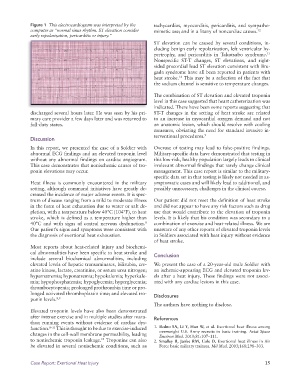
Figure 1  This electrocardiogram was interpreted by the   tachycardias, myocarditis, pericarditis, and sympatho-
              computer as “normal sinus rhythm. ST elevation consider   mimetic use; and in a litany of noncardiac causes. 12
              early repolarization, pericarditis or injury.”
                                                                 ST elevation can be caused by several conditions, in-
                                                                 cluding benign early repolarization, left ventricular hy-
                                                                 pertrophy, and pericarditis in Takotsubo syndrome.
                                                                                                               13
                                                                 Nonspecific ST-T changes, ST elevations, and right-
                                                                 sided precordial lead ST elevation consistent with Bru-
                                                                 gada syndrome have all been reported in patients with
                                                                 heat stroke.  This may be a reflection of the fact that
                                                                           14
                                                                 the sodium channel is sensitive to temperature changes.

                                                                 The combination of ST elevation and elevated troponin
                                                                 level in this case suggested that heart catheterization was
                                                                 indicated. There have been some reports suggesting that
              discharged several hours later. He was seen by his pri-  ST-T changes in  the  setting of  heat  stroke  are related
              mary care provider a few days later and was returned to   to an increase in myocardial oxygen demand and not
              full-duty status.                                  an anatomic lesion, which should resolve with cooling
                                                                 measures, obviating the need for standard invasive in-
                                                                 terventional procedures. 9
              Discussion
              In this report, we presented the case of a Soldier with   Overuse of testing may lead to false-positive findings.
              abnormal ECG findings and an elevated troponin level   Military-specific data have demonstrated that testing in
              without any abnormal findings on cardiac angiogram.   this low-risk, healthy population largely leads to clinical
              This case demonstrates that nonischemic causes of tro-  irrelevant abnormal findings that rarely change clinical
              ponin elevations may occur.                        management. This case report is similar to the military-
                                                                 specific data set in that testing is likely not needed in as-
              Heat  illness  is  commonly  encountered  in  the  military   ymptomatic cases and will likely lead to additional, and
              setting, although command initiatives have greatly de-  possibly unnecessary, challenges in the clinical course.
              creased the incidence of major adverse events. It is spec-
              trum of disease ranging from a mild to moderate illness   Our patient did not meet the definition of heat stroke
              in the form of heat exhaustion due to water or salt de-  and did not appear to have any risk factors such as drug
              pletion, with a temperature below 40°C (104°F), to heat   use that would contribute to the elevation of troponin
              stroke, which is defined as a temperature higher than   levels. It is likely that his condition was secondary to a
              40°C and with signs of central nervous dysfunction.    combination of exercise and heat-related illness. We are
                                                             8
              Our patient’s signs and symptoms were consistent with   unaware of any other reports of elevated troponin levels
              the diagnosis of exertional heat exhaustion.       in Soldiers associated with heat injury without evidence
                                                                 of heat stroke.
              Most reports about heat-related injury and biochemi-
              cal abnormalities have been specific to heat stroke and   Conclusion
              include several biochemical abnormalities, including
              elevated levels of hepatic transaminases, bilirubin, cre-  We present the case of a 20-year-old male Soldier with
              atine kinase, lactate, creatinine, or serum urea nitrogen;   an ischemic-appearing ECG and elevated troponin lev-
              hypernatremia; hyponatremia; hypokalemia; hyperkale-  els after a heat injury. These findings were not associ-
              mia; hypophosphatemia; hypoglycemia; hyperglycemia;   ated with any cardiac lesions in this case.
              thrombocytopenia; prolonged prothrombin time or pro-
              longed activated thromboplastin time; and elevated tro-  Disclosures
              ponin levels. 8,9
                                                                 The authors have nothing to disclose.
              Elevated troponin levels have also been demonstrated
              after intense exercise and in multiple studies after mara-  References
              thon running events without evidence of cardiac dys-
              function. 8–11  This is thought to be due to exercise-induced   1.  Bedno SA, Li Y, Han W, et al. Exertional heat illness among
              changes in the cell-wall membrane permeability, leading   overweight U.S. Army recruits in basic training. Aviat Space
                                                                   Environ Med. 2010;81:107–111.
              to nonischemic troponin leakage.  Troponins can also   2.  Smalley B, Janke RM, Cole D. Exertional heat illness in Air
                                           10
              be elevated in several nonischemic conditions, such as   Force basic military trainees. Mil Med. 2003;168:298–303.


              Case Report: Exertional Heat Injury                                                             15

