


Page 165 - Journal of Special Operations Medicine - Spring 2017
P. 165
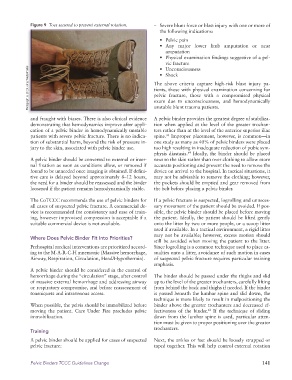
Figure 9  Toes secured to prevent external rotation.    – Severe blunt force or blast injury with one or more of
                                                                   the following indications:

                                                                   •  Pelvic pain
                                                                   •  Any major lower limb amputation or near
                                                                       amputation
                                                                   •  Physical examination findings suggestive of a pel-
                                                                     vic fracture
             Photograph by Lt Col James Wiedenhoefer.            The  above  criteria  capture  high-risk  blast  injury  pa-
                                                                   •  Unconsciousness
                                                                   •  Shock

                                                                 tients, those with physical examination concerning for
                                                                 pelvic fracture, those with a compromised physical
                                                                 exam due to unconsciousness, and hemodynamically


                                                                 A pelvic binder provides the greatest degree of stabiliza-
              and fraught with biases. There is also clinical evidence   unstable blunt trauma patients.
              demonstrating that hemodynamics improve after appli-  tion when applied at the level of the greater trochan-
              cation of a pelvic binder in hemodynamically unstable   ters rather than at the level of the anterior superior iliac
              patients with severe pelvic fracture. There is no indica-  spine.  Improper placement, however, is common—in
                                                                      33
              tion of substantial harm, beyond the risk of pressure in-  one study as many as 40% of pelvic binders were placed
              jury to the skin, associated with pelvic binder use.  too high resulting in inadequate reduction of pubic sym-
                                                                 physis diastasis.  Ideally, the binder should be placed
                                                                               64
              A pelvic binder should be converted to external or inter-  next to the skin rather than over clothing to allow more
              nal fixation as soon as conditions allow, or removed if   accurate positioning and prevent the need to remove the
              found to be unneeded once imaging is obtained. If defini-  device on arrival to the hospital. In tactical situations, it
              tive care is delayed beyond approximately 8–12 hours,   may not be advisable to remove the clothing; however,
              the need for a binder should be reassessed and the binder   the pockets should be emptied and gear removed from
              loosened if the patient remains hemodynamically stable.  the belt before placing a pelvic binder.

              The CoTCCC recommends the use of pelvic binders for   If a pelvic fracture is suspected, logrolling and unneces-
              all cases of suspected pelvic fracture. A commercial de-  sary movement of the patient should be avoided. If pos-
              vice is recommended for consistency and ease of train-  sible, the pelvic binder should be placed before moving
              ing, however improvised compression is acceptable if a   the patient. Ideally, the patient should be lifted gently
              suitable commercial device is not available.       onto the litter by two or more people, or a scoop litter
                                                                 used if available. In a tactical environment, a rigid litter
                                                                 may not be available; however, excess motion should
              Where Does Pelvic Binder Fit Into Priorities?
                                                                 still be avoided when moving the patient to the litter.
              Prehospital medical interventions are prioritized accord-  Since logrolling is a common technique used to place ca-
              ing to the M-A-R-C-H mnemonic (Massive hemorrhage,   sualties onto a litter, avoidance of such motion in cases
              Airway, Respiration, Circulation, Head/Hypothermia).  of suspected pelvic fracture requires particular training
                                                                 emphasis.
              A pelvic binder should be considered in the control of
              hemorrhage during the “circulation” stage, after control   The binder should be passed under the thighs and slid
              of massive external hemorrhage and addressing airway   up to the level of the greater trochanters, carefully lifting
              or respiratory compromise, and before reassessment of   from behind the back and thighs if needed. If the binder
              tourniquets and intravenous access.                is passed beneath the lumbar spine and slid down, the
                                                                 technique is more likely to result in malpositioning the
              When possible, the pelvis should be immobilized before   binder above the greater trochanters and decreased ef-
              moving the patient. Care Under Fire precludes pelvic   fectiveness  of the binder.  If the technique  of sliding
                                                                                       64
              immobilization.                                    down from the lumbar spine is used, particular atten-
                                                                 tion must be given to proper positioning over the greater
                                                                 trochanters.
              Training
              A pelvic binder should be applied for cases of suspected   Next, the ankles or feet should be loosely strapped or
              pelvic fracture:                                   taped together. This will help control external rotation


              Pelvic Binders TCCC Guidelines Change                                                          141

