


Page 164 - Journal of Special Operations Medicine - Spring 2017
P. 164
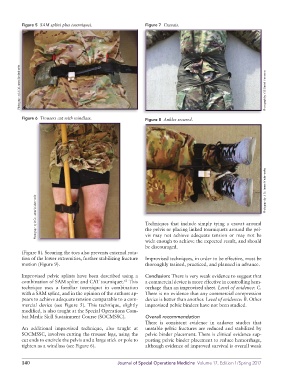
Figure 5  SAM splint plus tourniquet.              Figure 7  Cravats.


         Photograph by Lt Col James Wiedenhoefer.                                                              Photograph by MSG Daniel Morissette


          Figure 6  Trousers cut with windlass.              Figure 8  Ankles secured.


                                                                                                               Photograph by Lt Col James Wiedenhoefer.


                Photograph by Lt Col James Wiedenhoefer.     Techniques that include  simply tying a cravat  around


                                                             the pelvis or placing linked tourniquets around the pel-
                                                             vis may not achieve adequate tension or may not be
                                                             wide enough to achieve the expected result, and should
                                                             be discouraged.
          ( Figure 8). Securing the toes also prevents external rota-
          tion of the lower extremities, further stabilizing fracture   Improvised techniques, in order to be effective, must be
          motion (Figure 9).                                 thoroughly trained, practiced, and planned in advance.

          Improvised pelvic splints have been described using a   Conclusion: There is very weak evidence to suggest that
          combination of SAM splint and CAT tourniquet.  This   a commercial device is more effective in controlling hem-
                                                    63
          technique uses a familiar tourniquet in combination   orrhage than an improvised sheet. Level of evidence: C.
          with a SAM splint, and in the opinion of the authors ap-  There is no evidence that any commercial compression
          pears to achieve adequate tension comparable to a com-  device is better than another. Level of evidence: B. Other
          mercial device (see Figure 5). This technique, slightly   improvised pelvic binders have not been studied.
          modified, is also taught at the Special Operations Com-
          bat Medic Skill Sustainment Course (SOCMSSC).      Overall recommendation
                                                             There  is  consistent  evidence  in  cadaver  studies  that
          An additional improvised technique, also taught at   unstable pelvic fractures are reduced and stabilized by
          SOCMSSC, involves cutting the trouser legs, using the   pelvic binder placement. There is clinical evidence sup-
          cut ends to encircle the pelvis and a large stick or pole to   porting pelvic binder placement to reduce hemorrhage,
          tighten as a windlass (see Figure 6).              although evidence of improved survival is overall weak


          140                                     Journal of Special Operations Medicine  Volume 17, Edition 1/Spring 2017

