


Page 163 - Journal of Special Operations Medicine - Spring 2017
P. 163
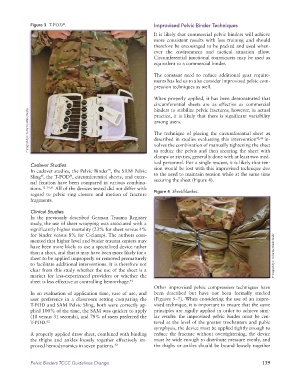
Figure 3  T-POD .                                  Improvised Pelvic Binder Techniques
                           ®
                                                                 It is likely that commercial pelvic binders will achieve
                                                                 more consistent results with less training  and should
                                                                 therefore be encouraged to be packed and used when-
                                                                 ever the environment and tactical situation allow.
                                                                   Circumferential junctional tourniquets may be used as
                                                                 equivalent to a commercial binder.

                                                                 The constant need to reduce additional gear require-
                                                                 ments has led us to also consider improvised pelvic com-
                                                                 pression techniques as well.

                                                                 When properly applied, it has been demonstrated that
                                                                 circumferential sheets are as effective as commercial
                                                                 binders to stabilize pelvic fractures; however, in actual
             Photograph by Lt Col James Wiedenhoefer.            among users.                              42,44  in-
                                                                 practice, it is likely that there is significant variability


                                                                 The technique  of placing the circumferential  sheet  as
                                                                 described in studies evaluating this intervention
                                                                 volves the combination of manually tightening the sheet
                                                                 to reduce the pelvis and then securing the sheet with
                                                                 clamps or zip ties, generally done with at least two med-
                                                                 ical personnel. For a single rescuer, it is likely that ten-
              Cadaver Studies                                    sion would be lost with this improvised technique due
              In cadaver studies, the Pelvic Binder , the SAM Pelvic   to the need to maintain tension while at the same time
                                              ™
              Sling , the T-POD , circumferential sheets, and exter-  securing the sheet (Figure 4).
                  ®
                              ®
              nal fixation have been compared in various combina-
              tions. 32-34,61  All of the devices tested did not differ with   Figure 4  Sheet/blanket.
              regard  to pelvic  ring closure  and motion  of fracture
              fragments.

              Clinical Studies
              In  the  previously  described  German  Trauma  Registry
              study, the use of sheet wrapping was associated with a
              significantly higher mortality (23% for sheet versus 4%
              for binder versus 8% for C-clamp). The authors com-
              mented that higher level and busier trauma centers may
              have been more likely to use a specialized device rather
              than a sheet, and that it may have been more likely for a
              sheet to be applied improperly or removed prematurely                                               Photograph by Lt Col James Wiedenhoefer.
              to facilitate additional interventions. It is therefore not
              clear from this study whether the use of the sheet is a
              marker for less-experienced providers or whether the
              sheet is less effective at controlling hemorrhage. 41
                                                                 Other improvised pelvic compression techniques have
              In an evaluation of application time, ease of use, and   been described but have not been formally studied
              user  preference  in  a  classroom  setting  comparing  the   (Figures 5–7). When considering the use of an impro-
              T-POD and SAM Pelvic Sling, both were correctly ap-  vised technique, it is important to ensure that the same
              plied 100% of the time, the SAM was quicker to apply   principles are rigidly applied in order to achieve simi-
              (18 versus 31 seconds), and 78% of users preferred the   lar  results:  the  improvised  pelvic  binder  must  be  cen-
              T-POD. 62                                          tered at the level of the greater trochanters and pubic
                                                                 symphysis, the device must be applied tightly enough to
              A properly applied draw sheet, combined with binding   reduce the fracture without overtightening, the device
              the thighs and ankles loosely together effectively im-  must be wide enough to distribute pressure evenly, and
              proved hemodynamics in seven patients. 42          the thighs or ankles should be bound loosely together


              Pelvic Binders TCCC Guidelines Change                                                          139

