


Page 45 - Journal of Special Operations Medicine - Winter 2016
P. 45
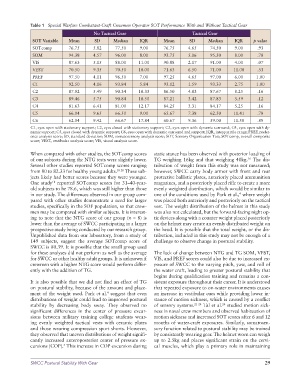
Table 1   Special Warfare Combatant-Craft Crewmen Operator SOT Performance With and Without Tactical Gear
                                        No Tactical Gear                        Tactical Gear
              SOT Variable   Mean       SD      Median     IQR       Mean      SD      Median     IQR     p value
              SOTcomp        76.75     5.82      77.50     9.00      76.75     4.65     74.50     9.00     .93
              SOM            94.38     4.57      96.00     8.00      93.75     5.06     95.50     8.00     .78
              VIS            87.63     5.15      88.00    11.00      90.88     2.17     91.00     4.00     .07
              VEST           70.50     9.35      70.50    10.00      71.63     6.50     71.00    11.00     .53
              PREF           97.50     4.11      96.50     7.00      97.25     4.65     97.00     6.00     1.00
              C1             92.50     4.16      93.84     5.84      93.12     1.59     93.33     2.75     1.00
              C2             87.92     5.49      90.34    10.33      86.50     4.83     87.67     8.25     .16
              C3             89.46     5.75      90.84    10.50      87.21     3.42     87.83     5.59     .12
              C4             81.63     6.41      81.00    12.17      84.25     3.31     84.17     5.25     .16
              C5             66.04     9.65      66.50     9.00      65.67     7.38     62.50    11.41     .78
              C6             62.04     9.42      66.67    17.84      60.67     9.36     59.00    11.58     .89
              C1, eyes open with stationary support; C2, eyes closed with stationary support; C3, eyes open with dynamic surround; C4, eyes open with dy-
              namic support; C5, eyes closed with dynamic support; C6, eyes open with dynamic surround and support; IQR, interquartile range; PREF, prefer-
              ence analysis score; SD, standard deviation; SOM, somatosensory analysis score; SOT, Sensory Organization Test; SOTcomp, overall composite
              score; VEST, vestibular analysis score; VIS, visual analysis score.

              When compared with other studies, the SOTcomp scores   static stance has been observed with posterior loading of
                                                                                                       16
              of our subjects during the NTG tests were slightly lower.   TG weighing 16kg and that weighing 40kg.  The dis-
              Several other studies reported SOTcomp scores ranging   tribution of weight from this study was not measured;
              from 80 to 82.33 for healthy young adults. 18-20  These sub-  however, SWCC carry body armor with front and rear
              jects likely had better scores because they were younger.   protective ballistic plates, anteriorly placed ammunition
              One study  reported SOTcomp scores for 31–40-year-  magazines, and a posteriorly placed rifle to create a more
                       18
              old subjects to be 78.6, which was still higher than those   evenly weighted distribution, which would be similar to
                                                                                                    4
              in our study. The differences observed in our group com-  one of the conditions used by Park et al.,  where weight
              pared with other studies demonstrate a need for larger   was placed both anteriorly and posteriorly on the tactical
              studies, specifically in the SOF population, so that crew-  vest. The weight distribution of the helmet in this study
              men may be compared with similar subjects. It is interest-  was also not calculated, but the forward-facing night op-
              ing to note that the NTG score of our group (n = 8) is   tic devices along with a counter weight placed posteriorly
              lower than the average of SWCC participating in a larger   on the helmet may create an evenly distributed weight on
              prospective study being conducted by our research group.   the head. It is possible that the total weight, or the dis-
              Unpublished data from our laboratory, from a study of   tribution, included in this study may not be enough of a
              149 subjects, suggest the average SOTcomp score of   challenge to observe change in postural stability.
              SWCC is 80.39. It is possible that the small group used
              for these analyses did not perform as well as the average   The lack of change between NTG and TG SOM, VEST,
              for SWCC or other healthy adult groups. It is unknown if   VIS, and PREF scores could also be due to increased ex-
              crewmen with a higher NTG score would perform differ-  posure of SWCC to the varying pitch, yaw, and roll of
              ently with the addition of TG.                     the water craft, leading to greater postural stability that
                                                                 begins during qualification training and remains a con-
              It is also possible that we did not find an effect of TG   sistent exposure throughout their career. It is understood
              on postural stability, because of the amount and place-  that repeated exposure to on-water environments causes
                                             4
              ment of the weight used. Park et al.  suggest that even   an increase in vestibular cues while providing lower in-
              distributions of weight could lead to improved postural   stance of motion sickness, which is caused by a conflict
                                                                                             24
              stability by decreasing  body  sway.  They observed  no   of sensory systems. 21-24  Tal et al.  studied motion sick-
              significant differences in the center of pressure excur-  ness in naval crew members and observed habituation of
              sions between military training college students wear-  motion sickness and increased SOT scores after 6 and 12
              ing evenly weighted tactical vests with ceramic plates   months of water-craft exposures. Similarly, somatosen-
              and those wearing compression sport shorts. However,   sory function related to postural stability may be trained
              they observed that uneven distributions of weight signifi-  by consistently wearing gear. The helmet worn can weigh
              cantly increased anteroposterior center of pressure ex-  up to 2.5kg and places significant strain on the cervi-
              cursions (COP).  This increase in COP excursion during   cal muscles, which play a primary role in maintaining
                           4


              SWCC Postural Stability With Gear                                                               29

