


Page 46 - Journal of Special Operations Medicine - Summer 2016
P. 46
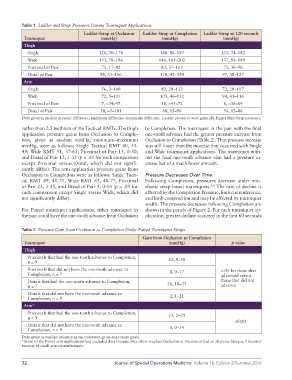
Table 1  Ladder and Strap Pressures During Tourniquet Applications
                                    Ladder–Strap at Occlusion   Ladder–Strap at Completion   Ladder–Strap at 120-seconds
           Tourniquet                      (mmHg)                   (mmHg)                   (mmHg)
           Thigh
            Single                        126, 70–178              140, 86–197              125, 74–182
            Wide                          133, 78–186              144, 105–202             137, 92–189
            Proximal of Pair               75, 17–92                83, 37–103               75, 30–96
            Distal of Pair                98, 31–156               110, 42–150               97, 38–127
           Arm
            Single                         56, 2–100                82, 28–133               72, 28–107
            Wide                           72, 5–101               105, 46–132               94, 41–116
            Proximal of Pair               7, –34–47                16, –45–72               8, –36–64
            Distal of Pair                58, –5–101                60, 15–96                54, 12–86
          Data given as median pressure difference, minimum difference–maximum difference. Ladder pressures were generally higher than Strap pressures.
          rather than 2.5 teeth/cm of the Tactical RMTs. The thigh   to Completion. The tourniquet in the pair with the final
          application pressure gains from Occlusion to Comple-  one-tooth advance had the greater pressure increase from
          tion, given as median mmHg, minimum– maximum       Occlusion to Completion (Table 2). That pressure increase
          mmHg, were as follows: Single Tactical RMT 40, 33-  was still lower than the increase that occurred with Single
          49; Wide RMT 51, 37-65; Proximal of Pair 15, 0-30;   and Wide tourniquet applications. The tourniquet with-
          and Distal of Pair 13, 1-35 (p < .05 for each comparison   out the final one-tooth advance also had a pressure in-
          except Proximal  versus Distal, which did not signifi-  crease but of a much lower amount.
          cantly differ). The arm application pressure gains from
          Occlusion to Completion were as follows: Single Tacti-  Pressure Decreases Over Time
          cal RMT 49, 41-71, Wide RMT 63, 48-77, Proximal    Following  Completion,  pressures  decrease  under  non-
          of Pair 23, 2-35, and Distal of Pair 3, 0-14 (p < .05 for   elastic strap-based tourniquets.  The rate of decline is
                                                                                        5,8
          each comparison except Single versus Wide, which did   affected by the Completion Pressure, limb circumference,
          not significantly differ).                         and limb composition and may be affected by tourniquet
                                                             width. The pressure decreases following Completion are
          For  Paired  tourniquet  applications,  either tourniquet  in   shown in the panels of Figure 2. For each tourniquet ap-
          the pair could have the one-tooth advance from Occlusion   plication, greater decline occurred in the first 60 seconds

          Table 2  Pressure Gain from Occlusion to Completion Under Paired Tourniquet Straps
                                                            Gain from Occlusion to Completion
           Tourniquet                                                  (mmHg)                    p value
           Thigh
            Proximals that had the one-tooth advance to Completion,    22, 9–30
            n = 9
            Proximals that did not have the one-tooth advance to       8, 0–17              <.05 for those that
            Completion, n = 7                                                               advanced versus
            Distals that had the one-tooth advance to Completion,     26, 18–35             those that did not
            n = 7                                                                           advance
            Distals that did not have the one-tooth advance to         2, 1–21
            Completion, n = 9
           Arm*
            Proximals that had the one-tooth advance to Completion,    23, 2–35
            n = 9
                                                                                                  .0020
            Distals that did not have the one-tooth advance to         3, 0–14
            Completion, n = 9
          Data given as median pressure gains, minimum gains–maximum gains.
          *Seven of the Paired arm applications had excluded data because they either reached Occlusion at Friction or had an alternate Strap cuff location
          because of small arm circumferences.


          32                                    Journal of Special Operations Medicine  Volume 16, Edition 2/Summer 2016

