


Page 123 - Journal of Special Operations Medicine - Spring 2016
P. 123
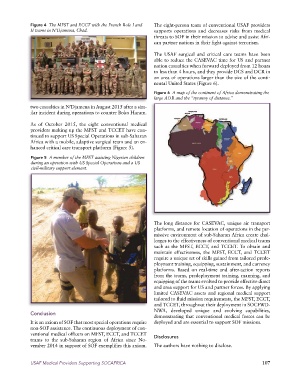
Figure 4  The MFST and ECCT with the French Role I and   The eight-person team of conventional USAF providers
              II teams in N’Djamena, Chad.                       supports operations and decreases risks from medical
                                                                 threats to SOF in their mission to advise and assist Afri-
                                                                 can partner nations in their fight against terrorism.

                                                                 The USAF surgical and critical care teams have been
                                                                 able to reduce the CASEVAC time for US and partner
                                                                 nation casualties when forward deployed from 12 hours
                                                                 to less than 4 hours, and they provide DCS and DCR in
                                                                 an area of operations larger than the size of the conti-
                                                                 nental United States (Figure 6).
                                                                 Figure 6  A map of the continent of Africa demonstrating the
                                                                 large AOR and the “tyranny of distance.”

              two casualties in N’Djamena in August 2015 after a sim-
              ilar incident during operations to counter Boko Haram.

              As of October 2015, the eight conventional medical
              providers making up the MFST and TCCET have con-
              tinued to support US Special Operations in sub-Saharan
              Africa with a mobile, adaptive surgical team and an en-
              hanced critical care transport platform (Figure 5).

              Figure 5  A member of the MFST assisting Nigerien children
              during an operation with US Special Operations and a US
              civil-military support element.


                                                                 The long distance for CASEVAC, unique air transport
                                                                 platforms, and remote location of operations in the per-
                                                                 missive environment of sub-Saharan Africa create chal-
                                                                 lenges to the effectiveness of conventional medical teams
                                                                 such as the MFST, ECCT, and TCCET. To obtain and
                                                                 maintain effectiveness, the MFST, ECCT, and TCCET
                                                                 require a unique set of skills gained from tailored prede-
                                                                 ployment training, equipping, sustainment, and currency
                                                                 platforms. Based on real-time and after-action reports
                                                                 from the teams, predeployment training, manning, and
                                                                 equipping of the teams evolved to provide effective direct
                                                                 and area support for US and partner forces. By applying
                                                                 limited CASEVAC assets and regional medical support
                                                                 tailored to fluid mission requirements, the MFST, ECCT,
                                                                 and TCCET, throughout their deployment in SOCFWD-
                                                                 NWA, developed unique and evolving capabilities,
              Conclusion
                                                                 demonstrating that conventional medical forces can be
              It is an axiom of SOF that most special operations require   deployed and are essential to support SOF missions.
              non-SOF assistance. The continuous deployment of con-
              ventional medical officers on MFST, ECCT, and  TCCET   Disclosures
              teams to the sub-Saharan region of Africa since No-
              vember 2014 in support of SOF exemplifies this axiom.   The authors have nothing to disclose.


              USAF Medical Providers Supporting SOCAFRICA                                                    107

