


Page 120 - Journal of Special Operations Medicine - Spring 2016
P. 120
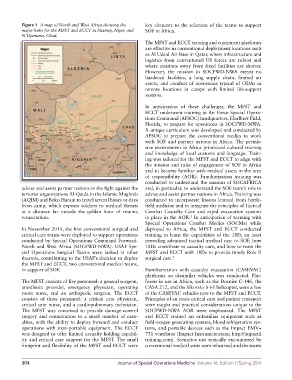
Figure 1  A map of North and West Africa showing the   key   elements  to  the  selection  of  the  teams  to  support
          major hubs for the MFST and ECCT in Niamey, Niger, and   SOF in Africa.
          N’Djamena, Chad.
                                                             The MFST and ECCT training and equipment platforms
                                                             are effective in conventional deployment locations such
                                                             as Al Udeid Air Base in Qatar, where infrastructure and
                                                             logistics from conventional US forces are robust and
                                                             where missions  away from  fixed facilities  are shorter.
                                                             However, the mission in SOCFWD-NWA meant no
                                                             hardened facilities, a long supply chain, limited air
                                                             assets, and conduct of operations typical of ODAs in
                                                             remote locations in camps with limited life-support
                                                             systems.

                                                             In anticipation of these  challenges,  the MFST and
                                                             ECCT underwent training at Air Force Special Opera-
                                                             tions Command (AFSOC) headquarters, Hurlburt Field,
                                                             Florida, to prepare for operations in SOCFWD-NWA.
                                                             A unique curriculum was developed and conducted by
                                                             AFSOC to prepare the conventional medics to work
                                                             with SOF and partner nations in Africa. The permis-
                                                             sive environment in Africa prioritized cultural training
                                                             and knowledge of local customs and language. Train-
                                                             ing was tailored for the MFST and ECCT to align with
                                                             the mission and rules of engagement of SOF in Africa
                                                             and to become familiar with medical assets in the area
                                                             of responsibility (AOR). Familiarization training was
                                                             conducted to understand the mission of SOCAFRICA
          advise and assist partner nations in the fight against the   and, in particular, to understand the SOF team’s role to
          terrorist organizations Al-Qaida in the Islamic Maghreb   advise and assist partner nations in Africa. Training was
          (AQIM) and Boko Haram to travel several hours or days   conducted to incorporate lessons learned from battle-
          from camp, which exposes soldiers to medical threats   field medicine and to integrate the principles of Tactical
          at a distance far outside the golden hour of trauma   Combat Casualty Care and rapid evacuation systems
          resuscitation.                                     in place in the AOR.  In anticipation of teaming with
                                                                                2
                                                             Special Operations Combat Medics (SOCMs) while
          In November 2014, the first conventional surgical and   deployed to Africa, the MFST and ECCT conducted
          critical care teams were deployed to support operations   training to learn the capabilities of the 18D, an asset
          conducted by Special Operations Command Forward-   providing advanced tactical medical care to SOF, how
          North and West Africa (SOCFWD-NWA). USAF Spe-      18Ds contribute to casualty care, and how to team the
          cial  Operations  Surgical  Teams  were  tasked  in  other   MFST and ECCT with 18Ds to provide timely Role II
          theaters, contributing to the USAF’s decision to deploy   surgical care. 3
          the MFST and ECCT, two conventional medical teams,
          in support of SOF.                                 Familiarization  with  casualty evacuation  (CASEVAC)
                                                             platforms on dissimilar vehicles was conducted. Plat-
          The MFST consists of five personnel: a general surgeon,   forms in use in Africa, such as the Dornier C-146, the
          anesthesia provider, emergency physician, operating   CASA 212, and the Sikorsky S-61 helicopter, were a few
          room  nurse,  and  an  orthopedic  surgeon.  The  ECCT   of the CASEVAC vehicles new to the MFST and ECCT.
          consists  of three personnel: a critical  care physician,   Principles of en route critical care and patient transport
          critical care nurse, and a cardiopulmonary technician.   were taught and practical considerations unique to the
          The MFST was conceived to provide damage-control   SOCFWD-NWA AOR were emphasized. The MFST
          surgery and resuscitation to a small number of casu-  and ECCT trained on unfamiliar equipment such as
          alties, with the ability to deploy forward and conduct   field oxygen generating systems, blood refrigeration sys-
          operations with man-portable equipment. The ECCT   tems, and portable devices such as the Impact EMV+
          was designed to offer limited casualty holding capabil-  731 ventilator (Impact Instrumentation; http://impactii
          ity and critical care support for the MFST. The small   training.com). Scenarios not typically encountered by
          footprint and flexibility of the MFST and ECCT were   conventional medical units were rehearsed and the teams


          104                                     Journal of Special Operations Medicine  Volume 16, Edition 1/Spring 2016

