


Page 81 - Journal of Special Operations Medicine - Winter 2015
P. 81
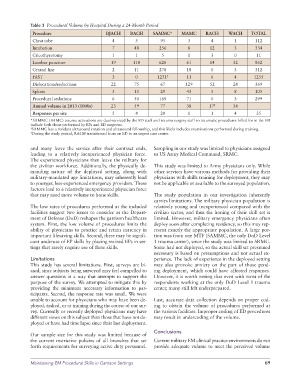
Table 3  Procedural Volume by Hospital During a 24-Month Period
              Procedure                      BJACH     BACH     SAMMC*      MAMC      RACH     WACH      TOTAL
              Chest tube                       4         5         95          3        4         1       112
              Intubation                       7        48         256         8        12        3       334
              Cricothyrotomy                   1         1          5          1        3         0        11
              Lumbar puncture                  19       110        626        61        14       32       862
              Central line                     2        11         278        18        0         3       312
              FAST                             3         0        1231 †      11        6         4       1255
              Dislocations/reductions          22       75         67         129       52       24       369
              Splints                          5        15         29         43        5         8       105
              Procedural sedations             6        50         169        71        0         3       299
              Annual volume in 2013 (1000s)    23       59         77         38       17 ‡      34
              Responses per site               5         4         20          1        1         4        35
              *SAMMC (BAMC) trauma activations are dual-serviced by the ED staff and trauma surgery staff so traumatic procedures billed for in the ED
              include both those performed by EPs and ED surgeons.
              † SAMMC has a resident ultrasound rotation and ultrasound fellowship, and this likely includes examinations performed during training.
              ‡ During the study period, RACH transitioned from an ED to an urgent care center.

              and  many leave  the  service  after  their  contract  ends,     Sampling in our study was limited to physicians assigned
              leading to a relatively inexperienced physician force.   to US Army Medical Command, SRMC.
              The experienced  physicians then leave the military for
              the civilian workforce. Additionally, the physically de-  This study was limited to Army physicians only. While
              manding nature of the deployed setting, along with   other services have various methods for providing their
              military-mandated age limitations, may inherently lead   physicians with skills training for deployment, they may
              to younger, less-experienced emergency providers. These   not be applicable or available to the surveyed population.
              factors lead to a relatively inexperienced physician force
              that may need more volume to hone skills.          The  study  population  in  our  investigation  inherently
                                                                 carries limitations. The military physician population is
              The low rates of procedures performed at the included   relatively young and inexperienced compared with the
              facilities suggest two issues to consider as the Depart-  civilian sector, and thus the honing of their skill set is
              ment of Defense (DoD) reshapes the garrison healthcare   limited. However, military emergency physicians often
              system. First, the low volume of procedures limits the   deploy soon after completing residency, so this may rep-
              ability of physicians to practice and retain currency in   resent exactly the appropriate population. A large por-
              important lifesaving skills. Second, there may be signifi-  tion was from one MTF (SAMMC, the only DoD Level
              cant underuse of EP skills by placing trained EPs in set-  1 trauma center), since the study was limited to SRMC.
              tings that rarely require use of these skills.     Some had not deployed, so the actual skill set presumed
                                                                 necessary is based on presumptions and not actual ex-
              Limitations                                        perience. The lack of experience in the deployed setting
              This study has several limitations. First, surveys are bi-  may also provoke anxiety on the part of those pend-
              ased, since subjects being surveyed may feel compelled to   ing deployment, which could have affected responses.
              answer questions in a way that attempts to support the   However, it is worth noting that even with most of the
              purpose of the survey. We attempted to mitigate this by   respondents working at the only DoD Level 1 trauma
              providing the minimum necessary information to par-  center, many still felt underprepared.
              ticipants. Second, the response rate was small. We were
              unable to account for physicians who may have been de-  Last, accurate data collection depends on proper cod-
              ployed, tasked, or at training during the course of our sur-  ing to obtain the volume of procedures performed at
              vey. Currently or recently deployed physicians may have   the various facilities. Improper coding of ED procedures
              different views on this subject than those that have not de-  may result in undercoding of the volume.
              ployed or have had time lapse since their last deployment.

                                                                 Conclusions
              Our sample size for this study was limited because of
              the current restrictive policies of all branches that set   Current military EM clinical practice environments do not
              forth requirements for surveying active duty personnel.   provide adequate volume to meet the perceived volume


              Maintaining EM Procedural Skills in Garrison Settings                                           69

