


Page 120 - Journal of Special Operations Medicine - Winter 2014
P. 120
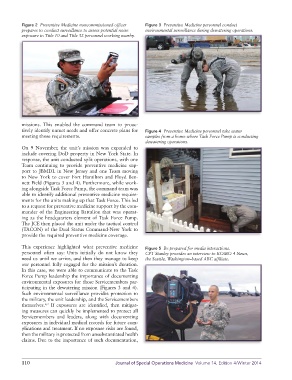
Figure 2  Preventive Medicine noncommissioned officer   Figure 3  Preventive Medicine personnel conduct
          prepares to conduct surveillance to assess potential noise   environmental surveillance during dewatering operations.
          exposure to Title 10 and Title 32 personnel working nearby.


          missions.  This  enabled  the  command  team  to  proac-
          tively identify unmet needs and offer concrete plans for   Figure 4  Preventive Medicine personnel take water
          meeting those requirements.                        samples from a home where Task Force Pump is conducting
                                                             dewatering operations.
          On 9 November, the unit’s mission was expanded to
          include covering DoD property in New York State. In
          response, the unit conducted split operations, with one
          Team continuing to provide preventive medicine sup-
          port to JBMDL in New Jersey and one Team moving
          to New York to cover Fort Hamilton and Floyd Ben-
          nett Field (Figures 3 and 4). Furthermore, while work-
          ing alongside Task Force Pump, the command team was
          able to identify additional preventive medicine require-
          ments for the units making up that Task Force. This led
          to a request for preventive medicine support by the com-
          mander of the Engineering Battalion that was operat-
          ing as the headquarters element of Task Force Pump.
          The JCE then placed the unit under the tactical control
          (TACON) of the Dual Status Command-New York to
          provide the required preventive medicine coverage.

          This experience highlighted what preventive medicine   Figure 5  Be prepared for media interactions.
          personnel often say: Units initially do not know they   CPT Stanley provides an interview to KOMO 4 News,
          need us until we arrive, and then they manage to keep   the Seattle, Washington–based ABC affiliate.
          our personnel fully engaged for the mission’s duration.
          In this case, we were able to communicate to the Task
          Force Pump leadership the importance of documenting
          environmental exposures for those Servicemembers par-
          ticipating in the dewatering mission (Figures 3 and 4).
          Such environmental surveillance provides protection to
          the military, the unit leadership, and the Servicemembers
          themselves.  If exposures are identified, then mitigat-
                    6,7
          ing measures can quickly be implemented to protect all
          Servicemembers and leaders, along with documenting
          exposures in individual medical records for future com-
          plications and treatment. If no exposure risks are found,
          then the military is protected from unsubstantiated health
          claims. Due to the importance of such documentation,


          110                                    Journal of Special Operations Medicine  Volume 14, Edition 4/Winter 2014

