


Page 61 - Journal of Special Operations Medicine - Spring 2014
P. 61
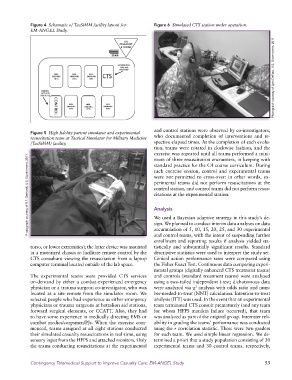
Figure 4  Schematic of TacSiMM facility layout for    Figure 6  Simulated CTS station under operation.
              EM-ANGEL Study.

                                                                                                                  Photograph courtesy of Lynn DeFato, U.S. Government, 2011


                                                                 and control stations were observed by co-investigators,
              Figure 5  High-fidelity patient simulator and experimental
              resuscitation team at Tactical Simulator for Military Medicine   who documented completion of interventions and re-
              (TacSiMM) facility.                                spective elapsed times. At the completion of each evolu-
                                                                 tion, teams were rotated in clockwise fashion, and the
                                                                 exercise was repeated until all teams performed a mini-
            Photograph courtesy of R.T. Gerhardt, U.S. Government, 2011  were not permitted to cross-over: in other words, ex-
                                                                 mum of three resuscitation encounters, in keeping with
                                                                 standard practice for the C4 course curriculum. During
                                                                 each  exercise session, control and  experimental teams

                                                                 perimental teams did not perform resuscitations at the
                                                                 control station, and control teams did not perform resus-
                                                                 citations at the experimental station.


                                                                 Analysis
                                                                 We used a Bayesian adaptive strategy in this study’s de-
                                                                 sign. We planned to conduct interim data analyses on data
                                                                 accumulation of 5, 10, 15, 20, 25, and 30 experimental
                                                                 and control teams, with the intent of suspending further
                                                                 enrollment and reporting results if analysis yielded sta-
              torso, or lower extremities); the latter device was mounted   tistically and substantially significant results. Standard
              in a motorized chassis to facilitate remote control by the   descriptive statistics were used to interpret the study set.
              CTS consultant viewing the resuscitation from a laptop   Critical action performance rates were compared using
              computer terminal located outside of the lab space.  the Fisher Exact Test. Continuous data comparing experi-
                                                                 mental groups (digitally enhanced CTS treatment teams)
              The  experimental teams  were  provided  CTS  services   and controls (standard treatment teams) were analyzed
              on-demand by either a combat-experienced emergency   using a two-tailed independent t-test; dichotomous data
              physician or a trauma surgeon co-investigator, who was   were analyzed via χ  analysis with odds ratio and num-
                                                                                  2
              located at a site remote from the simulator room. We   ber-needed-to-treat (NNT) calculation. Intention-to-treat
              selected people who had experience as either emergency   analysis (ITT) was used. In the event that an experimental
              physicians or trauma surgeons at battalion aid stations,   team terminated CTS consult prematurely (and any team
              forward surgical elements, or CCATT. Also, they had   for  whom  HFPS  manikin  failure  occurred),  that  team
              to have some experience in medically directing EMS or   was analyzed as part of the original group. Interrater reli-
              combat medics/corpsmen/PJs. When the exercise com-  ability in grading the teams’ performance was conducted
              menced, teams assigned at all eight stations conducted   using the r correlation statistic. There were two graders
              their simulated casualty resuscitations in real-time, using    for each team. We used simple linear regression. We de-
              sensory input from the HFPS and attached monitors. Only   termined a priori that a study population consisting of 30
              the teams conducting resuscitations at the experimental   experimental teams and 30 control teams, respectively,


              Contingency Telemedical Support to Improve Casualty Care: EM-ANGEL Study                        53

