


Page 50 - Journal of Special Operations Medicine - Spring 2014
P. 50
™
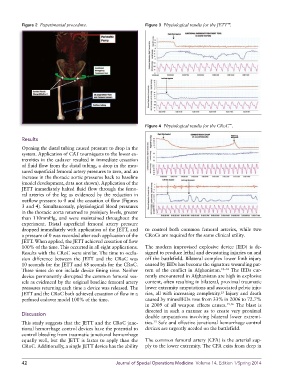
          Figure 2  Experimental procedure.                  Figure 3  Physiological results for the JETT .


                                                             Figure 4  Physiological results for the CRoC .
                                                                                                ™
          Results
          Opening the distal tubing caused pressure to drop in the
          system. Application of CAT tourniquets to the lower ex-
          tremities in the cadaver resulted in immediate cessation
          of fluid flow from the distal tubing, a drop in the mea-
          sured superficial femoral artery pressures to zero, and an
          increase in the thoracic aortic pressures back to baseline
          (model development, data not shown). Application of the
          JETT immediately halted fluid flow through the femo-
          ral arteries of the leg as evidenced by the reduction in
          outflow pressure to 0 and the cessation of flow (Figures
          3 and 4). Simultaneously, physiological blood pressures
          in the thoracic aorta returned to preinjury levels, greater
          than 110mmHg, and were maintained throughout the
          experiment. Distal superficial femoral artery pressure
          dropped immediately with application of the JETT, and   to control both common femoral arteries, while two
          a pressure of 0 was recorded after each application of the   CRoCs are required for the same clinical utility.
          JETT. When applied, the JETT achieved cessation of flow
          100% of the time. This occurred in all eight applications.   The modern improvised explosive device (IED) is de-
          Results with the CRoC were similar. The time to occlu-  signed to produce lethal and devastating injuries on and
          sion difference between the JETT and the CRoC was   off the battlefield. Bilateral complex lower limb injury
          10 seconds for the JETT and 68 seconds for the CRoC.   caused by IEDs has become the signature wounding pat-
          These times do not include device fitting time. Neither   tern of the conflict in Afghanistan. 10–14  The IEDs cur-
          device permanently disrupted the common femoral ves-  rently encountered in Afghanistan are high in explosive
          sels as evidenced by the original baseline femoral artery   content, often resulting in bilateral, proximal traumatic
          pressures returning each time a device was released. The   lower extremity amputations and associated pelvic inju-
                                                                                            15
          JETT and the CRoC both achieved cessation of flow in a   ries, all with increasing complexity.  Injury and death
          perfused cadaver model 100% of the time.           caused by mines/IEDs rose from 33% in 2006 to 72.7%
                                                             in 2009 of all weapon effects causes. 15,16  The blast is
                                                             directed in such a manner as to create very proximal
          Discussion
                                                             double amputations involving bilateral lower extremi-
          This study suggests that the JETT and the CRoC junc-  ties.  Safe and effective junctional hemorrhage control
                                                                15
          tional hemorrhage control devices have the potential to   devices are urgently needed on the battlefield.
          control bleeding from traumatic junctional hemorrhage
          equally well, but the JETT is faster to apply than the   The common femoral artery (CFA) is the arterial sup-
          CRoC. Additionally, a single JETT device has the  ability   ply to the lower extremity. The CFA exits from deep in


          42                                     Journal of Special Operations Medicine  Volume 14, Edition 1/Spring 2014

