


Page 43 - Journal of Special Operations Medicine - Spring 2014
P. 43
complicating factor could be that if the resource limita-  confusion on the field. Either immediate patients have
              tions (S) are at a medium level, providers must switch   priority over delayed patients all the time or delayed pa-
              priorities between the immediate and the delayed at   tients have priority over the immediate patients all the
              some time during the response effort. It may be the case   time. Second, the formulas that determine which one of
              that a policy that maintains the same priority all the   the two prioritization scheme to be used involves the
              time would be easier to implement. To give providers   total number of critical patients (I+D), not necessarily
              this option, we propose Simple-ReSTART, which is de-  the respective numbers in each class, making the method
              termined from ReSTART by dividing region C, which   more robust with respect to classification errors across
              corresponds to medium level of resource scarcity (region   the two classes, which can lead to incorrect estimates for
              C in Figure 2) into two, designating one part as belong-  I and D, but not their sum I + D.
              ing to region A, where resources are severely limited,
              and the other as belonging to region B, where resources   Demonstration of Prioritization
              are not restrictive. See Figure 4 for a visual depiction   Policies via an Example
              of the model behind Simple-ReSTART. Specifically, the   We now use an example to compare three prioritization
              steps for applying Simple-ReSTART are as follows:  methods: START, ReSTART, and Simple-ReSTART. We
                                                                 deliberately chose an example so that all three methods
              Step 1: Classify patients according to the START criteria.  will prescribe a different set of actions. In this hypothetical
                                                                 example, police and emergency medical services pro-
              Step 2: Determine the priorities among the immediate   viders have responded to a mass shooting at a crowded
              and delayed patients as follows:
                                                                 theater where people are watching a play. The theater is
                                                                 located 15 minutes from the only trauma center in the
                 (I)   If I + D > 2VT/R, transport all the delayed pa-  area. Ten ambulances are able to stage adjacent to the
                    tients first and then the immediate.
                                                                 theater, but it takes ten minutes to secure the area and
                 (II)  If I + D ≤ 2VT/R, transport all the immediate   gain access to the theater. Two mutual aid ambulances
                    patients first and then the delayed.         are also dispatched at the time of the incident, but it will
                                                                 take about 30 minutes for them to arrive. About 200 ad-
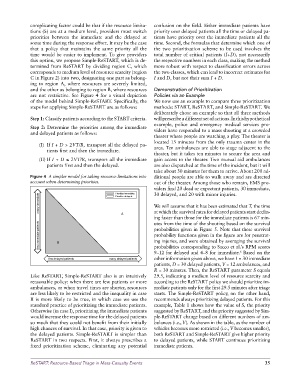
             Figure 4  A simpler model for taking resource limitations into   ditional people are able to walk away and are directed
             account when determining priorities.                out of the theater. Among those who remain, EMS pro-
                                                                 viders find 20 dead or expectant patients, 30 immediate,
                                                                 30 delayed, and 20 with minor injuries.
                                                 Prioritize immediate.
                 many immediate                  Prioritize delayed.  We will assume that it has been estimated that T, the time

                                                                 at which the survival rates for delayed patients start declin-
                                                   A
                                                                 ing faster than those for the immediate patients is 67 min-
                 few immediate patients       B                  utes from the time of the shooting based on the survival
                                                                 probabilities given in Figure 5. Note that these survival
                                                                 probability functions given in the figure are for penetrat-
                                                                 ing injuries, and were obtained by averaging the survival
                                                                 probabilities corresponding to Sacco et al.’s RPM scores
                                                                 9–12 for delayed and 4–8 for immediate.  Based on the
                                                                                                    6
                     few delayed patients                                              many delayed patients  other information given above, we have I = 30 immediate
                                                                 patients, D = 30 delayed patients, V = 12 ambulances, and
                                                                 R = 30 minutes. Then, the ReSTART parameter S equals
              Like ReSTART, Simple-ReSTART also is an intuitively   29.5, indicating a medium level of resource scarcity and
              reasonable policy: when there are few patients or more   according to the ReSTART policy we should prioritize im-
              ambulances, or when travel times are shorter, resources   mediate patients only for the first 29.5 minutes after triage
              are less likely to be restricted and the inequality in case   starts. The Simple-ReSTART policy, on the other hand,
              II is more likely to be true, in which case we use the   recommends always prioritizing delayed patients. For this
              standard practice of prioritizing the immediate patients.   example, Table 1 shows how the value of S, the priority
              Otherwise (in case I), prioritizing the immediate patients   suggested by ReSTART, and the priority suggested by Sim-
              would increase the response time for the delayed patients   ple-ReSTART change based on different numbers of am-
              so much that they could not benefit from their initially   bulances (i.e., V). As shown in the table, as the number of
              high chances of survival. In that case, priority is given to   vehicles becomes more restricted (i.e., V becomes smaller),
              the delayed patients. Simple-ReSTART is simpler than   both ReSTART and Simple-ReSTART give higher priority
              ReSTART in two respects. First, it always prescribes a   to delayed patients, while START continues prioritizing
              fixed prioritization scheme, eliminating any potential   immediate patients.


              ReSTART: Resource-Based Triage in Mass-Casualty Events                                          35

