


Page 71 - ATP-P 11th Ed
P. 71
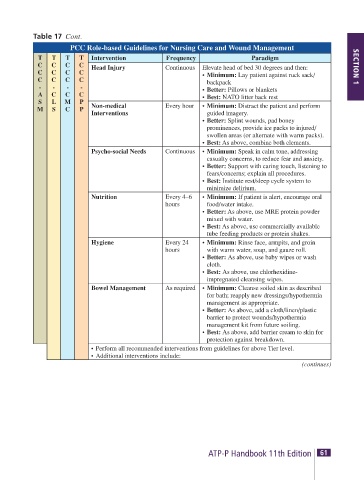
Table 17  Cont.
                PCC Role-based Guidelines for Nursing Care and Wound Management
         T   T   T    T  Intervention  Frequency        Paradigm
         C   C   C   C   Head Injury  Continuous  Elevate head of bed 30 degrees and then:  SECTION 1
         C   C   C   C                       • Minimum: Lay patient against ruck sack/
         C  C  C  C                           backpack
          -   -   -   -                      • Better: Pillows or blankets
         A   C   C   C                       • Best: NATO litter back rest
         S   L   M   P
         M  S  C  P  Non-medical     Every hour  • Minimum: Distract the patient and perform
                     Interventions            guided imagery.
                                             • Better: Splint wounds, pad boney
                                                prominences, provide ice packs to injured/
                                              swollen areas (or alternate with warm packs).
                                             • Best: As above, combine both elements.
                     Psycho-social Needs  Continuous  • Minimum: Speak in calm tone, addressing
                                              casualty concerns, to reduce fear and anxiety.
                                             • Better: Support with caring touch, listening to
                                              fears/concerns; explain all procedures.
                                             • Best: Institute rest/sleep cycle system to
                                              minimize delirium.
                     Nutrition       Every 4–6  • Minimum: If patient is alert, encourage oral
                                     hours    food/water intake.
                                             • Better: As above, use MRE protein powder
                                              mixed with water.
                                             • Best: As above, use commercially available
                                              tube feeding products or protein shakes.
                     Hygiene         Every 24  • Minimum: Rinse face, armpits, and groin
                                     hours    with warm water, soap, and gauze roll.
                                             • Better: As above, use baby wipes or wash
                                              cloth.
                                             • Best: As above, use chlorhexidine-
                                              impregnated cleansing wipes.
                     Bowel Management  As required  • Minimum: Cleanse soiled skin as described
                                              for bath; reapply new dressings/hypothermia
                                              management as appropriate.
                                             • Better: As above, add a cloth/linen/ plastic
                                              barrier to protect wounds/hypothermia
                                                management kit from future soiling.
                                             • Best: As above, add barrier cream to skin for
                                              protection against breakdown.
                     • Perform all recommended interventions from guidelines for above Tier level.
                     • Additional interventions include:
                                                                   (continues)


   60  SECTION 1   TACTICAL TRAUMA PROTOCOLS (TTPs)     ATP-P Handbook 11th Edition  61

