


Page 381 - ATP-P 11th Ed
P. 381
5.  Respiration/Breathing:
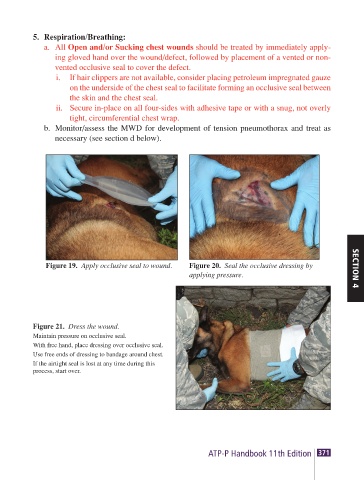
           a.  All Open and/or Sucking chest wounds should be treated by immediately apply-
             ing gloved hand over the wound/defect, followed by placement of a vented or non-
             vented occlusive seal to cover the defect.
             i.  If hair clippers are not available, consider placing petroleum impregnated gauze
                on the underside of the chest seal to facilitate forming an occlusive seal between
                the skin and the chest seal.
             ii.  Secure in-place on all four-sides with adhesive tape or with a snug, not overly
                tight, circumferential chest wrap.
           b.  Monitor/assess the MWD for development of tension pneumothorax and treat as
             necessary (see section d below).


           Figure 19.  Apply occlusive seal to wound.  Figure 20.  Seal the occlusive dressing by   SECTION 4
                                          applying pressure.


        Figure 21.  Dress the wound.
        Maintain pressure on occlusive seal.
        With free hand, place dressing over occlusive seal.
        Use free ends of dressing to bandage around chest.
        If the airtight seal is lost at any time during this
        process, start over.


                                              ATP-P Handbook 11th Edition 371

