


Page 41 - JSOM Spring 2026
P. 41
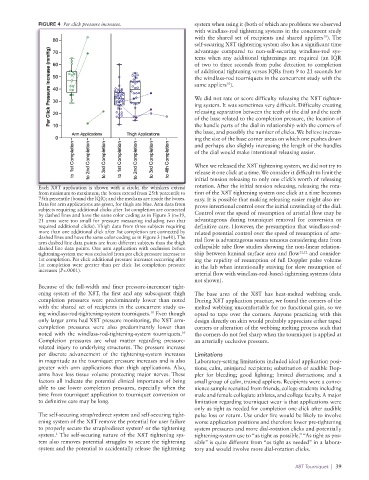
FIGURE 4  Per click pressure increases.            system when using it (both of which are problems we observed
                                                                 with windlass-rod tightening systems in the concurrent study
                                                                 with the shared set of recipients and shared appliers ). The
                                                                                                           10
                                                                 self-securing X8T tightening system also has a significant time
                                                                 advantage compared to non-self-securing windlass-rod sys-
                                                                 tems  when  any  additional  tightenings  are  required  (an  IQR
                                                                 of two to three seconds from pulse detection to completion
                                                                 of additional tightening versus IQRs from 9 to 21 seconds for
                                                                 the windlass-rod tourniquets in the concurrent study with the
                                                                 same appliers ).
                                                                           10
                                                                 We did not rate or score difficulty releasing the X8T tighten-
                                                                 ing system. It was sometimes very difficult. Difficulty creating
                                                                 releasing separation between the teeth of the dial and the teeth
                                                                 of the base related to the completion pressure, the location of
                                                                 the handle parts of the dial in relationship with the corners of
                                                                 the base, and possibly the number of clicks. We believe increas-
                                                                 ing the size of the base corner areas on which one pushes down
                                                                 and perhaps also slightly increasing the length of the handles
                                                                 of the dial would make intentional releasing easier.

                                                                 When we released the X8T tightening system, we did not try to
                                                                 release it one click at a time. We consider it difficult to limit the
                                                                 initial tension releasing to only one click’s worth of releasing
              Each X8T application is shown with a circle; the whiskers extend   rotation. After the initial tension releasing, releasing the rota-
              from minimum to maximum; the boxes extend from 25th percentile to   tion of the X8T tightening system one click at a time becomes
              75th percentile (bound the IQR); and the medians are inside the boxes.   easy. It is possible that making releasing easier might also im-
              Data for arm applications are green, for thigh are blue. Arm data from   prove intentional control over the initial unwinding of the dial.
              subjects requiring additional clicks after 1st completion are connected
              by dashed lines and have the same color coding as in Figure 3 (n=19,   Control over the speed of resumption of arterial flow may be
              21 arms were too small for pressure measuring including two that   advantageous during tourniquet removal for conversion or
              required additional clicks). Thigh data from three subjects requiring   definitive care. However, the presumption that windlass-rod-
              more than one additional click after 1st completion are connected by   related potential control over the speed of resumption of arte-
              dashed lines and have the same color coding as in Figure 3 (n=40). The   rial flow is advantageous seems tenuous considering data from
              arm dashed line data points are from different subjects than the thigh
              dashed line data points. One arm application with occlusion before   collapsible tube flow studies showing the non-linear relation-
              tightening-system use was excluded from per click pressure increase to   ship between luminal surface area and flow 11,12  and consider-
              1st completion. Per click additional pressure increases occurring after   ing the rapidity of resumption of full Doppler pulse volume
              1st completion were greater than per click 1st completion pressure   in the lab when intentionally striving for slow resumption of
              increases (P<.0001).
                                                                 arterial flow with windlass-rod-based-tightening systems (data
                                                                 not shown).
              Because of the full-width and finer pressure-increment tight-
              ening system of the X8T, the first and any subsequent thigh   The base area of the X8T has heat-melted webbing ends.
              completion pressures were predominantly lower than noted   During X8T application practice, we found the corners of the
              with the shared set of recipients in the concurrent study us-  melted webbing uncomfortable for no functional gain, so we
                                                  10
              ing  windlass-rod-tightening-system tourniquets.  Even though   opted to tape over the corners. Anyone practicing with this
              only larger arms had X8T pressure monitoring, the X8T arm-   design directly on skin would probably appreciate either taped
              completion  pressures  were  also  predominantly  lower  than   corners or alteration of the webbing melting process such that
                                                            10
              noted with the windlass-rod-tightening-system tourniquets.    the corners do not feel sharp when the tourniquet is applied at
              Completion pressures are what matter regarding pressure-   an arterially occlusive pressure.
              related injury to underlying structures. The pressure increase
              per discrete advancement of the tightening-system increases   Limitations
              in magnitude as the tourniquet pressure increases and is also   Laboratory-setting limitations included ideal application posi-
              greater with arm applications than thigh applications.  Also,   tions; calm, uninjured recipients; substitution of audible Dop-
              arms have less tissue volume protecting major nerves. These   pler for bleeding; good lighting; limited distractions; and a
              factors all indicate the potential clinical importance of being   small group of calm, trained appliers. Recipients were a conve-
              able to use lower completion pressures, especially when the   nience sample recruited from friends, college students including
              time from tourniquet application to tourniquet conversion or   male and female collegiate athletes, and college faculty. A major
              to definitive care may be long.                    limitation regarding tourniquet wear is that applications were
                                                                 only as tight as needed for completion one click after audible
              The self-securing strap/redirect system and self-securing tight-  pulse loss or return. Use under fire would be likely to involve
              ening system of the X8T remove the potential for user failure   worse application positions and therefore lower pre-tightening
              to properly secure the strap/redirect system  or the tightening   system pressures and more dial-rotation clicks and potentially
                                               1
              system.  The self-securing nature of the X8T tightening sys-  tightening-system use to “as tight as possible.” “As tight as pos-
                   1
              tem also removes potential struggles to secure the tightening   sible” is quite different from “as tight as needed” in a labora-
              system and the potential to accidentally release the tightening   tory and would involve more dial-rotation clicks.
                                                                                                 X8T Tourniquet  |  39

