


Page 79 - 2023 SMOG Digital
P. 79
CBRN


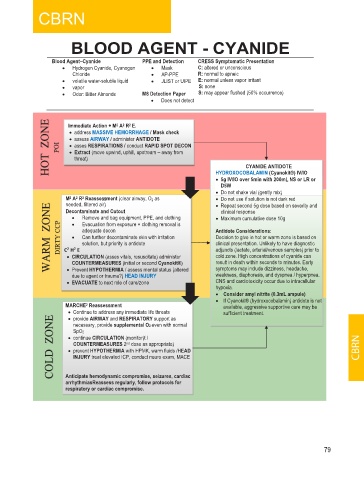
                BLOOD AGENT - CYANIDE

            Blood Agent–Cyanide   PPE and Detection   CRESS Symptomatic Presentation
               •  Hydrogen Cyanide, Cyanogen  •  Mask  C: altered or unconscious
                 Chloride         •  AP-PPE  R: normal to apneic
               •  volatile water-soluble liquid  •  JLIST or UIPE  E: normal unless vapor irritant
               •  vapor                     S: none
               •  Odor: Bitter Almonds  M8 Detection Paper   S: may appear flushed (50% occurrence)
                                  •  Does not detect
            HOT  ZONE   POI   Immediate Action + M 2  A 2  R 2  E.
                • address MASSIVE HEMORRHAGE / Mask check
                • assess AIRWAY / administer ANTIDOTE
                • asses RESPIRATIONS / conduct RAPID SPOT DECON
                • Extract (move upwind, uphill, upstream – away from
                 threat)
                                                      CYANIDE ANTIDOTE
                                                HYDROXOCOBALAMIN (Cyanokit®) IV/IO
                                                • 5g IV/IO over 5min with 200mL NS or LR or
                                                               L
                                                 D5W
                                                • Do not shake vial (gently mix)
               M 2  A 2  R 2  Reassessment (clear airway, O 2  as   • Do not use if solution is not dark red
                       s
                        s
            WARM  ZONE   DIRTY CCP   C  H  E  Remove and bag equipment, PPE, and clothing  • Maximum cumulative dose 10g
               needed, filtered air)
                                                • Repeat second 5g dose based on severity and
               Decontaminate and Cutout
                                                 clinical response
                 •
                   Evacuation from exposure + clothing removal is
                 •
                   adequate decon
                                                Antidote Considerations:
                   Can further decontaminate skin with irritation
                                                Decision to give in hot or warm zone is based on
                 •
                   solution, but priority is antidote
                                                clinical presentation. Unlikely to have diagnostic
                                                adjuncts (lactate, arterial/venous samples) prior to
                 2
                2
                                                cold zone. High concentrations of cyanide can
                • CIRCULATION (asses vitals, resuscitate) administer
                 COUNTERMEASURES (initial or second Cyanokit®)
                                                symptoms may include dizziness, headache,
                • Prevent HYPOTHERMIA / assess mental status (altered
                                                weakness, diaphoresis, and dyspnea / hyperpnea.
                 due to agent or trauma?) HEAD INJURY  result in death within seconds to minutes. Early
                • EVACUATE to next role of care/zone  CNS and cardiotoxicity occur due to intracellular
                                                hypoxia.
                                                • Consider amyl nitrite (0.3mL ampule)
                                                • If Cyanokit® (hydroxocobalamin) antidote is not
               MARCHE 2  Reassessment             available, aggressive supportive care may be
                • Continue to address any immediate life threats  sufficient treatment.
            COLD  ZONE  • continue CIRCULATION (monitor)t /                    CBRN
                • provide AIRWAY and RESPIRATORY support as
                 necessary, provide supplemental O2 even with normal
                 SpO2
                 COUNTERMEASURES 2 nd  dose as appropriate)
                • prevent HYPOTHERMIA with HPMK, warm fluids /HEAD
                 INJURY treat elevated ICP, conduct neuro exam, MACE
               Anticipate hemodynamic compromise, seizures, cardiac
               arrhythmiasReassess regularly, follow protocols for
               respiratory or cardiac compromise.
                                                                        79

