


Page 132 - JSOM Fall 2025
P. 132
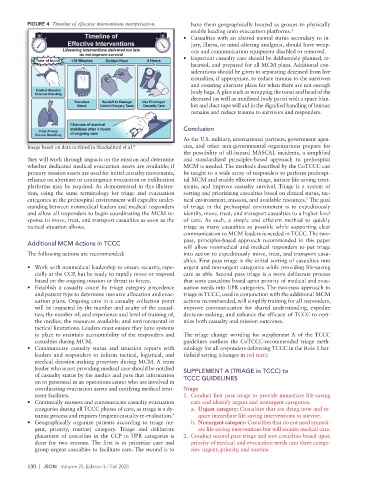
FIGURE 3  TCCC Triage 2025.                        Discussion
                                                                 The triage process should be simple and applicable across the
                                                                 range of military operations, all-hazards emergencies, and
                                                                 all-hazard MASCAL incidents. Terminology should align with
                                                                 commonly used operational language to ensure clarity and
                                                                 ease of adoption. Time is the ultimate triage tool, as such triage
                                                                 and categories may change when an injury worsens over time
                                                                 or  improves  with  medical  care. Accordingly,  there  are  three
                                                                 groups of casualties based on the current DoD medical evac-
                                                                 uation doctrine:
                                                                 1.  Casualties who are dying now and require immediate life-
                                                                   saving care (urgent)
                                                                 2.  Casualties who will die later without medical care (priority)
                                                                 3.  Casualties who will survive and require non-critical medi-
                                                                   cal care or who are expected to die due to their clinical sta-
                                                                   tus or due to medical, operational, or logistical constraints
                                                                   (routine)
              First Pass Triage
                                                                 Prehospital triage must categorize and prioritize casualties not
              First pass triage is defined as the initial sorting of casualties into   only for treatment but also for evacuation to a higher role of
              urgent and non-urgent categories while moving the casualties   care. To rapidly facilitate this, the principles-based approach
              out of danger and providing life-saving care as able. As soon   to triage in TCCC combines existing medical, evacuation, and
              as tactically feasible, responders should rapidly conduct first   international triage terminology with common terms of ref-
              pass triage to provide immediate life-saving care and identify   erence. This simplification improves communication between
              urgent and non-urgent categories. Simply put, during the first   nonmedical and medical responders since it is no longer nec-
              pass triage, casualties who are dying now and require immedi-  essary to translate medical triage terminology into evacuation
              ate life-saving interventions to survive should be categorized as   terminology, resulting in expedited triage decision-making and
              urgent. Remaining casualties who do not need immediate life-   driving actions that result in improved operations and casualty
              saving interventions but require medical care or are unlikely   care.
              to benefit from further intervention, should be categorized as
              non-urgent. The goals of first pass triage are to identify urgent   To illustrate this point, upon hearing that there is an urgent
              casualties and treat immediate life threats, primarily extremity   casualty, a medical responder will interpret this as a casualty
              or junctional bleeding and airway compromise. The focus is   who is suffering from life-threatening trauma. Timely life-sav-
              on efficiency to enable providers to evaluate all casualties as   ing medical interventions, such as applying limb tourniquets
              quickly as possible and not become overwhelmed in treatment   to control massive external bleeding and clearing the airway,
              of any individual casualty. It is also important to obtain an   may significantly improve the casualty’s chances of survival.
              initial understanding of the magnitude of the casualty situa-  These interventions may be provided expeditiously during first
              tion. First pass triage provides the information necessary for   pass triage, with the casualty being categorized as urgent. If the
              immediate evacuation coordination, communication, and sub-  patient is stabilized following these interventions, they may be
              sequent actions during second pass triage.         recategorized as priority during second pass triage. In contrast,
                                                                 another casualty may have non-compressible hemorrhage and
              Second Pass Triage                                 may survive only if blood transfusion is initiated within 36
                                                                 minutes and handoff to a surgical team occurs by 60 min-
              Second pass triage is defined as the overarching plan for sort-  utes.  This casualty may require an excessive amount of time
                                                                    4,8
              ing casualties based on the priority of medical and evacuation   and resources that may be required for other, potentially more
              needs into urgent, priority, and routine (UPR) categories. Sec-  survivable cases in this MASCAL event. This casualty may be
              ond pass triage is a more deliberate process that supports casu-  categorized as urgent during first pass triage, or perhaps (if
              alty evacuation while allowing continued care during ongoing   the injuries are clearly non-survivable) may be initially cate-
              MCM. These categories are defined as follows:      gorized as non-urgent. During the second pass triage, a more
                                                                 detailed assessment will occur, and, depending on the resource
              •  Urgent: High priority casualty with severe or critical life-   allocation, the patient may be categorized as urgent (resources
                threatening injury or illness who will only survive with im-  available) or routine (resources not available, expected to die)
                mediate surgery, rapid damage control resuscitation, or ad-  (Figure 4).
                vanced medical treatment.
              •  Priority:  Medium priority casualty with serious injury   However, receiving the same report of an urgent casualty, a
                or illness who will require surgery or advanced medical     nonmedical leader will interpret the casualty in a different way
                treatment at a delayed time (may include limb- and  eyesight-   and begin driving nonmedical actions to provide aid and litter
                threatening injuries).                           team, security, and casualty evacuation to the next role of care
              •  Routine: Low priority casualty with minimal injury or ill-  as soon as tactically feasible, prior to completing the mission.
                ness who will require additional medical treatment, or ex-  Further, a nonmedical leader upon hearing a casualty is cate-
                pectant casualty for whom life-saving interventions will be   gorized as routine will understand they may be evacuated at
                minimized.                                       a later time and may or may not require a litter. Additionally,


                                                                                                 Triage in TCCC  |  129

