


Page 108 - JSOM Fall 2025
P. 108
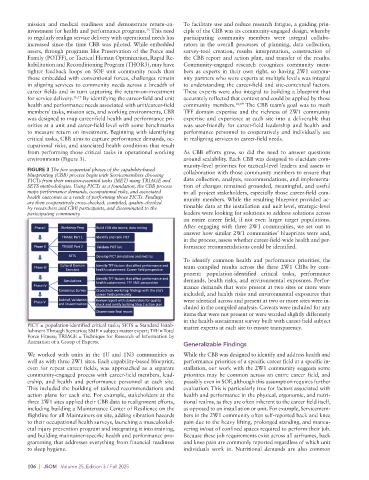
FIGURE 1  The Total Force Fitness (TFF) wheel shows the eight   FIGURE 2  The human performance optimization (HPO) spectrum
              domains key to enhancing performance and sustaining health.  highlights the range of capabilities associated with performing
                                                                 mission-essential tasks (MET) and the activities and personnel
                                                                 supporting Service members in each phase of recovery, restoration,
                                                                 prevention, and optimization.
                                                                    HPO Spectrum


                                                                   Performance   Optimization  Unit Mission
                                                                   Enhancement  Enhanced Ability   Essential
                                                                           to Perform MET
                                                                                        Task List
                                                                                        (METL)
                                                                                                       Build Individual
                                                                                                       Internal Resources
                                                                                                       to Exceed MET
                                                                                                       Demands
                                                                                       Warfighter
                                                                   Performance   Prevention  Mission
                                                                   Sustainment  Moderate/  Essential  Support agencies and medical               Embedded teams                Leaders, frontline supervisors, and peers
                                                                           Minimum Ability
                                                                           to Perform MET  Tasks       Reduce Individual
                                                                                                       Vulnerabilities that
                                                                                                       Impact Internal
                                                                                                       Resources to Match
                                                                                                       MET Demands
                                                                                                       Restore Individual
                                                                                                       Internal Resources
                                                                                                       to Match MET
              The first step to addressing health and performance needs is   Restoration               Demands
                                                                            Limited Ability
              to clearly identify those needs within context. This simple as-  Health   to Perform MET  Human
              sertion becomes increasingly complicated when applied to the   Sustainment  Recovery  Health
              U.S. Military as a whole, which encompasses numerous career   Limited Ability            Recover Individual
                                                                                                       Internal Resources
                                                                            to be Healthy
              fields working in dynamic environments on a vast scale. In                               to Meet Basic
                                                                                                       Health Needs
              an effort to meet the breadth and depth of health and perfor-
              mance needs across thousands of Servicemembers, career-field
              leadership, and health and performance personnel, researchers
              often turn to large sources of quantitative data, or “big data,”
              rather than qualitative or “thick” data. While this approach
              does allow for breadth in scope that leaves room for some
              specificity, it can lack the context often required to understand   airframes at three different installations from 2020 to 2023,
              nuanced relationships among the TFF domains or career-field   this article aims to address these questions, highlighting those
              considerations in context and may be divorced from commu-  areas within each TFF domain along the HPO spectrum that
              nity expertise and perspectives. 6–9               were common across sites and which components of the blue-
                                                                 print would likely require a careful look specific to context at
              Capability-based blueprinting (CBB) was built in an effort to   an installation level.
              address health and performance priorities from the bottom up,
              beginning with career-field and unit perspectives at an instal-  Background
              lation level.  With multiple capability-based blueprints com-
              pleted, several questions remained:                CBB was built in an effort to operationalize HPO and TFF and
                                                                 execute the priorities outlined in the 2018 National Defense
              •  Can a bottom up rather than top-down approach be effective?  Strategy.  It was an effort to facilitate health and performance
                                                                       10
              •  Is it possible to retain some level of specificity while also   personnel and unit/career-field leadership to cooperatively
                generalizing to the overall career field, particularly in an   address the health and performance priorities most impactful
                environment where limited time and resources make con-  to the mission readiness of those unit/career-field community
                ducting multiple capability-based blueprints less feasible?   members.  It also emerged in response to the growing avail-
                                                                        11
              •  Do needs identified at the career-field/unit level reflect needs   ability and placement of embedded health and performance
                at other installations within the same career fields working   assets. Embedded assets were placed to improve access but of-
                other missions, for example?                     ten came with a lack of clarity on what those assets should tar-
              •  Can a  capability-based blueprint for a specific unit/career   get and how to do so in alignment with the communities they
                field provide actionable insights for health and performance   were embedded in. 12,13  CBB was designed to equip career-field
                personnel, embedded assets, and career-field leadership that   leadership with information they could use to advocate for the
                is transferable?                                 needs of their own communities, while also providing those
              •  Can lessons learned through CBB with conventional forces   health and performance assets—many of whom have little or
                provide any corollaries for similar roles in a Special Opera-  no previous experience working with the military—with an
                tions Forces (SOF) community?                    entry point to address high-priority community needs. 14

              Using CBB conducted in collaboration with three Weapons Ar-  The ever-changing landscape of warfare has heightened calls for
              mament System (2W1) communities working on three different   health and performance programs to bridge the gap between

                                                        Scaling Community-Based Health and Performance Needs Assessments  |  105

