


Page 76 - JSOM Summer 2025
P. 76
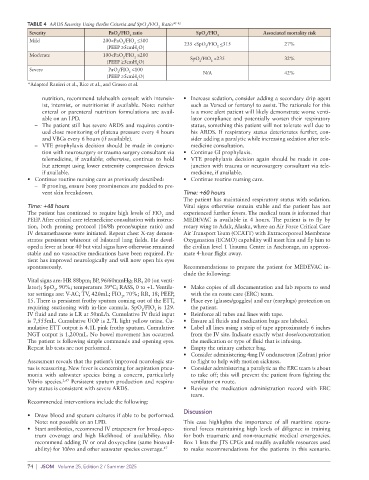
TABLE 4  ARDS Severity Using Berlin Criteria and SpO /FIO  Ratio 40–42
                                                 2   2
           Severity                  PaO /FIO  ratio             SpO /FIO              Associated mortality risk
                                       2   2                        2   2
           Mild                    200<PaO /FIO  ≤300
                                         2
                                             2
                                    (PEEP ≥5cmH O)           235 <SpO /FIO  <315              27%
                                                                    2
                                                                        2
                                              2
           Moderate                100<PaO /FIO  ≤200
                                         2   2                 SpO /FIO  <235                 32%
                                    (PEEP ≥5cmH O)                2   2
                                              2
           Severe                   PaO /FIO  ≤100
                                       2   2                       N/A                        42%
                                    (PEEP ≥5cmH O)
                                              2
          *Adapted Ranieri et al., Rice et al., and Grasso et al.
               nutrition, recommend telehealth consult with intensiv-  •  Increase sedation, consider adding a secondary drip agent
               ist, internist, or nutritionist if available. Note: neither   such as Versed or fentanyl to assist. The rationale for this
               enteral or parenteral nutrition formulations are avail-  is a more alert patient will likely demonstrate worse venti-
               able on an LPD.                                 lator compliance and potentially worsen their respiratory
               – The patient still has severe ARDS and requires contin-  status, something this patient will not tolerate well due to
               ued close monitoring of plateau pressure every 4 hours   his ARDS.  If  respiratory  status  deteriorates  further,  con-
               and VBGs every 6 hours (if available).          sider adding a paralytic while increasing sedation after tele-
               – VTE prophylaxis decision should be made in conjunc-  medicine consultation.
               tion with neurosurgery or trauma surgery consultant via   •  Continue GI prophylaxis.
               telemedicine,  if available;  otherwise, continue  to  hold   •  VTE prophylaxis decision again should be made in con-
               but attempt using lower extremity compression devices   junction with trauma or neurosurgery consultant via tele-
               if available.                                   medicine, if available.
          •  Continue routine nursing care as previously described:  •  Continue routine nursing care.
               – If proning, ensure bony prominences are padded to pre-
               vent skin breakdown.                          Time: +60 hours
                                                             The patient has maintained respiratory status with sedation.
          Time: +48 hours                                    Vital signs otherwise remain stable and the patient has not
          The patient has continued to require high levels of FIO  and   experienced further fevers. The medical team is informed that
                                                      2
          PEEP. After critical care telemedicine consultation with instruc-  MEDEVAC is available in 4 hours. The patient is to fly by
          tion, both proning protocol (16/8h prone/supine ratio) and   rotary wing to Adak, Alaska, where an Air Force Critical Care
          IV dexamethasone were initiated. Repeat chest X-ray demon-  Air Transport Team (CCATT) with Extracorporeal Membrane
          strates persistent whiteout of bilateral lung fields. He devel-  Oxygenation (ECMO) capability will meet him and fly him to
          oped a fever at hour 40 but vital signs have otherwise remained   the civilian level 1 Trauma Center in Anchorage, an approxi-
          stable and no vasoactive medications have been required. Pa-  mate 4-hour flight away.
          tient has improved neurologically and will now open his eyes
          spontaneously.                                     Recommendations to prepare the patient for MEDEVAC in-
                                                             clude the following:
          Vital signs are: HR 88bpm; BP, 96/60mmHg; RR, 20 (on venti-
          lator); SpO , 90%; temperature 39°C; RASS, 0 to +1. Ventila-  •  Make copies of all documentation and lab reports to send
                   2
          tor settings are: V-AC; TV, 420mL; FIO , 70%; RR, 18; PEEP,   with the en route care (ERC) team.
                                         2
          15. There is persistent frothy sputum coming out of the ETT,   •  Place eye (glasses/goggles) and ear (earplugs) protection on
          requiring suctioning with in-line cannula. SpO /FIO is 129.   the patient.
                                               2
                                                    2
          IV fluid and rate is LR at 50mL/h. Cumulative IV fluid input   •  Reinforce all tubes and lines with tape.
          is 7,555mL. Cumulative UOP is 2.7L light yellow urine. Cu-  •  Ensure all fluids and medication bags are labeled.
          mulative ETT output is 4.1L pink frothy sputum. Cumulative   •  Label all lines using a strip of tape approximately 6 inches
          NGT output is 1,200mL. No bowel movement has occurred.   from the IV site. Indicate exactly what dose/concentration
          The patient is following simple commands and opening eyes.   the medication or type of fluid that is infusing.
          Repeat lab tests are not performed.                •  Empty the urinary catheter bag.
                                                             •  Consider administering 4mg IV ondansetron (Zofran) prior
          Assessment reveals that the patient’s improved neurologic sta-  to flight to help with motion sickness.
          tus is reassuring. New fever is concerning for aspiration pneu-  •  Consider administering a paralytic as the ERC team is about
          monia with saltwater species being a concern, particularly   to take off; this will prevent the patient from fighting the
          Vibrio species. 2,47  Persistent sputum production and respira-  ventilator en route.
          tory status is consistent with severe ARDS.        •  Review the medication administration record with ERC
                                                               team.
          Recommended interventions include the following:
                                                             Discussion
          •  Draw blood and sputum cultures if able to be performed.
            Note: not possible on an LPD.                    This case highlights the importance of all maritime opera-
          •  Start antibiotics, recommend IV ertapenem for broad-spec-  tional forces maintaining high levels of diligence in training
            trum coverage and high likelihood of availability.  Also   for both traumatic and non-traumatic medical emergencies.
            recommend adding IV or oral doxycycline (same bioavail-  Box 1 lists the JTS CPGs and readily available resources used
            ability) for Vibro and other seawater species coverage. 47  to make recommendations for the patients in this scenario.

          74  |  JSOM   Volume 25, Edition 2 / Summer 2025

