


Page 47 - JSOM Summer 2025
P. 47
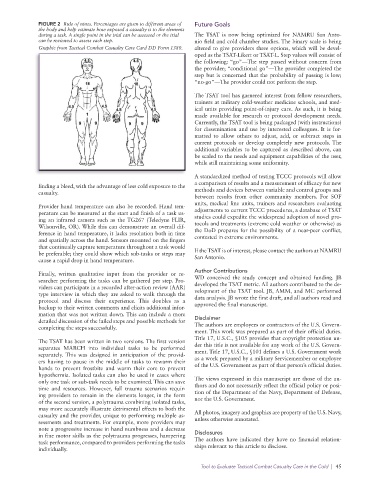
FIGURE 2  Rule of nines. Percentages are given to different areas of   Future Goals
              the body and help estimate how exposed a casualty is to the elements
              during a task. A single point in the trial can be assessed or the trial   The TSAT is now being optimized for NAMRU San Anto-
              can be reviewed to assess each step.               nio field and cold chamber studies. The binary scale is being
              Graphic from Tactical Combat Casualty Care Card DD Form 1380.  altered to give providers three options, which will be devel-
                                                                 oped as the TSAT-Likert or TSAT-L. Step values will consist of
                                                                 the following: “go”—The step passed without concern from
                                                                 the provider; “conditional go”—The provider completed the
                                                                 step but is concerned that the probability of passing is low;
                                                                 “no-go”—The provider could not perform the step.

                                                                 The TSAT tool has garnered interest from fellow researchers,
                                                                 trainers at military cold-weather medicine schools, and med-
                                                                 ical units providing point-of-injury care. As such, it is being
                                                                 made available for research or protocol development needs.
                                                                 Currently, the TSAT tool is being packaged (with instructions)
                                                                 for dissemination and use by interested colleagues. It is for-
                                                                 matted to allow others to adjust, add, or subtract steps in
                                                                 current protocols or develop completely new protocols. The
                                                                 additional variables to be captured as described above, can
                                                                 be scaled to the needs and equipment capabilities of the user,
                                                                 while still maintaining some uniformity.

                                                                 A standardized method of testing TCCC protocols will allow
                                                                 a comparison of results and a measurement of efficacy for new
              finding a bleed, with the advantage of less cold exposure to the
              casualty.                                          methods and devices between variable and control groups and
                                                                 between results from other community members. For SOF
                                                                 units, medical line units, trainers and researchers evaluating
              Provider hand temperature can also be recorded. Hand tem-
              perature can be measured at the start and finish of a task us-  adjustments to current TCCC procedures, a database of TSAT
              ing an infrared camera such as the TG267 (Teledyne FLIR,   studies could expedite the widespread adoption of novel pro-
              Wilsonville, OR). While this can demonstrate an overall dif-  tocols and treatments (extreme cold weather or otherwise) as
              ference in hand temperature, it lacks resolution both in time   the DoD prepares for the possibility of a near-peer conflict,
              and spatially across the hand. Sensors mounted on the fingers   contested in extreme environments.
              that continually capture temperature throughout a task would
              be preferable; they could show which sub-tasks or steps may   If the TSAT is of interest, please contact the authors at NAMRU
              cause a rapid drop in hand temperature.            San Antonio.
                                                                 Author Contributions
              Finally, written qualitative input from the provider or re-
              searcher performing the tasks can be gathered per step. Pro-  WD  conceived  the  study  concept  and  obtained  funding.  JB
              viders can participate in a recorded after-action review (AAR)   developed the TSAT metric. All authors contributed to the de-
              type interview in which they are asked to walk through the   velopment of the TSAT tool. JB, AMM, and MC performed
              protocol and discuss their experience.  This doubles as a   data analysis. JB wrote the first draft, and all authors read and
              backup to their written comments and elicits additional infor-  approved the final manuscript.
              mation that was not written down. This can include a more
              detailed discussion of the failed steps and possible methods for   Disclaimer
              completing the steps successfully.                 The authors are employees or contractors of the U.S. Govern-
                                                                 ment. This work was prepared as part of their official duties.
                                                                 Title 17, U.S.C., §105 provides that copyright protection un-
              The TSAT has been written in two versions. The first version
              separates MARCH into individual tasks to be performed   der this title is not available for any work of the U.S. Govern-
              separately. This was designed in anticipation of the provid-  ment. Title 17, U.S.C., §101 defines a U.S. Government work
              ers having to pause in the middle of tasks to rewarm their   as a work prepared by a military Servicemember or employee
              hands to prevent frostbite and warm their core to prevent   of the U.S. Government as part of that person’s official duties.
              hypothermia. Isolated tasks can also be used in cases where
              only one task or sub-task needs to be examined. This can save   The views expressed in this manuscript are those of the au-
              time  and resources. However,  full trauma  scenarios  requir-  thors and do not necessarily reflect the official policy or posi-
              ing providers to remain in the elements longer, in the form   tion of the Department of the Navy, Department of Defense,
              of the second version, a polytrauma combining isolated tasks,   nor the U.S. Government.
              may more accurately illustrate detrimental effects to both the
              casualty and the provider, unique to performing multiple as-  All photos, imagery and graphics are property of the U.S. Navy,
              sessments and treatments. For example, more providers may   unless otherwise annotated.
              note a progressive increase in hand numbness and a decrease
              in fine motor skills as the polytrauma progresses, hampering   Disclosures
              task performance, compared to providers performing the tasks     The authors have indicated they have no financial relation-
              individually.                                      ships relevant to this article to disclose.

                                                                   Tool to Evaluate Tactical Combat Casualty Care in the Cold  |  45

