


Page 28 - JSOM Spring 2025
P. 28
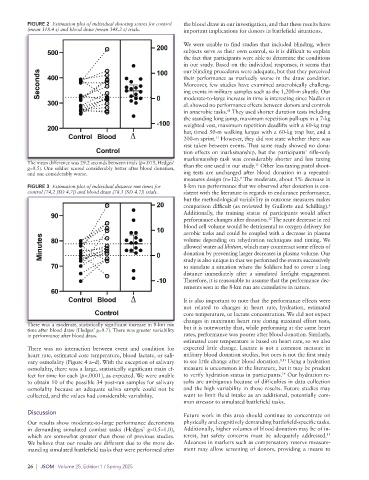
FIGURE 2  Estimation plot of individual shooting scores for control   the blood draw in our investigation, and that these results have
          (mean 318.4 s) and blood draw (mean 348.2 s) trials.  important implications for donors in battlefield situations.

                                                             We were unable to find studies that included blinding, where
                                                             subjects serve as their own control, so it is difficult to explain
                                                             the fact that participants were able to determine the conditions
                                                             in our study. Based on the individual responses, it seems that
                                                             our blinding procedures were adequate, but that they perceived
                                                             their performance as markedly worse in the draw condition.
                                                             Moreover, few studies have examined anaerobically challeng-
                                                             ing events in military samples such as the 1,200-m shuttle. Our
                                                             moderate-to-large increase in time is interesting since Nadler et
                                                             al. showed no performance effects between donors and controls
                                                             in anaerobic tasks.  They used shorter duration tests including
                                                                           11
                                                             the standing long jump, maximum repetition pull-ups in a 7-kg
                                                             weighted vest, maximum repetition deadlifts with a 60-kg trap
                                            ∆                bar, timed 50-m walking lunges with a 60-kg trap bar, and a
                                                                       11
                                                             200-m sprint.  However, they did not state whether there was
                                                             rest taken between events. That same study showed no dona-
                                                             tion effects on marksmanship, but the participants’ rifle-only
                                                             marksmanship task was considerably shorter and less taxing
          The mean difference was 29.2 seconds between trials (p=.015, Hedges’   than the one used in our study.  Other less taxing pistol shoot-
                                                                                    11
          g=0.5). One soldier scored considerably better after blood donation,
          and one considerably worse.                        ing tests are unchanged after blood donation in a repeated-
                                                             measures design (n=12).  The moderate, about 5% decrease in
                                                                               9
          FIGURE 3  Estimation plot of individual distance run times for   8-km run performance that we observed after donation is con-
          control (74.2 [SD 4.7]) and blood draw (78.1 [SD 4.7]) trials.  sistent with the literature in regards to endurance performance,
                                                             but the methodological variability in outcome measures makes
                                                             comparison difficult (as reviewed by Guillotte and Schilling).
                                                                                                            6
                                                             Additionally, the training status of participants would affect
                                                             performance changes after donation.  The acute decrease in red
                                                                                         12
                                                             blood cell volume would be detrimental to oxygen delivery for
                                                             aerobic tasks and could be coupled with a decrease in plasma
                                                             volume depending on rehydration techniques and timing. We
                                                             allowed water ad libitum, which may counteract some effects of
                                                             donation by preventing larger decreases in plasma volume. Our
                                                             study is also unique in that we performed the events successively
                                                             to simulate a situation where the Soldiers had to cover a long
                                                             distance immediately after a simulated firefight engagement.
                                                             Therefore, it is reasonable to assume that the performance dec-
                                                             rements seen in the 8-km run are cumulative in nature.
                                            ∆                It is also important to note that the performance effects were
                                                             not related to changes in heart rate, hydration, estimated
                                                             core temperature, or lactate concentration. We did not expect
                                                             changes in maximum heart rate during maximal effort tests,
          There was a moderate, statistically significant increase in 8-km run   but it is noteworthy that, while performing at the same heart
          time after blood draw (Hedges’ g=0.7). There was greater variability
          in performance after blood draw.                   rates, performance was poorer after blood donation. Similarly,
                                                             estimated core temperature is based on heart rate, so we also
          There was no interaction between event and condition for   expected little change. Lactate is not a common measure in
          heart rate, estimated core temperature, blood lactate, or sali-  military blood donation studies, but ours is not the first study
          vary osmolality (Figure 4 a–d). With the exception of salivary   to see little change after blood donation. 9,13  Using a hydration
          osmolality, there was a large, statistically significant main ef-  measure is uncommon in the literature, but it may be prudent
                                                                                             14
          fect for time for each (p<.0001), as expected. We were unable   to verify hydration status in participants.  Our hydration re-
          to obtain 10 of the possible 34 post-run samples for salivary   sults are ambiguous because of difficulties in data collection
          osmolality because an adequate saliva sample could not be   and the high variability in those results. Future studies may
          collected, and the values had considerable variability.  want to limit fluid intake as an additional, potentially com-
                                                             mon stressor to simulated battlefield tasks.
          Discussion                                         Future work in this area should continue to concentrate on

          Our results show moderate-to-large performance decrements   physically and cognitively demanding battlefield-specific tasks.
          in demanding simulated combat tasks (Hedges’  g=0.5–1.0),   Additionally, higher volumes of blood donation may be of in-
                                                                                                            15
          which are somewhat greater than those of previous studies.   terest, but safety concerns must be adequately addressed.
          We believe that our results are different due to the more de-  Advances in markers such as compensatory reserve measure-
          manding simulated battlefield tasks that were performed after   ment may allow screening of donors, providing a means to

          26  |  JSOM   Volume 25, Edition 1 / Spring 2025

