


Page 60 - JSOM Winter 2023
P. 60
lab setting prior to airway refresher training. No one withdrew   utilize the ALD in future SC. Open-ended responses regard-
          during the study period.                           ing ALD and training were used to solicit voluntary, open-
                                                             response feedback.
          The Study Group 2 (SOF) consisted of 10 Navy SOF. All were
          male (10/10) with an average length of service of 9.9 years   Pre-Testing Procedure
          (median 10.5, range 3–14). Although subjects were not SOF   Participants filled out a pre-study questionnaire to provide
          medics, all participants had completed the advanced TCCC   information on sex, age, military service time, and prior cri-
          course that includes airway management and SC skills training   cothyrotomy experience. Confidence levels in successfully
          within 12–36 months of study enrollment. No one withdrew   completing different steps in the SC procedure were assessed
          during the study period.                           on  a  scale  of  1  to  5,  with  1  indicating  no  confidence  and
                                                             5 indicating complete confidence with the statement, “I am
          SCs were performed on a 6-in-1 model (Strategic Operations,   confident in successfully executing the following CricKey
          https://www.strategic-operations.com/), complete with the in-  steps . . .” These steps included identifying anatomic landmarks
          cluded 3-D printed laryngeal inserts, and skin overlays (Laer-  (AL), making an adequate incision (AI), identifying and enter-
          dal, Inc., https://laerdal.com/us/) (Figure 1). A single overlay   ing the airway (EA), obtaining adequate hook retraction (HR),
          was used per participant. The overlay was shifted between the   successfully inserting the cricothyrotomy tube into the airway
          two SCs to provide an intact surface over the laryngeal insert.   in one try (OT), and successfully inserting the cricothyrotomy
          The Control-Cric System was used for every SC in this study.   tube into the airway with multiple tries (MT).
                                                         ™
          No other methods were used or evaluated. The Control-Cric
          features a blade with integrated tracheal hook to facilitate in-  Testing Procedure
                            ™
          sertion of the Cric-Key  cricothyrotomy tube and stylet obtu-  All participants performed two SCs using the Control-Cric
          rator. After insertion, the stylet obturator was removed and a   cricothyrotomy Cric-Key kit. Prior to the first SC, the ALD
          patent airway was provided via the cricothyrotomy tube. The   was demonstrated to each participant using a standardized
          ALD consists of a 10cc syringe, 18-gauge needle, and approx-  script that took approximately 20 seconds to deliver. The par-
          imately 5mL of normal saline. The partially fluid-filled syringe   ticipants were randomly assigned to SC sequences of ALD/no
          is advanced over the planned injection site with slight upward   ALD or no ALD/ALD. Participants were tested individually
          pressure/aspiration of the syringe. Once the air-filled trachea is   without observing other participants. SC times were recorded
          encountered, a vigorous bubbling occurs as air is drawn into   to measure the overall time and the time from the start to key
          the syringe. The use of  the ALD was demonstrated  to  each   points  of the  procedure:  incision, CricKey  hook  placement,
          participant prior to the initiation of SC with ALD.  CricKey tube placement, and CricKey cuff inflation. If the par-
                                                             ticipant skipped a step but still completed the procedure, the
                                                             SC was still evaluated for correct placement. Although not a
                                                             formal data point, the omitted step was annotated on the data
                                                             collection sheet (e.g., if CricKey hook was not used).
                                                             Post-Testing Procedure
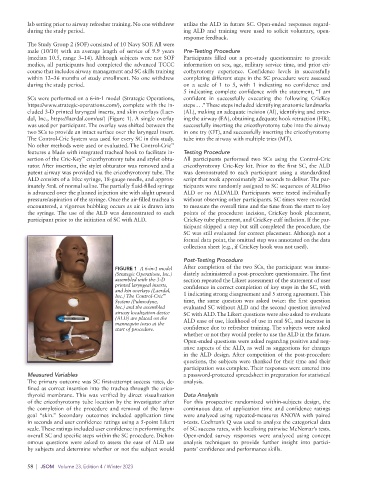
                                       FIGURE 1  A 6-in-1 model   After completion of the two SCs, the participant was imme-
                                       (Strategic Operations, Inc.)   diately administered a post-procedure questionnaire. The first
                                       assembled with the 3-D   section repeated the Likert assessment of the statement of user
                                       printed laryngeal inserts,   confidence in correct completion of key steps in the SC, with
                                       and kin overlays (Laerdal,
                                       Inc.) The Control-Cric    1 indicating strong disagreement and 5 strong agreement. This
                                                      ™
                                       System (Pulmodyne,    time,  the same  question  was  asked twice:  the  first question
                                       Inc.) and the assembled   evaluated SC without ALD and the second question involved
                                       airway localization device   SC with ALD. The Likert questions were also asked to evaluate
                                       (ALD) are placed on the   ALD ease of use, likelihood of use in real SC, and increase in
                                       mannequin torso at the
                                       start of procedure.   confidence due to refresher training. The subjects were asked
                                                             whether or not they would prefer to use the ALD in the future.
                                                             Open-ended questions were asked regarding positive and neg-
                                                             ative aspects of the ALD, as well as suggestions for changes
                                                             in the ALD design. After competition of the post-procedure
                                                             questions, the subjects were thanked for their time and their
                                                             participation was complete. Their responses were entered into
          Measured Variables                                 a password-protected spreadsheet in preparation for statistical
          The primary outcome was SC first-attempt success rates, de-  analysis.
          fined as correct insertion into the trachea through the crico-
          thyroid membrane. This was verified by direct visualization   Data Analysis
          of the cricothyrotomy tube location by the investigator after   For  this  prospective  randomized  within-subjects  design,  the
          the completion of the procedure and removal of the laryn-  continuous data of application time and confidence ratings
          geal  “skin.” Secondary outcomes included application time   were analyzed using repeated-measures ANOVA with paired
          in seconds and user confidence ratings using a 5-point Likert   t-tests. Cochran’s Q was used to analyze the categorical data
          scale. These ratings included user confidence in performing the   of SC success rates, with localizing pairwise McNemar’s tests.
          overall SC and specific steps within the SC procedure. Dichot-  Open-ended survey responses were analyzed using concept
          omous questions were asked to assess the ease of ALD use   analysis techniques to provide further insight into partici-
          by subjects and determine whether or not the subject would   pants’ confidence and performance skills.

          58  |  JSOM   Volume 23, Edition 4 / Winter 2023

