


Page 95 - JSOM Spring 2023
P. 95
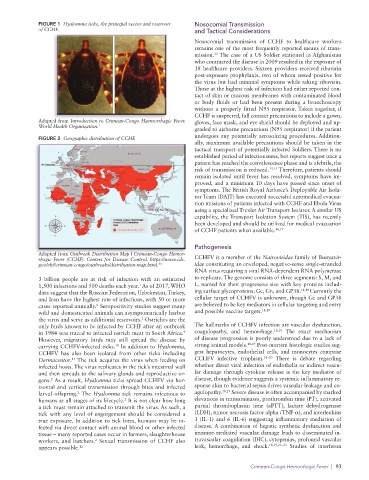
FIGURE 1  Hyalomma ticks, the principal vector and reservoir    Nosocomial Transmission
              of CCHF.                                           and Tactical Considerations

                                                                 Nosocomial transmission of CCHF to healthcare workers
                                                                 remains one of the most frequently reported means of trans-
                                                                 mission.  The case of a US Soldier stationed in Afghanistan
                                                                       13
                                                                 who contracted the disease in 2009 resulted in the exposure of
                                                                 18 healthcare providers. Sixteen providers received ribavirin
                                                                 post-exposure prophylaxis, two of whom tested positive for
                                                                 the virus but had minimal symptoms while taking ribavirin.
                                                                 Those at the highest risk of infection had either reported con-
                                                                 tact of skin or mucous membranes with contaminated blood
                                                                 or body fluids or had been present during a bronchoscopy
                                                                 without a properly fitted N95 respirator. Taken together, if
                                                                 CCHF is suspected, full contact precautions to include a gown,
              Adapted from Introduction to Crimean-Congo Haemorrhagic Fever.   gloves, face mask, and eye shield should be deployed and up-
              World Health Organization. 1
                                                                 graded to airborne precautions (N95 respirator) if the patient
                                                                 undergoes any potentially aerosolizing procedures. Addition-
              FIGURE 2  Geographic distribution of CCHF.
                                                                 ally, maximum available precautions should be taken in the
                                                                 tactical transport of potentially infected Soldiers. There is no
                                                                 established period of infectiousness, but reports suggest once a
                                                                 patient has reached the convalescence phase and is afebrile, the
                                                                 risk of transmission is reduced. 14,15  Therefore, patients should
                                                                 remain isolated until fever has resolved, symptoms have im-
                                                                 proved, and a minimum 10 days have passed since onset of
                                                                 symptoms. The British Royal Airforce’s Deployable Air Isola-
                                                                 tor Team (DAIT) has executed successful aeromedical evacua-
                                                                 tion missions of patients infected with CCHF and Ebola Virus
                                                                 using a specialized Trexler Air Transport Isolator. A similar US
                                                                 capability, the Transport Isolation System (TIS), has recently
                                                                 been developed and should be utilized for medical evacuation
                                                                 of CCHF patients when available. 16,17


                                                                 Pathogenesis
              Adapted from Outbreak Distribution Map | Crimean-Congo Hemor-
              rhagic Fever (CCHF). Centers for Disease Control. https://www.cdc.  CCHFV is a member of the Nairoviridae family of Bunyavir-
              gov/vhf/crimean-congo/outbreaks/distribution-map.html. 33  idae constituting an enveloped, negative-sense single-stranded
                                                                 RNA virus requiring a viral RNA-dependent RNA polymerase
              3 billion people are at risk of infection with an estimated   to replicate. The genome consists of three segments: S, M, and
              1,500 infections and 500 deaths each year.  As of 2017, WHO   L, named for their progressive size with key proteins includ-
                                              1
              data suggest that the Russian Federation, Uzbekestan, Turkey,   ing surface glycoproteins, Gc, Gn, and GP38. 18,19  Currently the
              and Iran have the highest rate of infections, with 50 or more   cellular target of CCHFV is unknown, though Gc and GP38
              cases reported annually.  Seropositivity studies suggest many   are believed to be key mediators in cellular targeting and entry
                                 8
              wild and domesticated animals can asymptomatically harbor   and possible vaccine targets. 18,19
                                               2
              the virus and serve as additional reservoirs.  Ostriches are the
              only birds known to be infected by CCHF after an outbreak   The hallmarks of CCHFV infection are vascular dysfunction,
                                                             9
              in 1984 was traced to infected ostrich meat in South Africa.    coagulopathy, and hemorrhage. 18,19   The exact mechanism
              However, migratory birds may still spread the disease by   of disease progression is poorly understood due to a lack of
              carrying  CCHFV-infected ticks.  In addition to Hyalomma,   strong animal models. 18,19  Post-mortem histologic studies sug-
                                       10
              CCHFV has also been isolated from other ticks including   gest hepatocytes, endothelial cells, and monocytes comprise
                         11
              Dermacentor.  The tick acquires the virus when feeding on   CCHFV infective trophism. 18–20   There  is debate regarding
              infected hosts. The virus replicates in the tick’s intestinal wall   whether direct viral infection of endothelia or indirect vascu-
              and then spreads to the salivary glands and reproductive or-  lar damage through cytokine release is the key mediator of
              gans.  As a result, Hyalomma ticks spread CCHFV via hor-  disease, though evidence suggests a systemic inflammatory re-
                  2
              izontal and vertical transmission through bites and infected   sponse akin to bacterial sepsis drives vascular leakage and co-
              larval offspring.  The Hyalomma tick remains infectious to   agulopathy. 18,19  Severe disease is often accompanied by marked
                          2
                                          2
              humans at all stages of its lifecycle.  It is not clear how long   elevations in transaminases, prothrombin time (PT), activated
              a tick must remain attached to transmit the virus. As such, a   partial thromboplastin time (aPTT), lactate dehydrogenase
              tick with any level of engorgement should be considered a   (LDH), tumor necrosis factor alpha (TNF-α), and interleukins
              true exposure. In addition to tick bites, humans may be in-  1 (IL-1) and 6 (IL-6) suggesting inflammatory mediation of
              fected via direct contact with animal blood or other infected   disease. A combination of hepatic synthetic dysfunction and
              tissue – many reported cases occur in farmers, slaughterhouse   immune-mediated vascular damage leads to disseminated in-
              workers, and butchers.  Sexual transmission of CCHF also   travascular coagulation (DIC), cytopenias, profound vascular
                                2
              appears possible. 12                               leak, hemorrhage, and shock. 18,19,21–23  Studies of interferon
                                                                                   Crimean-Congo Hemorrhagic Fever  |  93

