


Page 83 - JSOM Spring 2023
P. 83
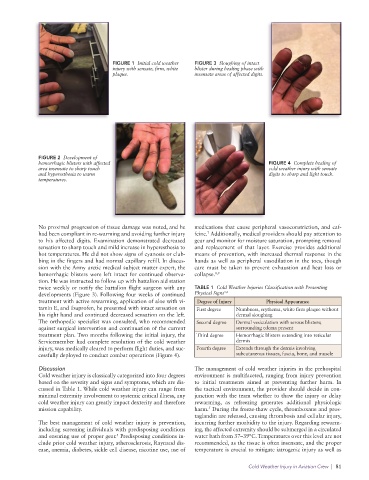
FIGURE 1  Initial cold weather   FIGURE 3  Sloughing of intact
                                      injury with sensate, firm, white   blister during healing phase with
                                      plaque.                    insensate areas of affected digits.


              FIGURE 2  Development of
              hemorrhagic blisters with affected                                         FIGURE 4  Complete healing of
              area insensate to sharp touch                                              cold weather injury with sensate
              and hyperesthesia to warm                                                  digits to sharp and light touch.
              temperatures.


              No proximal progression of tissue damage was noted, and he   medications that cause peripheral vasoconstriction, and caf-
              had been compliant in re-warming and avoiding further injury   feine.  Additionally, medical providers should pay attention to
                                                                     7
              to his affected digits. Examination demonstrated decreased   gear and monitor for moisture saturation, prompting removal
              sensation to sharp touch and mild increase in hyperesthesia to   and replacement of that layer. Exercise provides additional
              hot temperatures. He did not show signs of cyanosis or club-  means of prevention, with increased thermal response in the
              bing in the fingers and had normal capillary refill. In discus-  hands as well as peripheral vasodilation in the toes, though
              sion with the Army arctic medical subject matter expert, the   care must be taken to prevent exhaustion and heat loss or
              hemorrhagic  blisters  were left  intact  for continued  observa-  collapse. 8,9
              tion. He was instructed to follow up with battalion aid station
              twice weekly or notify the battalion flight surgeon with any   TABLE 1  Cold Weather Injuries Classification with Presenting
              developments (Figure 3). Following four weeks of continued   Physical Signs 5,6
              treatment with active rewarming, application of aloe with vi-  Degree of Injury  Physical Appearance
              tamin E, and ibuprofen, he presented with intact sensation on   First degree  Numbness, erythema, white firm plaque without
              his right hand and continued decreased sensation on the left.   dermal sloughing
              The orthopedic specialist was consulted, who recommended   Second degree  Dermal vesiculation with serous blisters;
              against surgical intervention and continuation of the current   surrounding edema present
              treatment plan. Two months following the initial injury, the   Third degree  Hemorrhagic blisters extending into reticular
              Servicemember had complete resolution of the cold weather       dermis
              injury, was medically cleared to perform flight duties, and suc-  Fourth degree  Extends through the dermis involving
              cessfully deployed to conduct combat operations (Figure 4).     subcutaneous tissues, fascia, bone, and muscle
              Discussion                                         The management of cold weather injuries in the prehospital
              Cold weather injury is classically categorized into four degrees   environment is multifaceted, ranging from injury prevention
              based on the severity and signs and symptoms, which are dis-  to initial treatments aimed at preventing further harm. In
              cussed in Table 1. While cold weather injury can range from   the tactical environment, the provider should decide in con-
              minimal extremity involvement to systemic critical illness, any   junction with the team whether to thaw the injury or delay
              cold weather injury can greatly impact dexterity and therefore   rewarming, as refreezing generates additional physiologic
                                                                     5
              mission capability.                                harm.  During the freeze-thaw cycle, thromboxane and pros-
                                                                 taglandin are released, causing thrombosis and cellular injury,
              The best management of cold weather injury is prevention,   incurring further morbidity to the injury. Regarding rewarm-
              including screening individuals with predisposing conditions   ing, the affected extremity should be submerged in a circulated
                                       5
              and ensuring use of proper gear.  Predisposing conditions in-  water bath from 37–39°C. Temperatures over this level are not
              clude prior cold weather injury, atherosclerosis, Raynaud dis-  recommended, as the tissue is often insensate, and the proper
              ease, anemia, diabetes, sickle cell disease, nicotine use, use of   temperature is crucial to mitigate iatrogenic injury as well as

                                                                                  Cold Weather Injury in Aviation Crew  |  81

