


Page 78 - JSOM Spring 2023
P. 78
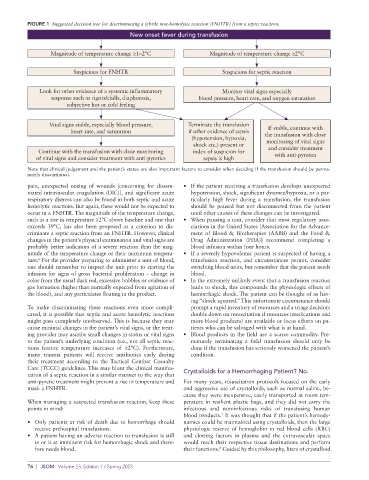
FIGURE 1  Suggested decision tree for discriminating a febrile non-hemolytic reaction (FNHTR) from a septic reaction.
                                            New onset fever during transfusion


                  Magnitude of temperature change ≥1–2°C              Magnitude of temperature change ≥2°C


                         Suspicious for FNHTR                             Suspicious for septic reaction


              Look for other evidence of a systemic inflammatory          Monitor vital signs especially
                  response such as rigors/chills, diaphoresis,    blood pressure, heart rate, and oxygen saturation
                       subjective hot or cold feeling


                 Vital signs stable, especially blood pressure,   Terminate the transfusion   If stable, continue with
                        heart rate, and saturation             if other evidence of sepsis   the transfusion with close
                                                                (hypotension, hypoxia,    monitoring of vital signs
                                                                shock etc.) present or   and consider treatment
              Continue with the transfusion with close monitoring   index of suspicion for   with anti-pyretics
             of vital signs and consider treatment with anti-pyretics  sepsis is high
          Note that clinical judgement and the patient’s status are also important factors to consider when deciding if the transfusion should be perma-
          nently discontinued.
          pain, unexpected oozing of wounds [concerning for dissem-  •  If the patient receiving a transfusion develops unexpected
          inated intravascular coagulation (DIC)], and significant acute   hypotension, shock, significant dyspnea/hypoxia, or a par-
          respiratory distress can also be found in both septic and acute   ticularly high fever during a transfusion, the transfusion
          hemolytic reactions. But again, these would not be expected to   should be paused but not disconnected from the patient
          occur in a FNHTR. The magnitude of the temperature change,   until other causes of these changes can be investigated.
          such as a rise in temperature ≥2°C above baseline and one that   •  When pausing a unit, consider that most regulatory asso-
          exceeds 39°C, has also been proposed as a criterion to dis-  ciations in the United States [Association for the Advance-
          criminate a septic reaction from an FNHTR. However, clinical   ment  of  Blood  &  Biotherapies  (AABB)  and  the  Food  &
          changes in the patient’s physical examination and vital signs are   Drug  Administration  (FDA)]  recommend  completing  a
          probably better indicators of a severe reaction than the mag-  blood infusion within four hours.
          nitude of the temperature change or their maximum tempera-  •  If a severely hypovolemic patient is suspected of having a
          ture.  For the provider preparing to administer a unit of blood,   transfusion  reaction,  and  circumstances  permit,  consider
              6
          one should remember to inspect the unit prior to starting the   switching blood units, but remember that the patient needs
          infusion for signs of gross bacterial proliferation – change in   blood.
          color from the usual dark red, excessive bubbles or evidence of   •  In the extremely unlikely event that a transfusion reaction
          gas formation (higher than normally expected from agitation of   leads to shock, this compounds the physiologic effects of
          the blood), and any particulates floating in the product.  hemorrhagic shock. The patient can be thought of as hav-
                                                               ing “shock squared.” This unfortunate circumstance should
          To make discriminating these reactions even more compli-  prompt a rapid inventory of resources and a triage decision:
          cated, it is possible that septic and acute hemolytic reactions   double down on resuscitation if resources (medications and
          might pass completely unobserved. This is because they may   more blood products) are available or focus efforts on pa-
          cause minimal changes in the patient’s vital signs, or the treat-  tients who can be salvaged with what is at hand.
          ing provider may ascribe small changes in status or vital signs   •  Blood products in the field are a scarce commodity. Pre-
          to the patient’s underlying condition (i.e., not all septic reac-  maturely terminating a field transfusion should only be
          tions feature temperature  increases of ≥2°C). Furthermore,   done if the transfusion has seriously worsened the patient’s
          many trauma patients will receive antibiotics early during   condition.
          their treatment according to the  Tactical Combat Casualty
          Care (TCCC) guidelines. This may blunt the clinical manifes-  Crystalloids for a Hemorrhaging Patient? No.
          tation of a septic reaction in a similar manner to the way that
          anti-pyretic treatment might prevent a rise in temperature and   For many years, resuscitation protocols focused on the early
          mask a FNHTR.                                      and aggressive use of crystalloids, such as normal saline, be-
                                                             cause they were inexpensive, easily transported at room tem-
          When managing a suspected transfusion reaction, keep these   perature in resilient plastic bags, and they did not carry the
          points in mind:                                    infectious and non-infectious risks of transfusing human
                                                             blood products.  It was thought that if the patient’s hemody-
                                                                         1
          •  Only patients at risk of death due to hemorrhage should   namics could be maintained using crystalloids, then the large
            receive prehospital transfusions.                physiologic reserve of hemoglobin in red blood cells (RBC)
          •  A patient having an adverse reaction to transfusion is still   and clotting factors in plasma and the extravascular space
            in or is at imminent risk for hemorrhagic shock and there-  would reach their respective tissue destinations and perform
                                                                         8
            fore needs blood.                                their functions.  Guided by this philosophy, liters of crystalloid
          76  |  JSOM   Volume 23, Edition 1 / Spring 2023

