


Page 77 - JSOM Spring 2023
P. 77
2
              Febrile non-hemolytic transfusion reactions (FNHTR) are also   donor in the field.  Note that these reactions will not occur if
              a common reaction, occurring  in approximately 1% of all   LTOWB is used since it is compatible with all recipients.
                        1
              transfusions.  However, these tend to occur more often during
              platelet (PLT) transfusions compared to red blood cell [RBC or   Bacterial septic reactions are uncommon with blood products
              low titer group O whole blood (LTOWB)] transfusions, which   that are stored in the cold, such as RBCs, LTOWB, and cold-
              are utilized in the contemporary combat field environment.   stored platelets (CSP). However, they are more common fol-
              This reaction is caused by the elaboration of pyrogenic cy-  lowing room temperature stored PLT transfusions because the
                                                                                                                3
              tokines (fever stimulating peptides) which trigger a transient   storage temperature is more conducive for bacterial growth.
              inflammatory state. FNHTRs are identified by an increase in   These reactions occur when the blood product is contam-
              temperature of ≥1°C (often exceeding 38°C) compared to the   inated with a sufficient quantity of harmful bacteria and/or
              patient’s baseline, and they can feel hot or cold and have chills   their  toxins,  and they  can  be  fatal.  When  collecting  blood
              and rigors. FNHTRs are benign and easily treated with an-  product donations, blood centers often discard the first 20–30
              ti-pyretic medications. There are two additional, more serious   mL of whole blood that is collected.  This step helps to en-
                                                                                             4–6
              reactions in the differential diagnosis of an FNHTR: acute he-  sure that the skin plug that was formed when the collection
              molytic reactions and bacterial sepsis.            needle pierced the donor’s skin does not incubate with the rest
                                                                 of the blood that is collected. The collection sets used to col-
              Acute hemolytic reactions occur when an ABO incompatible   lect fresh warm whole blood units in the field might not be
              RBC or whole blood unit is administered, such as adminis-  equipped with the ability to dispose of the first few milliliters
              tering a group A RBC to a group O recipient. This hemolytic   of collected blood. As such, extra attention should be paid to
              reaction is due to naturally occurring antibodies against the A   thorough skin decontamination before the venipuncture. This
              and/or B antigens on the donor RBCs leading to immediate, in-  is particularly true when establishing a field blood bank in
              travascular destruction of the transfused RBCs. This reaction   preparation for combat operations in which blood might be
              will typically manifest early in the transfusion and the patient   stored for prolonged periods of time. In a fresh whole blood
              will suffer from circulatory collapse and shock, which is what   draw, the immediate use of these products mitigates the risk of
              differentiates it from an FNHTR. Thus, if a new onset fever   bacterial proliferation.
              is detected during a transfusion, it is imperative to consider
              the patient’s vital signs and clinical condition before proceed-  Unfortunately, the signs and symptoms of septic reactions can
              ing with the transfusion. Most acute hemolytic reactions are   closely resemble those of both FNHTRs and acute hemolytic
              due to clerical error (wrong unit administered to the patient).   reactions (see Figure 1 for guidance). In general, septic or acute
              Therefore, at a minimum, re-verify that the correct donor unit   hemolytic reactions should be suspected if the patient has circu-
              was infused, or that the unit that was transfused came from   latory collapse or hypotension as these would not be expected
                                                                                  7
              the intended donor if the donation was from a walking blood   to occur in a FNHTR.  Findings in the field such as back/flank
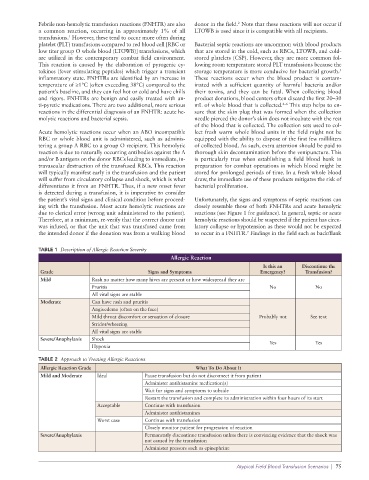
              TABLE 1  Description of Allergic Reaction Severity
                                                         Allergic Reaction
                                                                                       Is this an   Discontinue the
              Grade                              Signs and Symptoms                   Emergency?     Transfusion?
              Mild             Rash no matter how many hives are present or how widespread they are
                               Pruritis                                                  No             No
                               All vital signs are stable
              Moderate         Can have rash and pruritis
                               Angioedema (often on the face)
                               Mild throat discomfort or sensation of closure         Probably not    See text
                               Stridor/wheezing
                               All vital signs are stable
              Severe/Anaphylaxis  Shock                                                  Yes            Yes
                               Hypoxia

              TABLE 2  Approach to Treating Allergic Reactions
              Allergic Reaction Grade                            What To Do About It
              Mild and Moderate  Ideal          Pause transfusion but do not disconnect it from patient
                                                Administer antihistamine medication(s)
                                                Wait for signs and symptoms to subside
                                                Restart the transfusion and complete its administration within four hours of its start
                                 Acceptable     Continue with transfusion
                                                Administer antihistamines
                                 Worst case     Continue with transfusion
                                                Closely monitor patient for progression of reaction
              Severe/Anaphylaxis                Permanently discontinue transfusion unless there is convincing evidence that the shock was
                                                not caused by the transfusion
                                                Administer pressors such as epinephrine

                                                                              Atypical Field Blood Transfusion Scenarios  |  75

