


Page 60 - JSOM Fall 2022
P. 60
Methods and face, with a cricothyrotomy completed. The other casu
alty occurred during Operation Freedom’s Sentinel; the civil
Ethics ian noncombatant had serious injury to the thorax, receiving
This is a secondary analysis from a deidentified data set seek prehospital whole blood. The population had a median Injury
ing to describe trends in prehospital care within the Depart Severity Score of 9 (Table 1). Of those casualties, 95 (79%)
ment of Defense Trauma Registry (DODTR). The US Army had documented air evacuation, 7 (6%) had documented
Institute of Surgical Research reviewed protocol H20015 ground evacuation, and the remainder lacked documentation
and determined it was exempt from institutional review board of the evacuation within their chain of care. Approximately
oversight, with approval from local regulatory boards. one third of patients (32%) had documentation of prehospital
care from medic or combat lifesaverqualified personnel. The
Department of Defense Trauma Registry Description most frequent interventions focused on hypothermia preven
The DODTR, formerly known as the Joint Theater Trauma tion for 74 casualties (62%), cervical spine stabilization for
Registry, is the data repository for DoD traumarelated inju 38 casualties (32%), and analgesic administration for 48 ca
ries. 1014 The DODTR includes documentation regarding de sualties (40%) (Table 2). Only three casualties were taken to a
mographics, injuryproducing incidents, diagnoses, treatments, Role 1 prior to transfer to a higher echelon.
and outcomes of injuries sustained by US military and US ci
vilian personnel in wartime and peacetime from the point of
injury to final disposition. Shortterm outcome data are avail TABLE 1 Patient Demographics, Severe Injuries by Body Region,
able for nonUS casualties. The DODTR comprises all patients and Survival*
admitted to a Role 3 (fixed medical facility with surgical ca Factor Percentage (No.)
pabilities) or a Role 2 (mobile medical facility with limited Demographics
resuscitation products and imaging) augmented with surgical Age (y) 30 (range, 26–35)
capabilities who have an injury diagnosis and trauma occurring Male 98% (118)
within 72 hours from injury. The registry defines the prehospi Battle status 2% (2)
Battle
tal setting as any location prior to reaching a location with sur Nonbattle 98% (118)
gical capabilities, to include Role 1 (military unit–level medical Military rank
care, i.e., point of injury, casualty collection point, battalion aid Officer 27% (33)
station) and Role 2. 10,13–15 Enlisted 47% (56)
Coalition/other 26% (31)
Analysis Military operation
Statistical analyses were performed using Microsoft Excel, ver OEF 69% (83)
sion 10, and JMP Statistical Discovery from SAS, version 15. OFS 12% (15)
13% (16)
OIF
We reported categorical variables as numbers with percent OIR 3% (3)
ages, ordinal variables as medians with interquartile ranges, Other 3% (3)
and continuous variables as means with standard deviation. Injury Severity Score
We defined a serious injury by body region as an abbreviated (composite) 9 (range, 4–22)
injury scale of ≥3. 16 Serious injuries by body region (N=120)
Head/neck 17% (20)
Facial 3% (3)
Results Thorax 27% (32)
Abdomen 11% (13)
A total of 28,950 casualty encounters were obtained from the Extremities 17% (20)
DODTR from 2007 to 2020 as part of the overall data from Skin/superficial 1% (1)
which this subanalysis was drawn. Within that 28,950, we Outcome (survival to discharge) 98% (118)
identified 120 casualties who were injured by aircraft crash *Based on an Abbreviated Injury Scale of ≥3.
(Figure 1). A majority were male enlisted soldiers within the OEF, Operation Enduring Freedom; OFS, Operation Freedom’s Senti
US Army, and nearly all (98%) survived to hospital discharge. nel; OIF, Operation Iraqi Freedom; OIR, Operation Inherent Resolve.
Of the two casualties who did not survive, one occurred
during OEF; the patient had serious injuries to the head/neck Discussion
In this analysis, we describe the casualties from helicopter
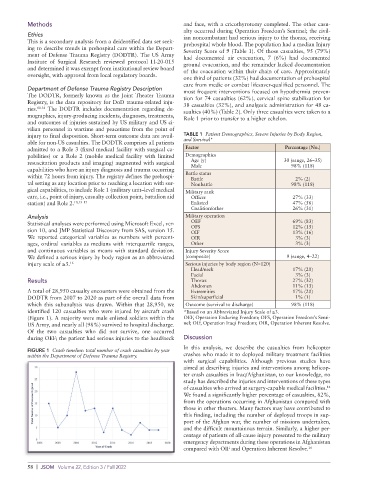
FIGURE 1 Crash timeline: total number of crash casualties by year
within the Department of Defense Trauma Registry. crashes who made it to deployed military treatment facilities
with surgical capabilities. Although previous studies have
aimed at describing injuries and interventions among helicop
ter crash casualties in Iraq/Afghanistan, to our knowledge, no
study has described the injuries and interventions of these types
of casualties who arrived at surgerycapable medical facilities.
16
We found a significantly higher percentage of casualties, 82%,
from the operations occurring in Afghanistan compared with
those in other theaters. Many factors may have contributed to
this finding, including the number of deployed troops in sup
port of the Afghan war, the number of missions undertaken,
and the difficult mountainous terrain. Similarly, a higher per
centage of patients of allcause injury presented to the military
emergency departments during these operations in Afghanistan
compared with OIF and Operation Inherent Resolve. 16
58 | JSOM Volume 22, Edition 3 / Fall 2022

