


Page 61 - JSOM Fall 2022
P. 61
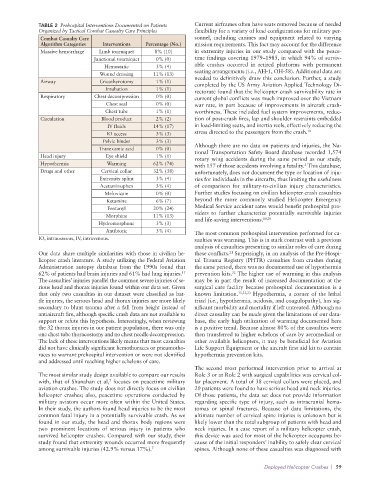
TABLE 2 Prehospital Interventions Documented on Patients Current airframes often have seats removed because of needed
Organized by Tactical Combat Casualty Care Principles flexibility for a variety of load configurations for military per
Combat Casualty Care sonnel, including canines and equipment related to varying
Algorithm Categories Interventions Percentage (No.) mission requirements. This fact may account for the difference
Massive hemorrhage Limb tourniquet 8% (10) in extremity injuries in our study compared with the peace
Junctional tourniquet 0% (0) time findings covering 1979–1985, in which 94% of surviv
Hemostatic 3% (4) able crashes occurred in retired platforms with permanent
Wound dressing 11% (13) seating arrangements (i.e., AH1, OH58). Additional data are
Airway Cricothyrotomy 1% (1) needed to definitively draw this conclusion. Further, a study
completed by the US Army Aviation Applied Technology Di
Intubation 1% (1) rectorate found that the helicopter crash survivability rate in
Respiratory Chest decompression 0% (0) current global conflicts was much improved over the Vietnam
Chest seal 0% (0) war rate, in part because of improvements in aircraft crash
Chest tube 1% (1) worthiness. These included fuel system improvements, reduc
Circulation Blood product 2% (2) tion of postcrash fires, lap and shoulder restraints embedded
IV fluids 14% (17) in loadlimiting seats, and inertia reels, effectively reducing the
IO access 3% (3) stress directed to the passengers from the crash. 18
Pelvic binder 3% (3)
Tranexamic acid 0% (0) Although there are no data on patients and injuries, the Na
tional Transportation Safety Board database recorded 1,574
Head injury Eye shield 1% (1) rotary wing accidents during the same period as our study,
Hypothermia Warming 62% (74) with 157 of those accidents involving a fatality. This database,
2
Drugs and other Cervical collar 32% (38) unfortunately, does not document the type or location of inju
Extremity splint 3% (4) ries for individuals in the aircrafts, thus limiting the usefulness
Acetaminophen 3% (4) of comparison for militarytocivilian injury characteristics.
Meloxicam 0% (0) Further studies focusing on civilian helicopter crash casualties
Ketamine 6% (7) beyond the more commonly studied Helicopter Emergency
Fentanyl 20% (24) Medical Service accident rates would benefit prehospital pro
Morphine 11% (13) viders to further characterize potentially survivable injuries
19,20
Hydromorphone 3% (3) and lifesaving interventions.
Antibiotic 3% (4) The most common prehospital intervention performed for ca
IO, intraosseous, IV, intravenous. sualties was warming. This is in stark contrast with a previous
analysis of casualties presenting to similar roles of care during
21
Our data share multiple similarities with those in civilian he these conflicts. Surprisingly, in an analysis of the PreHospi
licopter crash literature. A study utilizing the Federal Aviation tal Trauma Registry (PHTR) casualties from crashes during
Administration autopsy database from the 1990s found that the same period, there was no documented use of hypothermia
62% of patients had brain injuries and 61% had lung injuries. prevention kits. The higher use of warming in this analysis
17
22
The casualties’ injuries parallel the common severe injuries of se may be in part the result of increased documentation at the
rious head and thorax injuries found within our data set. Given surgical care facility because prehospital documentation is a
that only two casualties in our dataset were classified as bat known limitation. 15,22,23 Hypothermia, a corner of the lethal
tle injuries, the serious head and thorax injuries are more likely triad (i.e., hypothermia, acidosis, and coagulopathy), has sig
secondary to blunt trauma after a fall from height instead of nificant morbidity and mortality if left untreated. Although no
antiaircraft fire, although specific crash data are not available to direct causality can be made given the limitations of our data
support or refute this hypothesis. Interestingly, when reviewing base, the early high utilization of warming documented here
the 32 thorax injuries in our patient population, there was only is a positive trend. Because almost 80% of the casualties were
one chest tube thoracostomy and no chest needle decompression. then transferred to higher echelons of care by aeromedical or
The lack of these interventions likely means that most casualties other available helicopters, it may be beneficial for Aviation
did not have clinically significant hemothoraces or pneumotho Life Support Equipment or the aircraft first aid kit to contain
races to warrant prehospital intervention or were not identified hypothermia prevention kits.
and addressed until reaching higher echelons of care.
The second most performed intervention prior to arrival at
The most similar study design available to compare our results Role 3 or at Role 2 with surgical capabilities was cervical col
with, that of Shanahan et al, focuses on peacetime military lar placement. A total of 38 cervical collars were placed, and
7
aviation crashes. The study does not directly focus on civilian 20 patients were found to have serious head and neck injuries.
helicopter crashes; also, peacetime operations conducted by Of those patients, the data set does not provide information
military aviators occur more often within the United States. regarding specific type of injury, such as intracranial hema
In their study, the authors found head injuries to be the most tomas or spinal fractures. Because of data limitations, the
common fatal injury in a potentially survivable crash. As we ultimate number of cervical spine injuries is unknown but is
found in our study, the head and thorax body regions were likely lower than the total subgroup of patients with head and
two prominent locations of serious injury in patients who neck injuries. In a case report of a military helicopter crash,
survived helicopter crashes. Compared with our study, their this device was used for most of the helicopter occupants be
study found that extremity wounds occurred more frequently cause of the initial responders’ inability to safely clear cervical
among survivable injuries (42.9% versus 17%). 7 spines. Although none of these casualties was diagnosed with
Deployed Helicopter Crashes | 59

