


Page 25 - 2022 Spring JSOM
P. 25
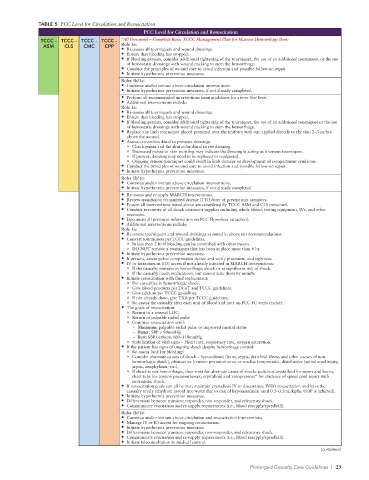
TABLE 5  PCC Level for Circulation and Resuscitation
                                                PCC Level for Circulation and Resuscitation
              TCCC - TCCC - TCCC - TCCC -  *All Personnel – Complete Basic TCCC Management Plan for Massive Hemorrhage then:
               ASM    CLS   CMC    CPP   Role 1a:
                                         •  Re-assess all tourniquets and wound dressings.
                                         •  Ensure that bleeding has stopped.
                                         •  If bleeding persists, consider additional tightening of the tourniquet, the use of an additional tourniquet, or the use
                                          of hemostatic dressings with wound packing to stem the hemorrhage.
                                         •  Conduct the principles of wound care to avoid infection and possible follow-on sepsis.
                                         •  Initiate hypothermia prevention measures.
                                         Roles 1b/1c:
                                         •  Continue and/or initiate above circulation interventions.
                                         •  Initiate hypothermia prevention measures, if not already completed.
                                         •  Perform all recommended interventions from guidelines for above Tier level.
                                         •  Additional interventions include:
                                         Role 1a:
                                         •  Re-assess all tourniquets and wound dressings.
                                         •  Ensure that bleeding has stopped.
                                         •  If bleeding persists, consider additional tightening of the tourniquet, the use of an additional tourniquet or the use
                                          of hemostatic dressings with wound packing to stem the hemorrhage.
                                         •  Replace any limb tourniquet placed proximal over the uniform with one applied directly to the skin 2–3 inches
                                          above the wound.
                                         •  Assess extremities distal to pressure dressings.
                                             o Check pulses and the skin color distal to the dressing.
                                             o Decreased pulses or skin mottling may indicate the dressing is acting as a venous tourniquet.
                                             o If present, dressing may need to be replaced or readjusted.
                                             o Ongoing venous tourniquet could result in limb damage or development of compartment syndrome.
                                         •  Conduct the principles of wound care to avoid infection and possible follow-on sepsis.
                                         •  Initiate hypothermia prevention measures.
                                         Roles 1b/1c:
                                         •  Continue and/or initiate above circulation interventions.
                                         •  Initiate hypothermia prevention measures, if not already completed
                                         •  Re-assess and re-apply MARCH interventions.
                                         •  Review transfusion transmitted disease (TTD)/titer of present unit members.
                                         •  Ensure all interventions noted above are completed by TCCC ASM and CLS personnel.
                                         •  Conduct inventory of all shock treatment supplies including whole blood, testing equipment, IVs, and other
                                          resources.
                                         •  Document all pertinent information on PCC Flowsheet (attached).
                                         •  Additional interventions include:
                                         Role 1a:
                                         •  Re-assess tourniquets and wound dressings as noted in above tier recommendations.
                                         •  Convert tourniquets per TCCC guidelines.
                                             o In less than 2 hr if bleeding can be controlled with other means.
                                             o DO NOT remove a tourniquet that has been in place more than 6 hr.
                                         •  Initiate hypothermia prevention measures.
                                         •  If present, assess pelvic compression device and verify placement and tightness.
                                         •  IV or intraosseous (IO) access if not already initiated in MARCH interventions:
                                             o If the casualty remains in hemorrhagic shock or at significant risk of shock.
                                             o If the casualty needs medications, but cannot take them by mouth.
                                         •  Initiate resuscitation with fluid replacement:
                                             o For casualties in hemorrhagic shock.
                                             o Give blood products per DCoT and TCCC guidelines.
                                             o Give calcium per TCCC guidelines.
                                             o If not already done, give TXA per TCCC guidelines.
                                             o Re-assess the casualty after each unit of blood and note on PCC FC vitals tracker.
                                         •  The goals of resuscitation:
                                             o Return to a normal LOC.
                                             o Return of palpable radial pulse
                                             o Continue resuscitation until:
                                               – Minimum: palpable radial pulse or improved mental status
                                               – Better: SBP > 90mmHg
                                               – Best: SBP between 100–110mmHg.
                                             o Stabilization of vital signs – Heart rate, respiratory rate, oxygen saturation.
                                         •  If the patient has signs of ongoing shock despite hemorrhage control:
                                             o Re-assess look for bleeding!
                                             o Consider alternate causes of shock – hypovolemic (burn, sepsis, diarrheal illness and other causes of non-
                                            hemorrhagic shock), obstructive (tension pneumothorax or cardiac tamponade), distributive (spinal cord injury,
                                            sepsis, anaphylaxis, etc.).
                                             o If shock is not hemorrhagic, then treat for alternate cause of shock: judicious crystalloid for sepsis and burns,
                                            chest tube for tension pneumothorax; crystalloid and vasopressors* for evidence of spinal cord injury with
                                            neurogenic shock.
                                         •  If resuscitation goals can all be met, maintain crystalloid IV or discontinue IV/IO resuscitation and have the
                                          casualty orally rehydrate (avoid free water due to risk of hyponatremia) until 0.3–0.5mL/kg/hr. UOP is achieved.
                                         •  Initiate hypothermia prevention measures.
                                         •  Differentiate between transient responder, non-responder, and refractory shock.
                                         •  Communicate evacuation and re-supply requirements (i.e., blood resupply/speedball).
                                         Roles 1b/1c:
                                         •  Continue and/or initiate above circulation and resuscitation interventions.
                                         •  Manage IV or IO access for ongoing resuscitation.
                                         •  Initiate hypothermia prevention measures.
                                         •  Differentiate between transient responder, non-responder, and refractory shock.
                                         •  Communicate evacuation and re-supply requirements (i.e., blood resupply/speedball).
                                         •  Initiate teleconsultation to medical control.
                                                                                                          (continues)

                                                                                   Prolonged Casualty Care Guidelines  |  23

