


Page 90 - JSOM Fall 2021
P. 90
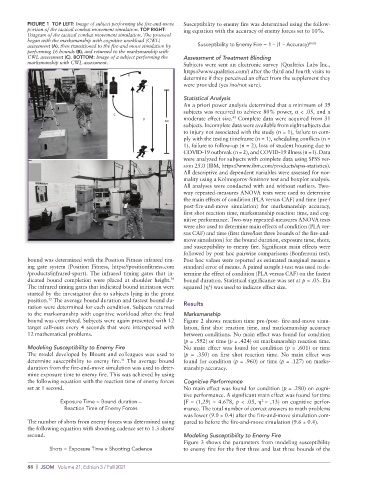
FIGURE 1  TOP LEFT: Image of subject performing the fire-and-move   Susceptibility to enemy fire was determined using the follow-
          portion of the tactical combat movement simulation. TOP RIGHT:   ing equation with the accuracy of enemy forces set to 10%.
          Diagram of the tactical combat movement simulation. The protocol
          began with the marksmanship with cognitive workload (CWL)                                   shots
          assessment (A), then transitioned to the fire-and move simulation by   Susceptibility to Enemy Fire = 1 – (1 – Accuracy)
          performing 16 bounds (B), and returned to the marksmanship with
          CWL assessment (C). BOTTOM: Image of a subject performing the   Assessment of Treatment Blinding
          marksmanship with CWL assessment.                  Subjects were sent an electronic survey (Qualtrics Labs Inc.,
                                                             https://www.qualtrics.com/) after the third and fourth visits to
                                                             determine if they perceived an effect from the supplement they
                                                             were provided (yes /no/not sure).
                                                             Statistical Analysis
                                                             An a priori power analysis determined that a minimum of 39
                                                             subjects was required to achieve 80% power, α < .05, and a
                                                             moderate effect size.  Complete data were acquired from 31
                                                                             43
                                                             subjects. Incomplete data were available from eight subjects due
                                                             to injury not associated with the study (n = 1), failure to com-
                                                             ply with the testing timeframe (n = 1), scheduling conflicts (n =
                                                             1), failure to follow-up (n = 2), loss of student housing due to
                                                             COVID-19 outbreak (n = 2), and COVID-19 illness (n =1). Data
                                                             were analyzed for subjects with complete data using SPSS ver-
                                                             sion 25.0 (IBM, https://www.ibm.com/products/spss-statistics).
                                                             All descriptive and dependent variables were assessed for nor-
                                                             mality using a Kolmogorov-Smirnov test and boxplot analysis.
                                                             All analyses were conducted with and without outliers. Two-
                                                             way repeated-measures ANOVA tests were used to determine
                                                             the main effects of condition (PLA versus CAF) and time (pre-/
                                                             post-fire-and-move simulation) for marksmanship accuracy,
                                                             first shot reaction time, marksmanship reaction time, and cog-
                                                             nitive performance. Two-way repeated-measures ANOVA tests
                                                             were also used to determine main effects of condition (PLA ver-
                                                             sus CAF) and time (first three/last three bounds of the fire-and-
                                                             move simulation) for the bound duration, exposure time, shots,
                                                             and susceptibility to enemy fire. Significant main effects were
                                                             followed by post hoc pairwise comparisons (Bonferroni test).
          bound was determined with the Position Fitness infrared tim-  Post hoc values were reported as estimated marginal means ±
          ing gate system (Position Fitness,  https://positionfitness.com   standard error of means. A paired sample t-test was used to de-
          /products/infrared-sport). The infrared timing gates that in-  termine the effect of condition (PLA versus CAF) on the fastest
          dicated bound completion were placed at shoulder height.    bound duration. Statistical significance was set at p < .05. Eta
                                                         39
          The infrared timing gates that indicated bound initiation were   squared (η ) was used to indicate effect size.
                                                                     2
          started by the investigator due to subjects lying in the prone
          position.  The average bound duration and fastest bound du-
                 42
          ration were determined for each condition. Subjects returned   Results
          to the marksmanship with cognitive workload after the final   Marksmanship
          bound was completed. Subjects were again presented with 12   Figure 2 shows reaction time pre-/post- fire-and-move simu-
          target call-outs every  4 seconds that  were interspersed with     lation, first shot reaction time, and marksmanship accuracy
          12 mathematical problems.                          between conditions. No main effect was found for condition
                                                             (p = .592) or time (p = .424) on marksmanship reaction time.
          Modeling Susceptibility to Enemy Fire              No main effect was found for condition (p = .601) or time
          The model developed by Blount and colleagues was used to   (p = .350) on first shot reaction time. No main effect was
          determine  susceptibility  to  enemy  fire.   The  average  bound   found for condition (p = .960) or time (p = .127) on marks-
                                         31
          duration from the fire-and-move simulation was used to deter-  manship accuracy.
          mine exposure time to enemy fire. This was achieved by using
          the following equation with the reaction time of enemy forces   Cognitive Performance
          set at 1 second.                                   No main effect was found for condition (p = .280) on cogni-
                                                             tive performance. A significant main effect was found for time
                                                                                       2
                     Exposure Time = Bound duration –        [F = (1,29) = 4.678, p < .05, η = .13) on cognitive perfor-
                      Reaction Time of Enemy Forces          mance. The total number of correct answers to math problems
                                                             was lower (9.0 ± 0.4) after the fire-and-move simulation com-
          The number of shots from enemy forces was determined using   pared to before the fire-and-move simulation (9.6 ± 0.4).
          the following equation with shooting cadence set to 1.3 shots/
          second.                                            Modeling Susceptibility to Enemy Fire
                                                             Figure 3 shows the parameters from modeling susceptibility
                 Shots = Exposure Time × Shooting Cadence    to enemy fire for the first three and last three bounds of the


          88  |  JSOM   Volume 21, Edition 3 / Fall 2021

