


Page 16 - JSOM Spring 2021
P. 16
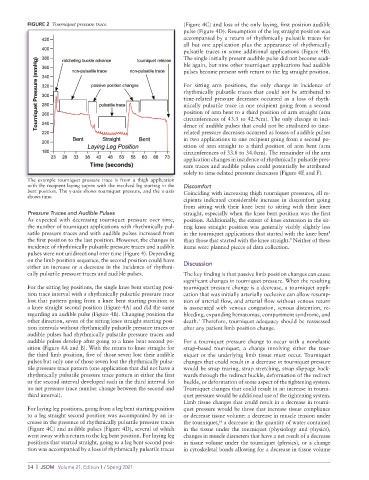
FIGURE 2  Tourniquet pressure trace.               (Figure 4C) and loss of the only laying, first position audible
                                                             pulse (Figure 4D). Resumption of the leg straight position was
                                                             accompanied by a return of rhythmically pulsatile traces for
                                                             all but one application plus the appearance of rhythmically
                                                             pulsatile traces in some additional applications (Figure 4B).
                                                             The single initially present audible pulse did not become audi-
                                                             ble again, but nine other tourniquet applications had audible
                                                             pulses become present with return to the leg straight position.

                                                             For sitting arm positions, the only change in incidence of
                                                             rhythmically pulsatile traces that could not be attributed to
                                                             time-related  pressure decreases occurred  as a loss of rhyth-
                                                             mically pulsatile trace in one recipient going from a second
                                                             position of arm bent to a third position of arm straight (arm
                                                             circumferences of 43.3 to 42.9cm). The only change in inci-
                                                             dence of audible pulses that could not be attributed to time-
                                                             related pressure decreases occurred as losses of audible pulses
                                                             in two applications to one recipient going from a second po-
                                                             sition of arm straight to a third position of arm bent (arm
                                                             circumferences of 33.8 to 34.0cm). The remainder of the arm
                                                             application changes in incidence of rhythmically pulsatile pres-
                                                             sure traces and audible pulses could potentially be attributed
                                                             solely to time-related pressure decreases (Figure 4E and F).
          The example tourniquet pressure trace is from a thigh application
          with the recipient laying supine with the involved leg starting in the   Discomfort
          bent position. The y-axis shows tourniquet pressure, and the x-axis   Coinciding with increasing thigh tourniquet pressures, all re-
          shows time.
                                                             cipients indicated considerable increase in discomfort going
                                                             from  sitting  with  their  knee  bent  to  sitting  with  their  knee
          Pressure Traces and Audible Pulses                 straight, especially when the knee bent position was the first
          As expected  with decreasing  tourniquet  pressure  over time,   position. Additionally, the extent of knee extension in the sit-
          the number of tourniquet applications with rhythmically pul-  ting knee straight position was generally visibly slightly less
          satile pressure traces and with audible pulses increased from   in the tourniquet applications that started with the knee bent 8
          the first position to the last position. However, the changes in   than those that started with the knee straight.  Neither of these
                                                                                                9
          incidence of rhythmically pulsatile pressure traces and audible   items were planned pieces of data collection.
          pulses were not unidirectional over time (Figure 4). Depending
          on the limb position sequence, the second position could have   Discussion
          either an increase or a decrease in the incidence of rhythmi-
          cally pulsatile pressure traces and audible pulses.  The key finding is that passive limb position changes can cause
                                                             significant changes in tourniquet pressure. When the resulting
          For the sitting leg positions, the single knee bent starting posi-  tourniquet pressure change is a decrease, a tourniquet appli-
          tion trace interval with a rhythmically pulsatile pressure trace   cation that was initially arterially occlusive can allow resump-
          lost that pattern going from a knee bent starting position to   tion of arterial flow, and arterial flow without venous return
          a knee straight second position (Figure 4A) and did the same   is associated with venous congestion, venous distention, re-
          regarding an audible pulse (Figure 4B). Changing position the   bleeding, expanding hematomas, compartment syndrome, and
          other direction, seven of the sitting knee straight starting posi-  death.  Therefore, tourniquet adequacy should be reassessed
                                                                  1
          tion intervals without rhythmically pulsatile pressure traces or   after any patient limb position change.
          audible pulses had rhythmically pulsatile pressure traces and
          audible pulses develop after going to a knee bent second po-  For a tourniquet pressure change to occur with a nonelastic
          sition (Figure 4A and B). With the return to knee straight for   strap–based tourniquet, a change involving either the tour-
          the third limb position, five of those seven lost their audible   niquet or the underlying limb tissue must occur. Tourniquet
          pulses but only one of those seven lost the rhythmically pulsa-  changes that could result in a decrease in tourniquet pressure
          tile pressure trace pattern (one application that did not have a   would be strap tearing, strap stretching, strap slippage back-
          rhythmically pulsatile pressure trace pattern in either the first   wards through the redirect buckle, deformation of the redirect
          or the second interval developed such in the third interval for   buckle, or deformation of some aspect of the tightening system.
          no net pressure trace number change between the second and   Tourniquet changes that could result in an increase in tourni-
          third interval).                                   quet pressure would be additional use of the tightening system.
                                                             Limb tissue changes that could result in a decrease in tourni-
          For laying leg positions, going from a leg bent starting position   quet pressure would be those that increase tissue compliance
          to a leg straight second position was accompanied by an in-  or decrease tissue volume: a decrease in muscle tension under
          crease in the presence of rhythmically pulsatile pressure traces   the tourniquet,  a decrease in the quantity of water contained
                                                                         16
          (Figure 4C) and audible pulses (Figure 4D), several of which   in the tissue under the tourniquet (physiology and physics),
          went away with a return to the leg bent position. For laying leg   changes in muscle diameters that have a net result of a decrease
          positions that started straight, going to a leg bent second posi-  in tissue volume under the tourniquet (physics), or a change
          tion was accompanied by a loss of rhythmically pulsatile traces   in cytoskeletal bonds allowing for a decrease in tissue volume


          14  |  JSOM   Volume 21, Edition 1 / Spring 2021

