


Page 67 - JSOM Spring 2020
P. 67
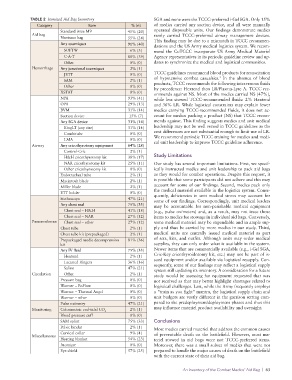
TABLE 2  Itemized Aid Bag Inventory                SGA and none were the TCCC-preferred i-Gel SGA. Only 15%
                Category             Item              % (n)     of medics carried any suction device, and all were manually
                          Standard issue M9           45% (20)   operated disposable units. Our findings demonstrate medics
              Aid bag                                            rarely carried TCCC-preferred airway management devices.
                          Nonissue bag                55% (24)   This finding may be due to a mismatch in TCCC recommen-
                          Any tourniquet              91% (40)   dations and the US Army medical logistics system. We recom-
                            SOFTW                      6% (3)    mend the CoTCCC incorporate US Army Medical Materiel
                            C-A-T                     88% (39)   Agency representatives in its periodic guideline review and up-
                            Other                      0% (0)    dates to synchronize the medical and logistical communities.
              Hemorrhage  Any junctional tourniquet    2% (1)
                            JETT                       0% (0)    TCCC guidelines recommend blood products for resuscitation
                                                                 of hypotensive combat casualties.  In the absence of blood
                                                                                            2
                            SAM                        2% (1)    products, TCCC recommends the following intravenous fluids
                            Other                      0% (0)    by precedence: Hextend then LR/Plasma-Lyte A. TCCC rec-
                          XSTAT                        0% (0)    ommends against NS. Most of the medics carried NS (47%),
                          NPA                         93% (41)   while less stowed TCCC-recommended fluids: 2% Hextend
                          OPA                         29% (13)   and 36% LR. While logistical constraints may explain fewer
                          BVM                         31% (14)   medics carrying TCCC-recommended fluids, it does not ac-
                          Suction device              15% (7)    count for medics packing a product (NS) that TCCC recom-
                          Any SGA device              31% (14)   mends against. This finding suggests medics and unit medical
                            KingLT (any size)         31% (14)   leadership may not be well versed in TCCC guidelines as the
                            Combitube                  0% (0)    cost differences are not substantial enough to limit use of LR.
                                                                 We recommend periodic TCCC training for medics and medi-
                            LMA                        0% (0)    cal unit leadership to improve TCCC guideline adherence.
              Airway      Any cricothyrotomy equipment  64% (28)
                            Control-Cric               2% (1)
                            H&H cricothyrotomy kit    38% (17)   Study Limitations
                            NAR cricothyrotomy kit    25% (11)   Our study has several important limitations. First, we specif-
                            Other cricothyrotomy kit   0% (0)    ically instructed medics and unit leadership to pack aid bags
                          Endotracheal tube            2% (1)    as they would for combat operations. Despite this request, it
                          Macintosh blade              2% (1)    is possible that some participants did not adhere and this may
                          Miller blade                 2% (1)    account for some of our findings. Second, medics pack only
                                                                 the medical materiel available in the logistics system. Conse-
                          ETT holder                   0% (0)    quently, deficiencies in unit medical stores may account for
                          Stethoscope                 47% (21)   some of our findings. Correspondingly, unit medical leaders
                          Any chest seal              75% (33)   may be accountable for non-perishable medical equipment
                            Chest seal – H&H          41% (18)   (e.g., pulse oximeters) and, as a result, may not issue those
                            Chest seal – NAR          27% (12)   items to medics for stowage in individual aid bags. Conversely,
              Pneumothorax   Chest seal – other       27% (12)   some medical materiel may be expendable and in ample sup-
                          Chest tube                   2% (1)    ply and thus be carried by more medics in our study. Third,
                          Chest tube kit (prepackaged)  2% (1)   medical units are centrally issued medical materiel as part
                          Prepackaged needle decompression   81% (36)  of sets, kits, and outfits. Although units may order medical
                          kit                                    supplies, they can only order what is available in the system.
                          Any IV fluid                75% (33)   Newer items that are commercially available (e.g., i-Gel SGA,
                            Hextend                    2% (1)    Cric-Key cricothyroidotomy kit, etc.) may not be part of is-
                                                                 sued equipment and/or available via logistical resupply. Con-
                            Lactated Ringers          36% (16)   sequently, some of our findings may reflect a logistical supply
                            Saline                    47% (21)   system still updating its inventory. A consideration for a future
              Circulation   Other                      2% (1)    study would be assessing for equipment requested that was
                          Pressure bag                 0% (0)    not received as that may better highlight shortages related to
                          Warmer – EnFlow              0% (0)    logistical challenges. Last, while the Army frequently employs
                          Warmer – Thermal Angel       0% (0)    a “train as you fight” mantra, the logistical supply chain and
                          Warmer – other               0% (0)    unit budgets are vastly different in the garrison setting com-
                          Pulse oximetry              47% (21)   pared to the predeployment/deployment phases and thus this
              Monitoring  Colorimetric end-tidal CO    2% (1)    may influence materiel product availability and oversight.
                                            2
                          Blood pressure cuff          0% (0)
                          SAM splint                  75% (33)   Conclusions
                          Pelvic binder                2% (1)    Most medics carried materiel that address the common causes
                          Cervical collar              9% (4)    of preventable death on the battlefield. However, most ma-
              Miscellaneous
                          Heating blanket             54% (23)   teriel stowed in aid bags were not TCCC-preferred items.
                          Atomizer                     0% (0)    Moreover, there was a small subset of medics that were not
                          Eye shield                  57% (25)   prepared to handle the major causes of death on the battlefield
                                                                 with the current state of their aid bag.

                                                                            An Inventory of the Combat Medics’ Aid Bag  |  63

