


Page 18 - JSOM Summer 2019
P. 18
Most cases of DCS will present within 12 hours of surfacing   treatment consists of nematocyst removal from the skin and
          from a dive, with more than 90% presenting within 24 hours.   then cleansing and debridement with soap and seawater.  A de-
                                                                                                        8
          More than 80% of neurological DCS will present within 1   layed type IV hypersensitivity reaction may occur days to weeks
          hour and thus will be likely to be encountered early in the   after exposure and present with erythematous macules, plaques,
          echelons of care. DCS is treated with hyperbaric recompres-  or papules in the distribution of fire coral contact. Treatment
          sion and supplemental oxygen.  Protocols for treatment are   is supportive and includes topical steroids and antihistamines. 9
                                   1
          specified in the United States Navy Dive Manual, Revision 7.
                                                         2
          Surface oxygen suffices  for initial treatment if  a hyperbaric   Portuguese men-of-war inhabit waters of the Atlantic and the
          chamber is not available. 1                        Indo-Pacific. They have blue, gas-filled bladders and long ten-
                                                             tacles.  Envenomation by a Portuguese man-of-war can result
                                                                  10
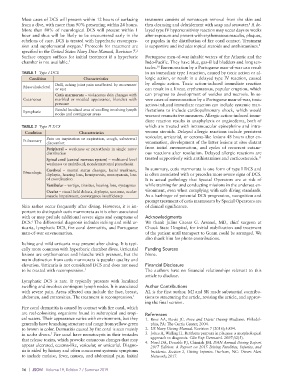
          TABLE 1  Type I DCS                                in an immediate type I reaction, caused by toxic action or al-
             Condition              Characteristics          lergic action, or result in a delayed type IV reaction, caused
                        Dull, aching joint pain unaffected by movement   by allergic action. Toxic action-induced immediate reaction
           Musculoskeletal  or rest                          can result in a linear, erythematous, papular eruption, which
                        Cutis marmorata – violaceous skin changes with   can progress to development of vesicles and necrosis. In se-
           Cutaneous    marbled or mottled appearance, blanches with   vere cases of envenomation by a Portuguese man-of-war, toxic
                        pressure                             action-induced immediate reaction can include systemic man-
                        Painful localized area of swelling involving lymph   ifestations to include cardiopulmonary shock, which would
           Lymphatic
                        nodes and contiguous areas           warrant resuscitative measures. Allergic action-induced imme-
                                                             diate reaction results in anaphylaxis or angioedema, both of
          TABLE 2  Type II DCS                               which are treated with intramuscular epinephrine and intra-
           Condition              Characteristics            venous steroids. Delayed allergic reactions include persistent
                    Pain on inspiration or expiration, cough, substernal   vesicular, urticarial, or eczema-like lesions 48 hours after en-
           Pulmonary                                         venomation, development of the latter lesions at sites distant
                    discomfort
                    Peripheral – weakness or paresthesia in single nerve   from initial envenomation, and cycles of recurrent cutane-
                    distribution                             ous reactions after resolution. Delayed allergic reactions are
                    Spinal cord (central nervous system) – multicord level   treated supportively with antihistamines and corticosteroids. 11
                    weakness or multifocal, nondermatomal paresthesia
                    Cerebral – mental status changes, facial weakness,   In summary, cutis marmorata is one form of type I DCS and
           Neurologic
                    diplopia, hearing loss, hemiparesis, monoparesis, loss   is often associated with or precedes more severe signs of DCS.
                    of coordination                          It is actual pathology that Special Operators are at risk of
                    Vestibular – vertigo, tinnitus, hearing loss, nystagmus  while training for and conducting missions in the undersea en-
                    Ocular – visual field defects, diplopia, scotoma, ocular   vironment, even when complying with safe diving standards.
                    muscle impairment, convergence insufficiency  As a harbinger of potential DCS progression, recognition and
                                                             prompt treatment of cutis marmorata by Special Operators are
          Skin rashes occur frequently after diving. However, it is im-  of clinical significance.
          portant to distinguish cutis marmorata as it is often associated
          with or may prelude additional severe signs and symptoms of   Acknowledgments
          DCS.  The differential diagnosis includes itching and mild ur-  We thank Julius Caesar G. Arsenal, MD, chief surgeon at
              6
          ticaria, lymphatic DCS, fire coral dermatitis, and Portuguese   Chuuk State Hospital, for initial stabilization and treatment
          man-of-war envenomation.                           of the patient until transport to Guam could be arranged. We
                                                             also thank him for photo contributions.
          Itching and mild urticaria may present after diving. It is typi-
          cally more common with hyperbaric chamber dives. Urticarial   Funding Sources
          lesions are erythematous and blanche with pressure, but the   None.
          main distinction from cutis marmorata is papular quality and
          elevation. Urticaria is not considered DCS and does not need   Financial Disclosure
          to be treated with recompression. 1                The authors have no financial relationships relevant to this
                                                             article to disclose.
          Lymphatic DCS is rare. It typically presents with localized
          swelling and involves contingent lymph nodes. It is associated   Author Contributions
          with severe pain. Areas affected can include the face, breast,   AL is the first author. MJ and SR made substantial contribu-
          abdomen, and extremities. The treatment is recompression. 1  tions to structuring the article, revising the article, and approv-
                                                             ing the final version.
          Fire coral dermatitis is caused by contact with fire coral, which
          are reef-colonizing organisms found in subtropical and tropi-  References
          cal waters. Their appearance varies with environment, but they   1.  Bove AA, Davis JC. Bove and Davis’ Diving Medicine. Philadel-
          generally have branching structure and range from yellow-green   phia, PA: The Curtis Center; 2004.
          to brown in color. Dermatitis caused by fire coral is seen mainly   2.  US Navy Diving Manual. Revision 7 (2016);5:894.
          in scuba divers.  Fire coral have nematocysts in their tentacles   3.  Johes A, Walling H. Retiform purpura in plaques: a morphological
                      7
          that release toxins, which provoke cutaneous changes that may   approach to diagnosis. Clin Exp Dermatol. 2007;32(5).
          appear ulcerated, eczema-like, vesicular, or urticarial. Diagno-  4.  Nord DA, Denoble PJ, Chimiak JM. DAN Annual Diving Report
                                                               2017 Edition: A Report on 2015 Diving Fatalities, Injuries, and
          sis is aided by history and often concurrent systemic symptoms   Incidents. Section 2, Diving Injuries. Durham, NC: Divers Alert
          to include malaise, fever, nausea, and abdominal pain. Initial   Network; 2017.


          16  |  JSOM   Volume 19, Edition 2 / Summer 2019

