


Page 138 - JSOM Summer 2019
P. 138
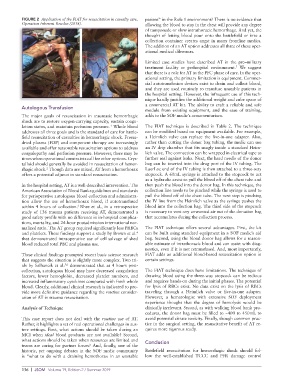
FIGURE 2  Application of the FIAT for resuscitation in casualty care,   patient” in the Role 1 environment? There is no evidence that
          Operation Inherent Resolve (2018).                 allowing the blood to stay in the chest will provide any degree
                                                             of tamponade or slow intrathoracic hemorrhage. And yet, the
                                                             thought of letting blood pour onto the battlefield or into a
                                                             collection container creates angst in many frontline medics.
                                                             The addition of an AT option addresses all three of these oper-
                                                             ational medical dilemmas.

                                                             Limited case studies have described AT in the pre–military
                                                             treatment facility or prehospital environment.  We suggest
                                                                                                  7
                                                             that there is a role for AT in the PFC phase of care. In the oper-
                                                             ational setting, the primary limitation is equipment. Commer-
                                                             cial autotransfusion devices exist to drain and collect blood,
                                                             and they are used routinely to transfuse unstable patients in
                                                             the hospital setting. However, the infrequent use of this tech-
                                                             nique hardly justifies the additional weight and cube space of
                                                             a commercial AT kit. The ability to craft a reliable and safe
          Autologous Transfusion
                                                             module from existing equipment, and the ease of training,
          The major goals of resuscitation in traumatic hemorrhagic   adds to the SOF medic’s armamentarium.
          shock are to restore oxygen-carrying capacity, sustain coagu-
          lation status, and maintain perfusion pressure.  Whole blood   The FIAT technique is described in Table 2. The technique
                                               1
          addresses all three goals and is the standard of care for battle-  can be modified based on equipment available. For example,
          field resuscitation of casualties in hemorrhagic shock. Freeze-  a Heimlich valve can replace the five-in-one adapter. Also,
          dried plasma (FDP) and component therapy are increasingly   rather than cutting the donor bag tubing, the medic can use
          available and offer reasonable resuscitation options to address   an IV drip chamber that fits snugly inside a standard Heim-
          coagulopathy and perfusion pressure. However, there may be   lich valve. The connection can be wrapped in electrical tape to
          times when operational constraints call for other options. Crys-  further seal against leaks. Next, the hard needle of the donor
          talloid should generally be avoided in resuscitation of hemor-  bag can be inserted into the drug port of the IV tubing. The
          rhagic shock.  Though data are mixed, AT from a hemothorax   LuerLoc end of the IV tubing is then attached to a three-way
                    2
          offers a potential adjunct to standard resuscitation.  stopcock. A 60mL syringe is attached to the stopcock to act
                                                             as a hydraulic assist to pull the blood off of the chest tube and
          In the hospital setting, AT is a well-described intervention. The   then push the blood into the donor bag. In this technique, the
          American Association of Blood Banks guidelines and standards   collection line needs to be pinched while the syringe is used to
          for perioperative autologous blood collection and administra-  pull the blood off of the chest tube. The next step is pinching
          tion  allow  the  use  of  hemothorax  blood,  if  autotransfused   the IV line from the Heimlich valve as the syringe pushes the
          within 4 hours of collection. Rhee et al., in a retrospective   blood into the collection bag. The third side of the stopcock
                                 3
          study of 136 trauma patients receiving AT, demonstrated a   is necessary to vent any unwanted air out of the donation bag
          good safety profile with no difference in in-hospital complica-  that accumulates during the collection process.
          tions, mortality, and 24-hour postadmission international nor-
          malized ratio. The AT group required significantly less PRBCs   The FIAT technique offers several advantages. First, the kit
          and platelets. These findings support a study by Brown et al.    can be built using standard equipment in a SOF medic’s aid
                                                         4
          that demonstrated intraoperative use of cell salvage of shed   bag. Second, using the blood donor bag allows for a reason-
          blood reduced total PBC and plasma use.            able estimate of intrathoracic blood and can assist with diag-
                                                             nostics, even if it is not retransfused. And, most importantly,
          These clinical findings prompted recent basic science research   FIAT adds an additional blood-based resuscitation option in
          that suggests the situation is slightly more complex. Two tri-  certain settings.
          als by Salhancik et al.  demonstrated that at 4 hours post-
                            5,6
          collection, autologous blood may have decreased coagulation   The FIAT technique does have limitations. The technique of
          factors, lower hemoglobin, decreased platelet numbers, and   drawing blood using the three-way stopcock can be tedious
          increased inflammatory cytokines compared with fresh whole   and requires hands-on during the initial phases. The potential
          blood. Clearly, additional clinical research is indicated to pro-  for lysis of RBCs exist. No data exist on the lysis of RBCs
          vide more definitive guidance regarding the routine consider-  traveling through a Heimlich valve or five-in-one adapter.
          ation of AT in trauma resuscitation.               However, a hematologist with extensive SOF deployment
                                                             experience thought that the degree of hemolysis would be
          Analysis of Technique                              clinically irrelevant. Second, as with walking blood bank pro-
                                                             cedures, the donor bag must be filled to ~400 to 450mL to
          This case report does not deal with the  routine use of AT.   avoid potential citrate toxicity. Finally, though common prac-
          Rather, it highlights a set of real operational challenges in aus-  tice in the surgical setting, the resuscitative benefit of AT re-
          tere settings. First, what actions should be taken during an   quires more rigorous study.
          MCI when  ideal blood products are not available? Second,
          what actions should be taken when resources are limited and   Conclusion
          teams are caring for partner forces? And, finally, one of the
          historic, yet ongoing debates in the SOF medic community   Battlefield resuscitation for hemorrhagic shock should fol-
          is “what to do with a draining hemothorax in an unstable   low the well-established TCCC and PFR damage control


          136  |  JSOM   Volume 19, Edition 2 / Summer 2019

