


Page 22 - JSOM Winter 2018
P. 22
were performed with the Microsoft Excel software package   FIGURE 2  Decompression failure by device.
          (Micro soft Corp, www.microsoft.com). Statistical analysis
          was performed using the STATA, version 13, statistical soft-
          ware package (StataCorp).


          Results
          A total of 196 t-H/PTX events were induced in 25 swine, and
          these were evenly distributed across the four devices studied.
          One animal failed to recover and died prematurely during
          the experiment, without intervention. A total of 100 events
          were performed with 10% EBV hemorrhage and HTX, and
          96 events were performed with 20% EBV hemorrhage and
          HTX. Assumption of normality of distribution was rejected
          with respect to continuous outcomes of interest, seconds to in-
          tervention (p = .000), seconds to rescue (p = .000), and volume
          of CO  instilled (p = .000).                       AC, angiocatheter; LT, laparoscopic trocar; mVN, modified Veress
               2                                             needle.
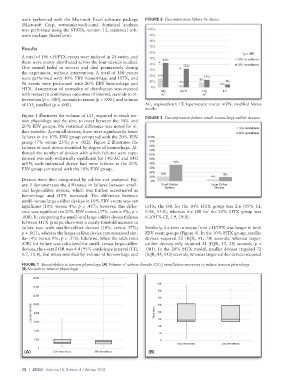
          Figure 1 illustrates the volume of CO  required to reach ten-
                                        2
          sion physiology and the time to onset between the 10% and   FIGURE 3  Decompression failure: small- versus large-caliber devices.
          20% EBV groups. No statistical difference was noted for ei-
          ther variable. Across all devices, there were significantly fewer
          failures in the 10% EBV group compared with the 20% EBV
          group  (7%  versus  23%;  p  =  .002).  Figure  2  illustrates  the
          failures of each device stratified by degree of hemorrhage. Al-
          though the number of devices with which failures were expe-
          rienced was only statistically significant for 14G AC and 14G
          mVN, each individual device had more failures in the 20%
          EBV group compared with the 10% EBV group.

          Devices were then categorized by caliber and analyzed. Fig-
          ure 3 demonstrates the difference in failures between small-
          and large-caliber devices, which was further accentuated as
          hemorrhage  and  HTX  increased.  The  difference  between
          small- versus large-caliber devices in 10% EBV events was not
          significant (10% versus 4%; p = .437); however, this differ-  HTX, the OR for the 10% HTX group was 2.6 (95% CI,
          ence was significant in 20% EBV events (37% versus 9%; p =   0.48, 13.8), whereas the OR for the 20% HTX group was
          .008). In comparing the small- and large-caliber device failures   6.1(95% CI, 1.9, 19.8).
          between HTX groups, there was a nearly fourfold increase in
          failure rate with smaller-caliber devices (10% versus 37%;    Similarly, the time to rescue from t-H/TPX was longer in both
          p = .001), whereas the larger-caliber device rate remained sim-  EBV event groups (Figure 4). In the 10% HTX group, smaller
          ilar (4% versus 9%; p = .370). Likewise, when the odds ratio   devices required 52 (IQR, 41, 78) seconds, whereas larger-
          (OR) for failure was calculated for small- versus large-caliber   caliber devices only required 21 (IQR, 15, 28) seconds (p <
          devices, the overall OR was 4.4 (95% confidence interval [CI],   .001). In the 20% HTX model, smaller devices required 72
          1.7, 11.4), but when stratified by volume of hemorrhage and   (IQR, 45, 142) seconds, whereas larger-caliber devices required

          FIGURE 1  Susceptibility to tension physiology. (A) Volume of carbon dioxide (CO ) insufflation necessary to induce tension physiology.
                                                                   2
          (B) Seconds to tension physiology.


           (A)                                                (B)


          20  |  JSOM   Volume 18, Edition 4 / Winter 2018

