


Page 137 - JSOM Winter 2018
P. 137
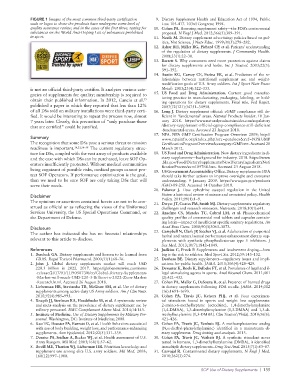
FIGURE 1 Images of the most common third-party certification   9.  Dietary Supplement Health and Education Act of 1994, Public
              seals or logos to show the products have undergone some level of   Law 103-417. 103rd Congress; 1994.
              quality assurance review, and in the cases of the first three, testing for   10.  Cohen PA. Assessing supplement safety—the FDA’s controversial
              substances on the World Anti-Doping List of substances prohibited   proposal. N Engl J Med. 2012;366(5):389–391.
              in sport.                                          11.  Nestle M. Dietary supplement advertising: policies based on pol-
                                                                    itics, Not Science. J Nutr Educ. 1999;31(5):278–282.
                                                                 12.  Ashar BH, Miller RG, Pichard CP, et al. Patients’ understanding
                                                                    of the regulation of dietary supplements. J Community Health.
                                                                    2008;33(1):22–30.
                                                                 13.  Barrett S. Why consumers need more protection against claims
                                                                    for dietary supplements and herbs.  Int J Toxicol.  2003;22(5):
                                                                    391–392.
                                                                 14.  Austin KG, Carvey CE, Farina EK, et al. Predictors of the re-
                                                                    lationships between nutritional supplement use and weight-
                                                                    modification goals of U.S. Army soldiers. Int J Sport Nutr Exerc
              is not an official third-party certifier. It analyzes various cate-  Metab. 2013;23(4):322–335.
              gories of supplements for quality; membership is required to   15.  US  Food  and  Drug  Administration.  Current  good  manufac-
                                                            55
              obtain their published information. In 2012, Cancio et al.    turing practice in manufacturing, packaging, labeling, or hold-
                                                                    ing operations for dietary supplements. Final rule.  Fed Regist.
              published a paper in which they reported that less than 12%   2007;72(121):34751–34958.
              of all DSs sold on military installations were third-party certi-  16.  Long J. Dietary supplement official: cGMP compliance still de-
              fied. It would be interesting to repeat the process now, almost   ficient in ‘fundamental’ areas. Natural Products Insider. 10 Jan-
              7 years later. Clearly, this precaution of “only purchase those   uary 2018. https://www.naturalproductsinsider.com/regulatory
              that are certified” could be justified.               /dietary-supplement-official-cgmp-compliance-still-deficient
                                                                    -fundamental-areas. Accessed 23 August 2018.
                                                                 17.  NPA. NPA GMP Certification Program Overview. 2009; http://
              Summary                                               www.npainfo.org/index.php?src=gendocs&ref=NPAGMP
              The recognition that some DSs pose a serious threat to mission   CertificationProgramOverview&category=GMPcert. Accessed 28
              readiness is important. 16,21,56–58  The current regulatory struc-  March 2012.
              ture for DSs, coupled with the vast array of products available   18.  US Food and Drug Administration. New dietary ingredients in di-
              and the ease with which DSs can be purchased, leave SOF Op-  etary supplements—background for industry. 2018. https://www
              erators insufficiently protected. Without medical communities   .fda.gov/Food/DietarySupplements/NewDietaryIngredientsNoti
                                                                    ficationProcess/ucm109764.htm. Accessed 23 August 2018.
              being cognizant of possible risks, medical groups cannot pro-  19.  US Government Accountability Office. Dietary supplements: FDA
              tect SOF Operators. If performance optimization is the goal,   should take further actions to improve oversight and consu mer
              then we need to be sure SOF are only taking DSs that will   understanding. 9 January 2009. https://www.gao.gov/products
              serve their needs.                                    /GAO-09-250. Accessed 14 October 2018.
                                                                 20.  Palamar J. How ephedrine escaped regulation in the United
              Disclaimer                                            States: a historical review of misuse and associated policy. Health
                                                                    Policy. 2011;99(1):1–9.
              The opinions or assertions contained herein are not to be con-  21.  Dwyer JT, Coates PM, Smith MJ. Dietary supplements: regulatory
              strued as official or as reflecting the views of the Uniformed   challenges and research resources. Nutrients. 2018;10(1):e41.
              Services University, the US Special Operations Command, or   22.  Anselmo CS, Mendes TC, Cabral LM, et al. Physicochemical
              the Department of Defense.                            quality profiles of commercial oral tablets and capsules contain-
                                                                    ing lutein—impact of insufficient specific sanitary regulations. An
              Disclosure                                            Acad Bras Cienc. 2018;90(3)3063–3073.
              The author has indicated she has no financial relationships   23.  Campbell N, Clark JP, Stecher VJ, et al. Adulteration of purported
                                                                    herbal and natural sexual performance enhancement dietary sup-
              relevant to this article to disclose.                 plements with synthetic phosphodiesterase type 5 inhibitors.  J
                                                                    Sex Med. 2013;10(7):1842–1849.
              References                                         24.  Judkins C, Prock P. Supplements and inadvertent doping—how
              1.  Burdock GA. Dietary supplements and lessons to be learned from   big is the risk to athletes. Med Sport Sci. 2012;59:143–152.
                GRAS. Regul Toxicol Pharmacol. 2000;31(1):68–76.  25.  Denham BE. Dietary supplements—regulatory issues and impli-
              2.  John J. Global dietary supplements market will reach USD   cations for public health. JAMA. 2011;306(4):428–429.
                220.3 billion in 2022. 2017. https://globenewswire.com/news   26.  Deventer K, Roels K, Delbeke FT, et al. Prevalence of legal and il-
                -release/2017/01/11/905073/0/en/Global-Dietary-Supplements   legal stimulating agents in sports. Anal Bioanal Chem. 2011;401
                -Market-will-reach-USD-220-3-Billion-in-2022-Zion-Market   (2):421–432.
                -Research.html. Accessed 26 August 2018.         27.  Cohen PA, Maller G, DeSouza R, et al. Presence of banned drugs
              3.  Lieberman HR, Stavinoha TB, McGraw SM, et al. Use of dietary   in dietary supplements following FDA recalls. JAMA. 2014;312
                supplements among active-duty US Army soldiers. Am J Clin Nutr.   (16):1691–1693.
                2010;92(4):985–995.                              28.  Cohen PA, Travis JC, Keizers PHJ, et al. Four experimen-
              4.  Knapik JJ, Steelman RA, Hoedebecke SS, et al. A systematic review   tal stimulants found in sports and weight loss supplements:
                and meta-analysis on the prevalence of dietary supplement use by   2-amino-6-methylheptane  (octodrine), 1,4-dimethylamylamine
                military personnel. BMC Complement Altern Med. 2014;14:143.  (1,4-DMAA),  1,3-dimethylamylamine  (1,3-DMAA)  and  1,3-di-
              5.  Institute of Medicine. Use of Dietary Supplements by Military Per-  methylbutylamine (1,3-DMBA). Clin Toxicol (Phila). 2018;56(6):
                sonnel. Washington, DC: Institute of Medicine; 2008.  421–426.
              6.  Kao TC, Deuster PA, Burnett D, et al. Health behaviors associated   29.  Cohen PA, Travis JC, Venhuis BJ. A methamphetamine analog
                with use of body building, weight loss, and performance enhancing   (N,α-diethyl-phenylethylamine) identified in a mainstream di-
                supplements. Ann Epidemiol. 2012;22(5):331–339.     etary supplement. Drug testing and analysis. 2013.
              7.  Deuster PA, Sridhar A, Becker WJ, et al. Health assessment of U.S.   30.  Cohen PA, Travis JC, Venhuis BJ. A synthetic stimulant never
                Army Rangers. Mil Med. 2003;168(1):57–62.           tested in humans, 1,3-dimethylbutylamine (DMBA), is identified
              8.  Bovill ME, Tharion WJ, Lieberman HR. Nutrition knowledge and   in multiple dietary supplements. Drug Test Anal. 2015;7(1):83–87.
                supplement use among elite U.S. army soldiers. Mil Med. 2003;   31.  Carvajal R. Contaminated dietary supplements. N Engl J Med.
                168(12):997–1000.                                   2010;362(3):274.

                                                                                    SOF Use of Dietary Supplements  |  135

