


Page 135 - JSOM Winter 2018
P. 135
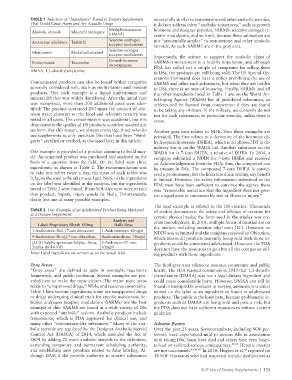
TABLE 1  Selection of “Ingredients” Found in Dietary Supplements   structurally similar to testosterone and other anabolic steroids,
              That Could Cause Harm and Are Actually Drugs       it did not address other “anabolic substances,” such as growth
                                              Methylhexanamine   hormone and designer peptides, SARMS, selective estrogen re-
              Anabolic steroids  Sildenafil analogues
                                              (DMAA)             ceptor modulators, and so forth, because these substances are
                                              Selective androgen   not “structurally similar” to testosterone and other anabolic
              Aromatase inhibitors  Tadalafil   receptor modulators  steroids, As such, SARMS are in the gray area.
                                              Selective estrogen
              Sibutramine     Modafinil/adrafinil
                                              receptor modulators  Importantly, the science to support the anabolic claim of
                                              Growth hormone
              Prohormones     Tamoxifen                          SARMS is nonexistent in a healthy population, and although
                                              secretagogues      FDA has called out a couple of companies for selling them
              DMAA, 1,3-dimethylamylamine.                       in DSs, the products are still being sold. The US Special Op-
                                                                 erations Command does have a policy prohibiting the use of
              Contaminated products can also be found within categories   SARMS and other such substances, but when they are hidden
              generally considered safe, such as multivitamin and mineral   in DSs, there is no way of knowing. Finally, SARMS and all
              products. One such example is a liquid multivitamin and   the other ingredients listed in Table 1 are on the World An-
              mineral DS that was widely distributed. After the initial case   ti-Doping  Agency  (WADA) list  of  prohibited  substances,  so
              was recognized, more than 200 additional cases were iden-  athletes will be banned from competition if they are found
              tified: The product contained 200 times the amount of sele-  to be taking any of them. In the military, we currently do not
              nium (trace element) on the label and selenium toxicity was   test for such substances, in particular steroids, unless there is
              noted in all cases. The contamination was accidental, but this   cause.
              demonstrates the quality of DS products is neither assured nor
              uniform. For this reason, we always encourage those who do   Another gray area relates to NDIs. Two short examples are
              use supplements to only purchase DSs that have been “third-  provided. The first relates to a derivative of the hormone de-
              party” certified or verified, as discussed later in this article.  hydroepiandrosterone (DHEA), which is an allowed DS in the
                                                                 military but is on the WADA list. Another substance on the
              One example is provided of a product claiming to build mus-  WADA list is 7-keto DHEA, a relative of DHEA. In 2004, a
              cle. An unnamed product was purchased and analyzed on the   company submitted a NDIN for 7-keto DHEA and received
              basis of a question from the field. On the label were three   an Acknowledgement from the FDA; thus, the compound can
              ingredients, as shown in Table 2. The recommendation was   be present in DSs. The compound 7-keto DHEA is consid-
              to take one tablet twice a day; the mass of each tablet was   ered a prohormone, but the literature documenting any benefit
              0.5g, so the total to be taken was 1g/d. None of the ingredients   is limited. However, the safety information submitted to the
              on the label was identified in the analysis, but the ingredients   FDA must have been sufficient to convince the agency there
              noted in Table 2 were found. If any SOF Operator were to take   was “reasonable assurance that the ingredient does not pres-
              that product, hepatic injury would be likely. Unfortunately,   ent a significant or unreasonable risk of illness or injury.”
              this is just one of many possible examples.
                                                                 The  next  example  is related  to the  DS  creatine.  Thousands
              TABLE 2  One Example of an Adulterated Product Being Marketed   of studies demonstrate the safety and efficacy of creatine for
              as a Dietary Supplement                            certain physical tasks; the form used in the studies was cre-
                                                Analysis and     atine monohydrate. In 2018, multiple forms of creatine are on
                 Label: Proprietary Blend: 150mg  Daily Dose     the market, including creatine ethyl ester HCl. However, an
              1-Androstene-3bol,17-one decanoate  1-Androsterone: 10mg/d  NDIN was submitted and the company received an Objection,
              4-Androstene-3b-ol,17-one ethanthate  Androstanedione: 78mg/d  which means all products currently being sold with those in-
              (25 R)-5alpha-spirostan-2alpha, 3beta,  2-Androsten-17-one:   gredients could be considered adulterated. However, the FDA
              5alpha-triol-6-OH            63mg/d                does not have the resources to go after all the companies sell-
              Note: Label ingredients are written as on the actual label.  ing products with those ingredients.


              Gray Areas                                         The final gray area relates to resource constraints and public
              “Gray areas” are defined as gaps in oversight, regulatory   health. The FDA warned consumers in 2013 that 1,3-dimeth-
              framework, and public confusion. Several examples are pro-  ylamylamine (DMAA) was not a legal dietary ingredient and
              vided here to make the topic clearer. The major topic areas   could cause considerable harm. However, DMAA can still be
              relate to “unapproved drugs,” NDIs, and resource constraints.   found in multiple DS products in varying amounts; it is either
              Table 1 lists various ingredients; some are unapproved drugs   named on the label as an ingredient or found in adulterated
              or drugs undergoing clinical trials for specific indications. Se-  products. The public is the loser here, because problematic in-
              lective androgen receptor modulators (SARMs) are the best   gredients such as DMAA are being sold and pose a risk, but
              example of this. SARMS are found in a wide variety of DSs   the FDA does not have sufficient resources to enforce current
              with expected “anabolic” actions. Anabolic products include   guidance.
              testosterone, which is FDA approved for clinical use, and
              many other “testosterone-like substances.” Many of the ana-  Adverse Events
              bolic steroids are regulated by the Designer Anabolic Steroid   Over the past 25 years, Servicemembers, including SOF per-
              Control Act (DASCA) of 2014, which amended the Act of   sonnel, have experienced mild to serious AEs in association
              2004 by adding 22 more anabolic steroids to the definition,   with taking DSs. Some have died and others have been hospi-
              expanding temporary and permanent scheduling authority,   talized or suffered serious consequences. 40-47  Hepatic injuries
              and establishing new penalties related to false labeling. Al-  are not uncommon. 43,45–47  In 2010, Hughes et al.  reported on
                                                                                                      43
              though DASCA did provide authority to control substances   18 SOF Operators who had suspected hepatic dysfunction as
                                                                                    SOF Use of Dietary Supplements  |  133

