


Page 19 - JSOM Fall 2018
P. 19
commonly in care situations when initial tourniquet pressure one (blood loss) differs from the other (neurogenic dysfunc
is marginally acceptable or tourniquet use is lengthy. tion). Sports announcers can retrospectively pick the turning
point of a ballgame with ease (as if an audience demands that
Item 4 was if someone in need of tourniquet use has bled to the story has to have something that must be the cause of the
death, would the respondent regret it more if they were the outcome), but it is hard to predict such.
only person available to apply a tourniquet or someone else
was instead. All users noted that regret loomed large over In item 8, users predicted when their performance would begin
judgment, as found in prior works. 3,24–26 to be reliable with a specific definition of reliability. The first
cadet answered test 1 incorrectly, although she had previously
In item 5, the fellow and the clinicianscientist answered cor aced all 80 tests in a prior study. But she was not reliable in
rectly that the flow in a halfclosed artery was normal. To the the present study and peaked with 73% at test 14. The second
27
contrary, the cadets answered incorrectly that it was half the cadet answered test 13 incorrectly despite having satisfactorily
normal flow. This item addressed a fluid mechanics phenom completed 76 of 80 tests in the prior study. But he was not
enon, the Venturi effect, which is relevant to the assessment reliable in the present study, peaking at 75% at test 15. The
of bleeding in first aid. The question was framed to allow the fellow answered test 12 incorrectly and test 13 correctly. The
respondent to adjust their prediction by using two relevant clinicianscientist answered test 1 correctly (all good results).
values as maximum and minimum bounds, normal and no The clinicianscientist created item 8 to check for a pattern
flow, respectively. All users assumed that the use of the word that was revealed as follows: users with more skills and expe
“flow” meant volumetric flow rate and not simply the velocity rience were noted to be more accurate in assessing their own
of that flow. skills and experience. 33
Item 6 questioned which factor is most associated with a need Item 9 was like item 8 except the user judged when he or she
for sidebyside use of tourniquets, and the responses by three would remain reliable. The first and second cadet answered
users were all different but incorrect. The clinicianscientist test 1 and 13, respectively. Both were incorrect and never be
answered correctly, mentioning the limb girth. At the site of came reliable. The fellow answered test 13 correctly. The cli
tourniquet use, greater limb girth increases the need for a sec nicianscientist answered test 1 correctly. The sought pattern
ond tourniquet used side by side with the first. The frequency was again seen: Users with more skills and experience in as
11
of girth causing such increase is greater than any other factor. sessing their own skills and experience were more accurate in
The greater girth commonly occurs in adult patients, espe assessing their own skills and experience. Although the finding
cially with tourniquet use on the proximal thigh, the limb sounds circular, it is not. It is spiral.
11
33
region of greatest girth. 28,29
Item 10 defined minimal important difference for blood loss, and
Item 7 dealt with the bloodloss volume, which was associated three users judged 100mL, and the clinicianscientist answered
with the severest degree (class IV) of hemorrhagic shock. 177mL, a value noted by educators. Users answers were within
34
30
Three users answered “true” that such volume had caused that the midrange of others we have polled over the years.
degree for an individual patient, and the clinicianscientist an
swered “false,” because causation was indeterminable in such Tourniquet Use Testing
a way. The three users conflated association with causation, Overall results among 60 tests were as follows: 38 were sat
31
and the coherent story of the item was written to allow readers isfactory (“go” status); 12 were not applicable because there
to jump to the conclusion of the storyline being about cau was no bleeding, so users judged not to intervene; and 10 were
sality as opposed to sampling. The clinicianscientist knew unsatisfactory (“no go”). Unsatisfactory results were due to
3,4
that the association between blood loss and shock severity was one test with a loose tourniquet and nine tests with 10 in
well established on average, but interpatient variability in that correct tourniquet placements (i.e., not at the right location).
association has long been shown to be large, thereby making Results are shown in Table 2.
causation impossible to determine from a single occurrence.
29
The clinicianscientist was aware (1) that the shock informa Each case resulted in a different pattern. Case 1 was uniformly
tion 30,32 was based on a 70kg man (the item allowed users to (100%) passed; users identified an absence of bleeding in each
discount unspecified possibilities, because neither mass nor of its 12 tests; the manikin was not turned on, and no lights
sex was noted), (2) the relevant ranges of body weight were on meant no bleeding. Case 1 was to be procedurally easy,
6
known, 28,29 (3) that compelling stories are likely to have us but we also wanted to see if users could reliably decide not
think of potential causes to potential effects, 3,26 and (4) that to intervene. Case 2 had 83% (10 of 12) satisfactory results.
it takes effort to abstain from the favorite sport of humans: The two unsatisfactory tests resulted from an incorrect tour
jumping to conclusions. As a counterexample, a gunshot niquet placement and a loose tourniquet, but neither ended
3
wound through abdominal blood vessels and the spinal cord in a bleeding status. Case 2 was to be mechanically easy, but
result in shock associated with both lesions, but the cause of we also wanted to see if the uncertainty from randomization
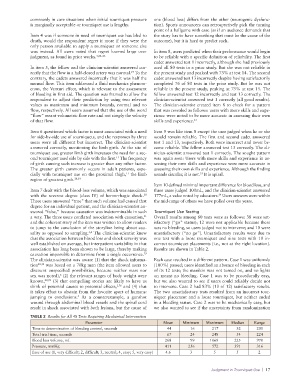
TABLE 2 Results for All 48 Tests Requiring Mechanical Intervention
Parameter Mean Minimum Maximum Median Range
Time to determination of bleeding control, seconds 44 16 217 32 201
Total trial time, seconds 67 24 248 54 224
Blood loss volume, mL 268 99 1069 225 970
Pressure, mmHg 411 256 572 391 316
Ease of use (1, very difficult; 2, difficult; 3, neutral; 4, easy; 5, very easy) 4.6 3 5 5 2
Judgment in Tourniquet Use | 17

