


Page 62 - JSOM Summer 2018
P. 62
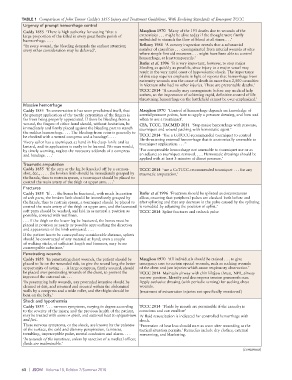
TABLE 1  Comparison of John Turner Caddy’s 1855 Injury and Treatment Guidelines, With Evolving Standards of Emergent TCCC
           Urgency of prompt hemorrhage control
           Caddy 1855  ‘There is high authority for stating “that a    Maughon 1970  ‘Many of the 193 deaths due to wounds of the
           large proportion of the killed in every great battle perish of   extremities . . . might be alive today if the thought were firmly
           haemorrhage. . . .                              embedded to staunch the flow of blood at all times . . .’
           “In every wound, the bleeding demands the earliest attention;    Bellamy 1984  ‘A cursory inspection reveals that a substantial
           every other consideration may be deferred’.     number of casualties . . . exsanguinated from arterial wounds at sites
                                                           where simple first aid measures . . . might have been able to control
                                                           hemorrhage, at least temporarily.’
                                                           Butler et al. 1996  ‘It is very important, however, to stop major
                                                           bleeding as quickly as possible, since injury to a major vessel may
                                                           result in the very rapid onset of hypovolemic shock. The importance
                                                           of this step requires emphasis in light of reports that hemorrhage from
                                                           extremity wounds was the cause of death in more than 2,500 casualties
                                                           in Vietnam who had no other injuries. These are preventable deaths.’
                                                           TCCC 2014  ‘A casualty may exsanguinate before any medical help
                                                           arrives, so the importance of achieving rapid, definitive control of life
                                                           threatening hemorrhage on the battlefield cannot be over-emphasized.’
           Massive hemorrhage
           Caddy 1855  ‘In conversation it has soon proclaimed itself, that   Maughon 1970  ‘Control of hemorrhage depends on knowledge of
           the prompt application of the tactile extremities of the fingers is   arterial pressure points, how to apply a pressure dressing, and how and
           far from being properly appreciated. If there be bleeding from a   when to use a tourniquet’.
           wound, the fingers of either hand should, without hesitation, be   CFA, TCCC, TACMED 2011  ‘Stop major hemorrhage with pressure,
           immediately and firmly placed against the bleeding part to stanch   tourniquet and wound packing with hemostatic agent ‘
           the sudden hemorrhage. . . . The bleeding from veins is generally to
           be checked with a wetted compress and a bandage’. . . .  TCCC 2014  ‘Use a CoTCCC-recommended tourniquet to control
                                                           life-threatening external hemorrhage that is anatomically amenable to
           ‘Every sailor has a tourniquet at hand in his clasp- knife and its   tourniquet application. . . .”
           laniard, and its application is easily to be learned. No man would,
           by timely warning, neglect the necessary addenda of a compress   ‘For compressible hemorrhage not amenable to tourniquet use or as
           and bandage. . . .’                             an adjunct to tourniquet removal. . . . Hemostatic dressings should be
                                                           applied with at least 3 minutes of direct pressure.’
           Traumatic amputation
           Caddy 1855  ‘If the arm or the leg be knocked off by a cannon-  TCCC 2014  ‘use a CoTCCC-recommended tourniquet . . . for any
           shot, &c., . . . . the broken limb should be immediately grasped by   traumatic amputation.’
           the hands, thus to restrain spasm, a tourniquet should be placed to
           control the main artery of the thigh or upper arm. . . .’
           Fractures
           Caddy 1855  ‘If . . . the bones be fractured, with much laceration   Butler et al 1996  ‘Fractures should be splinted as circumstances
           of soft parts, the broken limb should be immediately grasped by   allow, ensuring that peripheral pulses are checked both before and
           the hands, thus to restrain spasm, a tourniquet should be placed to  after splinting and that any decrease in the pulse caused by the splinting
           control the main artery of the thigh or upper arm, and the lacerated  is remedied by adjusting the position of splint.’
           soft parts should be washed, and laid in as natural a position as   TCCC 2014  Splint fractures and recheck pulse
           possible, covered with wet linen.
           . . . If the thigh or the lower leg be fractured, the bones must be
           placed in position as nearly as possible approaching the direction
           and appearance of the limb uninjured. . . .
           If the patient has to be conveyed any considerable distance, splints
           should be constructed of any material at hand; even a couple
           of walking sticks, of sufficient length and firmness, may be no
           contemptible substitute.’
           Penetrating wounds
           Caddy 1855  ‘In penetrating chest wounds, the patient should be   Maughon 1970  ‘All individuals should be trained . . . to give
           placed to lie on the wounded side, to give the sound lung the better  emergency care to certain special wounds, such as sucking wounds
           opportunity of acting . . . A large compress, firmly secured, should   of the chest and jaw injuries which cause respiratory obstruction.’
           be placed over penetrating wounds of the chest, to prevent the   TCCC 2014  Maintain airway with chin lift/jaw thrust, NPA, airway
           ingress of the external air. . . .              recover position. Identify and decompress tension pneumothorax.
           ‘In penetrating belly wounds, any protruded intestine should be   Apply occlusive dressing (with periodic venting) for sucking chest
           cleaned of dirt, and returned and secured within the abdominal   wounds.
           walls by a compress and a wide roller, and the thighs should be   [treatment of evisceration injuries not specifically mentioned]
           bent on the belly.’
           Shock and hypothermia
           Caddy 1855  ‘. . . nervous symptoms, varying in degree according   TCCC 2014  ‘Fluids by mouth are permissible if the casualty is
           to the severity of the injury, and the previous health of the patient,   conscious and can swallow’
           may be treated with wine or spirit, and external heat to epigastrium  IV fluid resuscitation is indicated for controlled hemorrhage with
           and feet.                                       shock.
           These nervous symptoms, or the shock, are known by the paleness   ‘Prevention of heat loss should start as soon after wounding as the
           of the surface, the cold and clammy perspiration, faintness,   tactical situation permits.’ Remedies include dry clothes, external
           trembling, imperceptible pulse, mental confusion and alarm. . . .  rewarming, and blanketing.
           ‘In wounds of the intestines, unless by sanction of a medical officer,
           fluids are inadmissible.’
                                                                                                     (continues)


          60  |  JSOM   Volume 18, Edition 2/Summer 2018

