


Page 108 - JSOM Spring 2018
P. 108
and provide insight into ways whereby value-directed be-  challenge  their  sense  of  meaning  and  purpose.  Clearly,  the
          havior can improve an individual’s health, well-being, and   ability to determine how to shift between differing behavioral
          performance. Military chaplains participating in the Mental   sets to ensure that actions are consistent with values in the
          Health Integration of Chaplaincy Services training program   moment will improve an individual’s ability to maintain value-
          are taught to incorporate components of ACT into the spiri-  directed living.
          tual care practices and guidance they provide to SOF.
                                                             Cognitive Flexibility and Agility
          Wilson et al.  describe values as “ongoing patterns of activity   SOF Operators are continuously asked to adapt and adjust
                    8
          that are actively constructed, dynamic, and evolving.” From   within the dynamic flow of real-time, life-threatening tasks.
          the broader context of spirituality, values can be understood as   Outside  influences  continually  transform  what  seemed  to
          the ways in which a person finds meaning and purpose in their   be static situations into complex and often chaotic environ-
          life, or through questions such as “what gets you up in the   ments.  Whereas a strong system of beliefs and values may
                                                                  10
          morning?” Values are individually defined, differ among in-  be of benefit in this environment, at times, rigidly held beliefs
          dividuals, and are service based or derived. Most people have   can present conflict and result in self-doubt and questioning.
          some internal driving value system that can support them,   Approaches to managing these conflicts include the concepts
          and this system can also change and shift over time, based on   of cognitive flexibility and cognitive agility.
          experiences.
                                                             Cognitive flexibility is defined as “the readiness with which
          Individuals can identify their values by evaluating the ways in   one can selectively switch between mental processes to gen-
          which they direct their time, energy, and financial resources.   erate appropriate behavioral responses.”  It reflects a per-
                                                                                              11
          Although values can be related to personal goals, they are also   son’s ability to use a variety of approaches when faced with
          a motivating force and direction toward which persons move   challenges, problems, or different unpleasant and difficult
          and identify with others. People may identify values within   situations. Cognitive flexibility requires an individual to have
          different contexts, such as being an attentive father, a loyal   “awareness that there are alternative options for coping in
          brother, a trusted team member, or they may have an overarch-  various situations, willingness to adapt and be flexible, and
          ing value that drives many aspects of their life, such as being   belief that they have the ability to be flexible.”  McCann and
                                                                                                 12
          a person of integrity or good steward of the earth and nature.   Webb  found that individuals with a high level of spiritual
                                                                 13
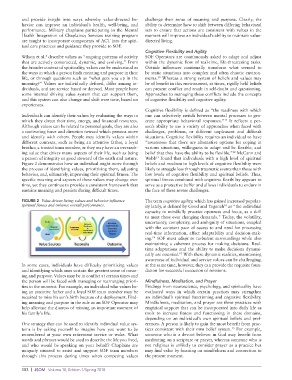
          Figure 2 demonstrates how an individual might move through   beliefs and medium to high levels of cognitive flexibility were
          the process of identifying values, prioritizing them, adjusting   likely to struggle less through traumatic events than those with
          behavior, and, ultimately, improving their spiritual fitness. The   low levels of cognitive flexibility and spiritual beliefs. Thus,
          specific meaning and aspects of these values may change over   spiritual fitness combined with cognitive flexibility appears to
          time, yet they continue to provide a consistent framework that   serve as a protective buffer and allows individuals to endure in
          sustains meaning and persists during difficult times.  the face of these severe challenges.

          FIGURE 2  Value-driven living: values and behavior influence   The term cognitive agility, which has gained increased popular-
          spiritual fitness and enhance overall performance.  ity lately, is defined by Good and Yeganeh  as “the individual
                                                                                              10
                                                             capacity to mindfully practice openness and focus, as a skill
                                                             to meet these ever changing demands.” Today, the volatility,
                                                             uncertainty, complexity, and ambiguity of situations, coupled
                                                             with the constant pace of access to and need for processing
                                                             real-time information, affect adaptability and decision-mak-
                                                             ing.  SOF must adapt to turbulent surroundings while also
                                                                14
                                                             maintaining a coherent process for making decisions. Real-
                                                             time adaptations and the ability to make decisions dynami-
                                                             cally are essential.  With these dynamic realities, maintaining
                                                                           10
                                                             awareness of individual and service values can be challenging;
          In some cases, individuals have difficulty prioritizing values   at the same time, however, they can provide the requisite foun-
          and identifying which ones sustain the greatest sense of mean-  dation for successful execution of missions.
          ing and purpose. Values may be in conflict at certain times and
          the person will be faced with managing or rearranging priori-  Mindfulness, Meditation, and Prayer
          ties in the moment. For example, an individual who values be-  Findings from neuroscience, psychology, and spirituality have
          ing an attentive father and a loyal SOF team member may be   evaluated ways in which certain practices may strengthen
          required to miss his son’s birth because of a deployment. Find-  an individual’s spiritual functioning and cognitive flexibility.
          ing meaning and purpose in the role as an SOF Operator may   Mindfulness, meditation, and prayer are three practices with
          help alleviate the distress of missing an important moment of   empirical support that can be incorporated into daily life as
          his family’s life.                                 tools to increase  fitness and functioning in these domains,
                                                             depending on an individual’s own spiritual beliefs and pref-
          One strategy that can be used to identify individual value sys-  erences. A person is likely to gain the most benefit from prac-
                                                                                                 15
          tems is by asking yourself to imagine how you want to be   tices consistent with their own belief system.  For example,
          remembered at your own retirement service or wake. What   someone who is a devout believer in God may benefit from
          words and phrases would be used to describe the life you lived,   meditating on a scripture or prayer, whereas someone who is
          and who would be speaking on your behalf? Chaplains are   not religious is unlikely to consider prayer as a practice but
          uniquely situated to assist and support SOF team members   may find value by focusing on mindfulness and connection to
          through this process during times when competing values   the present moment.


          102  |  JSOM   Volume 18, Edition 1/Spring 2018

